Loading Dock Lifts: Types, Specs, and Selection
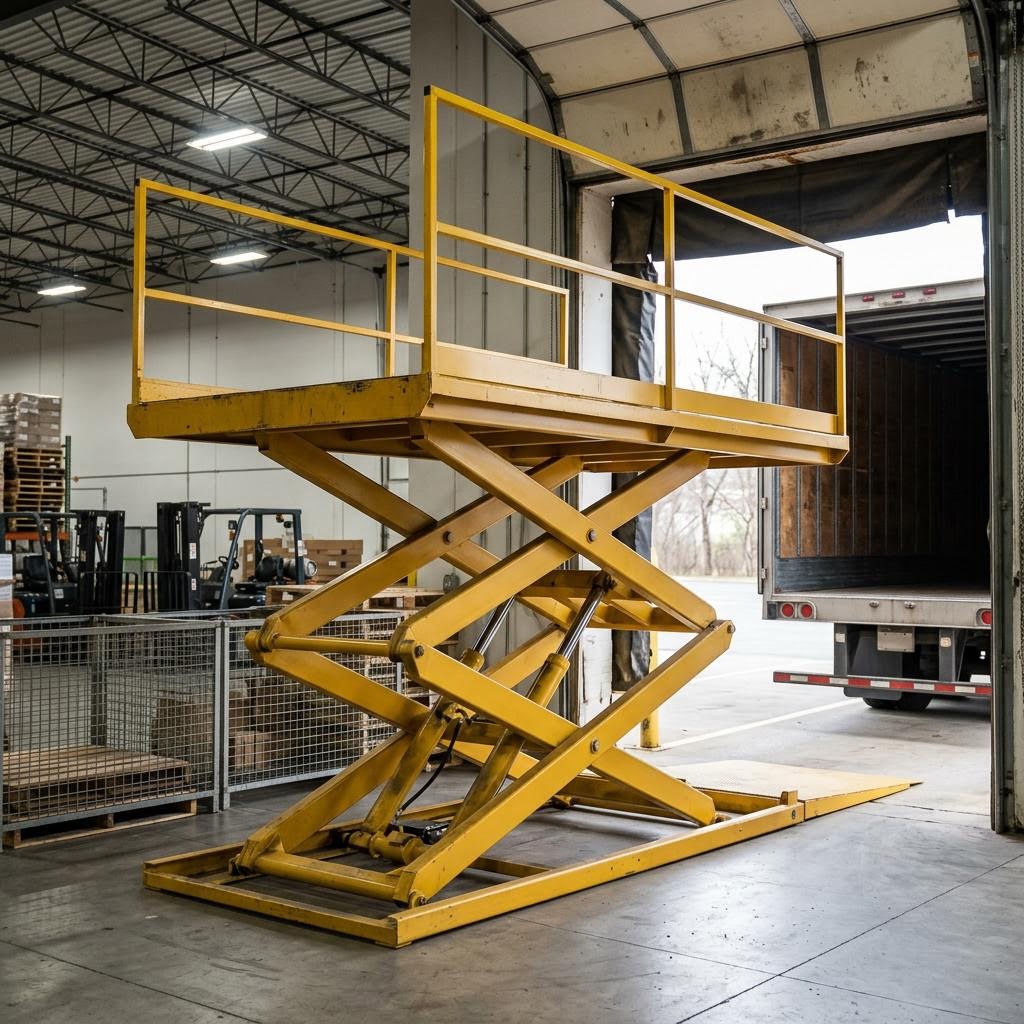
A trailer arrives at a facility with a standard dock, but the next delivery is sitting on the pavement. The receiving crew has a pallet jack, a forklift, and a schedule that leaves little room for improvisation. A temporary ramp may connect the truck to the building, but it can also create an awkward grade, limit equipment access, and turn every transfer into a negotiation between load weight, clearance, and operator confidence.
That mismatch is where loading dock lifts earn their place. They aren't accessories added to make a difficult bay slightly more convenient. A properly specified lift is structural material-handling infrastructure, designed to bridge changing elevations, support rolling loads, and fit the building's traffic pattern. The procurement decision therefore starts with the operation, not a catalog photograph.
The market reflects that specialization. The global loading dock lifts market was valued at $1.04 billion in 2025 and is projected to reach $1.73 billion by 2034, implying a 5.8% CAGR, according to Dataintelo's loading dock lifts market analysis. The same source identifies hydraulic dock lifts as 48.2% of the market and warehousing applications as 35.6% of revenue, evidence that these systems serve a defined industrial need rather than a narrow niche.
Table of Contents
- Solving Ground-Level Loading Bottlenecks
- Comparing Scissor, Column, and Vertical Lift Types
- Evaluating Capacity and Dimensional Specifications
- Navigating Safety Standards and Compliance Features
- Managing Installation Requirements and Site Preparation
- Selection Criteria for Mixed-Fleet Operations
- Implementing Lifecycle Maintenance and Inspection Protocols
Solving Ground-Level Loading Bottlenecks
A facility manager usually notices the problem before anyone mentions a lift. The dock works well for standard trailers, but a box truck stops at ground level. A supplier sends a vehicle with a different bed height. A forklift can move the pallet inside the building, yet the transfer point outside the dock doesn't provide a safe, level path.
The crew starts compensating. Someone finds a portable ramp. Someone else repositions a pallet jack. A supervisor slows the operation because the load approaches the transition at an uncomfortable angle. None of those workarounds solves the underlying elevation gap, and each one makes the next delivery dependent on judgment rather than a repeatable process.
The bottleneck is structural
A dock lift changes the question from “How do we get this load across?” to “What working height and travel range does this operation require?” The platform can serve ground-level deliveries, connect with a dock, or support transfers between different floor elevations when the site and equipment are designed for that purpose.
That matters in mixed-fleet facilities. A standard dock leveler is useful when the trailer and dock are already close to the intended operating relationship. It isn't automatically the right answer when vehicles arrive at substantially different heights or when the receiving area must handle both dock-high and ground-level traffic.
Practical rule: If operators must repeatedly improvise the connection between a vehicle and the building, the facility has an equipment problem, not a training problem.
An undersized ramp or lift can also create a false sense of capacity. Static pallet weight doesn't describe the full event. The platform must tolerate rolling equipment, concentrated wheel loads, braking, turning, and repeated transitions without excessive deflection or instability.
Treat the lift as part of the traffic system
Before requesting quotes, document the actual movement. Record the vehicle types, the highest and lowest transfer elevations, the material-handling equipment entering the platform, and whether the lift will serve one bay or several workflows. Include weather exposure, drainage, pedestrian interaction, and the space available for approach and staging.
The goal isn't to buy the largest machine available. It's to specify a platform and mechanism that make the normal movement predictable. A suitable lift removes the recurring bottleneck while preserving operator visibility, trailer access, and maintenance access around the bay.
Comparing Scissor, Column, and Vertical Lift Types
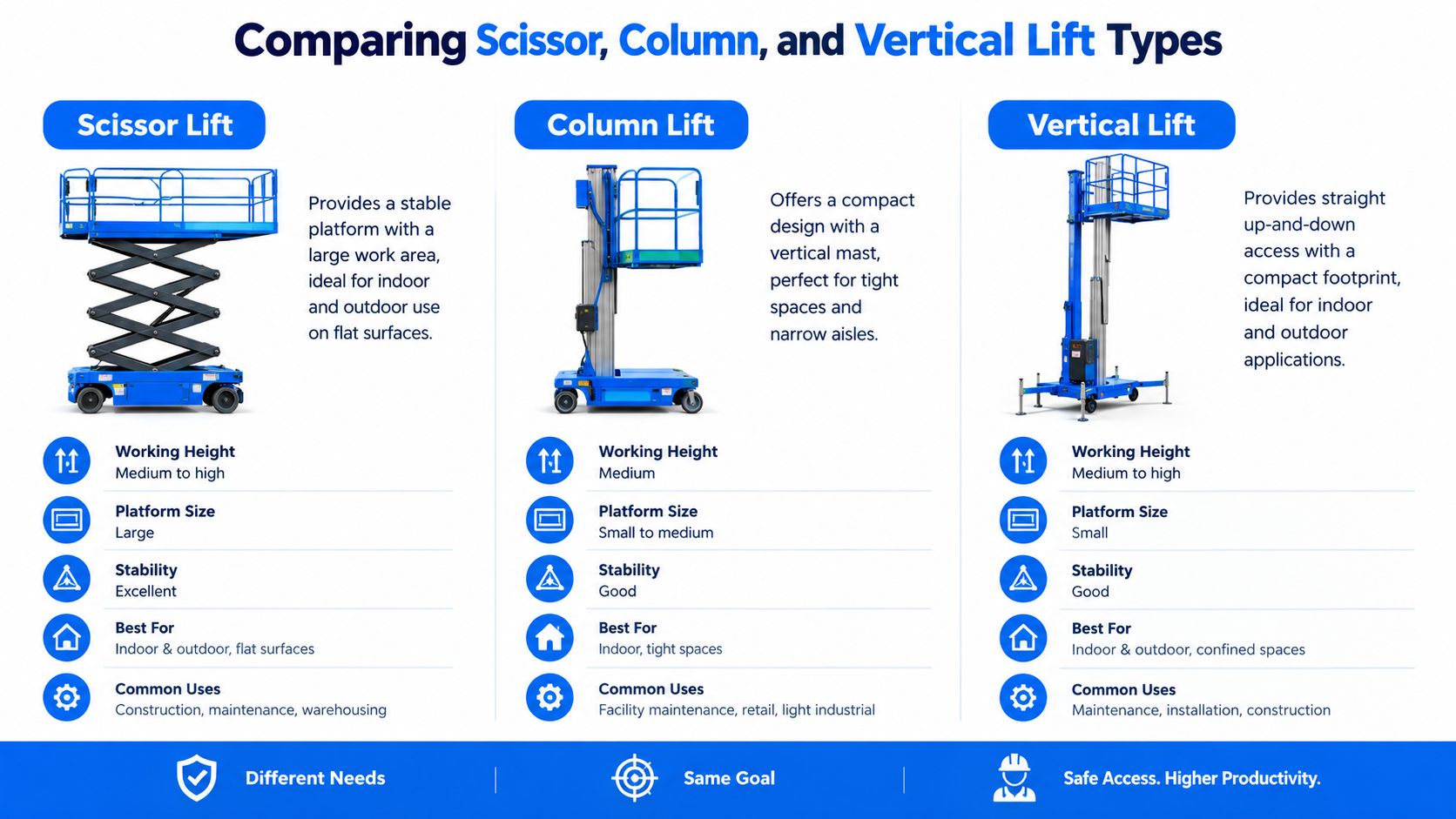
The mechanism determines more than how a platform rises. It affects the footprint, pit requirements, stability under rolling loads, access around the platform, and the way a facility manages maintenance. Buyers should compare the mechanical layout against the traffic pattern instead of treating “lift” as a single product category.
Scissor lifts
A scissor dock lift uses linked arms beneath the platform. The geometry distributes support across the base and gives the platform a broad, stable operating surface. That makes the configuration a strong candidate for pallet-jack and forklift traffic, particularly where loads roll onto the platform and the facility needs a sturdy bridge rather than a light-duty transfer table.
The trade-off is construction below the platform. A recessed scissor lift commonly needs a properly engineered pit, drainage provisions, and enough clearance for the folded mechanism and maintenance work. The pit can produce a clean finished surface, but it also introduces concrete, water-management, and installation coordination that buyers must include in the project scope.
Column lifts
Column or postsupported systems guide the platform with vertical members. Their structure can suit applications where the facility needs a particular travel path, wants to preserve space beneath the platform, or can't use the same pit arrangement as a recessed scissor unit. The exact configuration matters, because columns and guides can affect side access, guarding, and the approach path for handling equipment.
These lifts can work well in controlled receiving areas with defined loads and movement. They may be less convenient when operators need broad, unobstructed access from several directions or when the platform must withstand frequent dynamic traffic from larger vehicles and forklifts.
Vertical lifts
A vertical lift emphasizes guided upward movement, often with a compact footprint relative to the travel required. It can be appropriate for multi-level material movement, restricted floor space, or applications where the platform needs to align with more than one fixed elevation.
The procurement risk is assuming that a compact footprint automatically means a simple installation. Vertical systems still require structural review, guarding, controls, landing protection, and a clear operating envelope. They also need a site layout that prevents pedestrians and vehicles from entering the lift's movement zone.
For a busy shipping bay, scissor construction often provides the most natural platform behavior under rolling loads. For a constrained or multi-level application, column or vertical arrangements may solve problems that a broad recessed platform can't. The right choice follows the movement, not the label.
Evaluating Capacity and Dimensional Specifications
A manufacturer's capacity rating is only useful when it matches the complete loading event. Start with the heaviest pallet or container, then account for the forklift or pallet jack, the wheel placement, and the forces created when equipment crosses the platform transition. A unit that carries the load statically may still be a poor choice if the daily traffic creates concentrated or dynamic loading outside the intended design.
Major industrial loading dock lift configurations are commonly specified from 5,000 to 12,000 lb, with platform sizes from roughly 48 in x 96 in up to 96 in x 144 in. Typical lowered heights are about 8 to 14 in, raised heights about 68 to 72 in, and standard power is 460 V AC, 3-phase, 60 Hz, as summarized in Beacon Technology's loading dock lift specifications.
| Specification | Standard Range | Operational Impact |
|---|---|---|
| Rated capacity | 5,000 to 12,000 lb | Must cover the load, handling equipment, wheel concentration, and dynamic rolling forces |
| Platform size | 48 in x 96 in to 96 in x 144 in | Determines usable maneuvering area and the approach length |
| Lowered height | About 8 to 14 in | Affects ground-level access and the transition into the platform |
| Raised height | About 68 to 72 in | Determines whether the lift reaches the dock or trailer interface |
| Power supply | 460 V AC, 3-phase, 60 Hz | Must match the facility's electrical service and control equipment |
Read the platform as a ramp
Platform length directly affects the approach angle. A longer platform can reduce the ramp angle between elevations, which generally gives pallet jacks and forklifts a more stable transition. Width matters just as much when operators need to correct a load path, pass around a pallet, or maintain clearance from the edge.
Don't specify dimensions from the largest pallet alone. Mark the turning path of the actual equipment, including fork length and load overhang. Then check the raised and lowered positions against dock bumpers, trailer floors, door openings, and nearby guardrails.
Check performance under repetition
Speed affects throughput, but a faster cycle isn't automatically better. Engineering benchmarks for ANSI MH29.1-compliant systems show a 15,000 lb capacity, about 34 seconds of lift time, a 7.5 HP externally mounted power unit, and a 3:1 safety factor, according to Handling Concepts' loading dock and air cargo lift guidance. Treat those figures as a benchmark for evaluating design detail, not as a universal specification for every facility.
Ask the vendor how the rating applies to rolling loads, where the power unit sits, how the lift handles a hydraulic failure, and what service access the design provides. A slower, serviceable lift that matches the traffic pattern will usually serve the operation better than a faster unit that strains the electrical system or complicates maintenance.
Navigating Safety Standards and Compliance Features
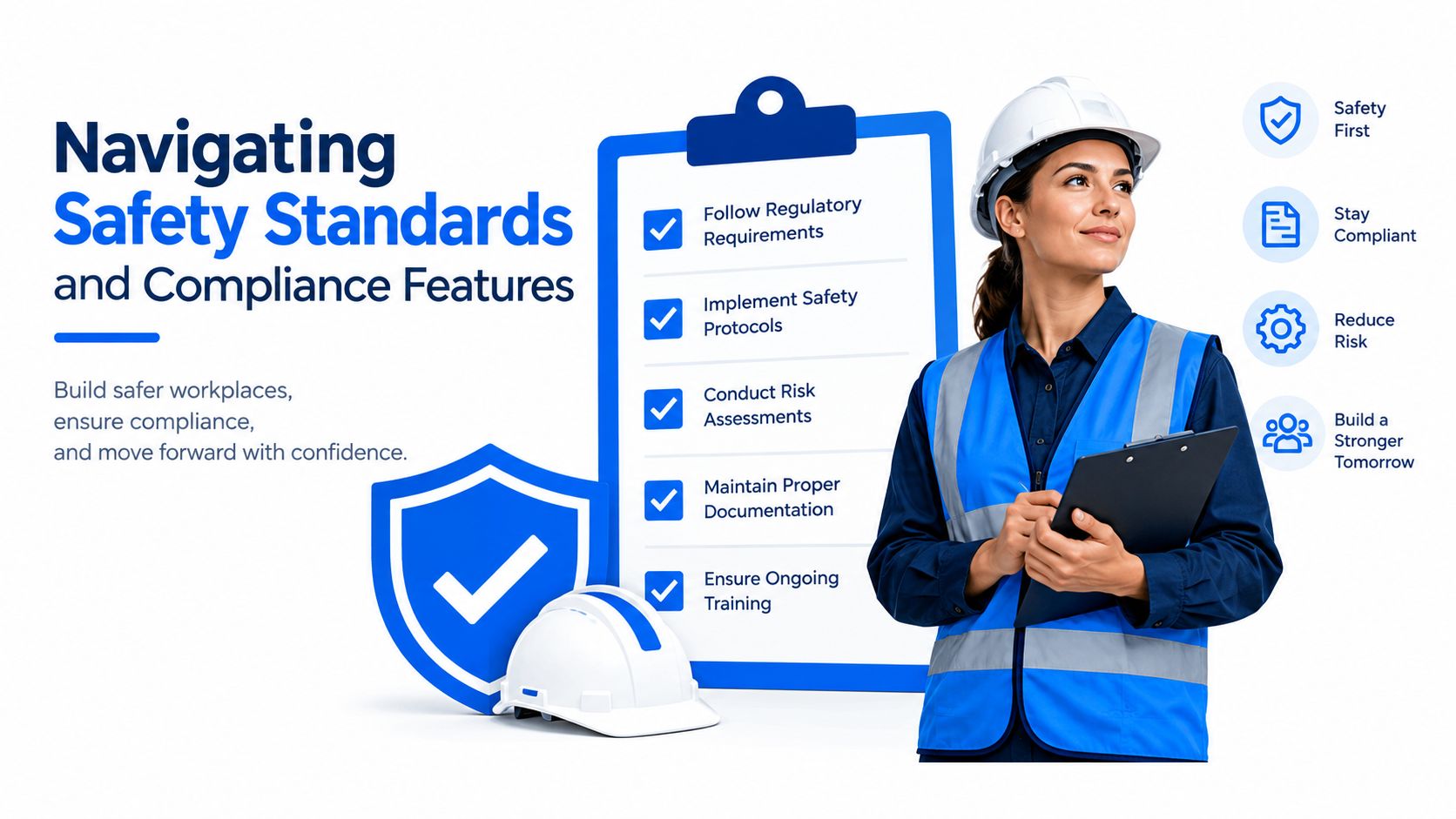
Compliance should appear in the specification package before the purchase order, not after installation. Modern loading dock lifts are commonly designed around ANSI MH29.1 for industrial scissor lifts and related OSHA requirements. Manufacturer architectural documents also identify conformance with combinations of OSHA, ANSI, and NEC, while detailed specifications may reference NFPA 70, ASTM-A36, ANSI Z535, AWS D.1, and applicable parts of OSHA 29 CFR 1910, as shown in Advance Lifts' recessed lift architectural specifications.
Require documents, not assurances
A vendor proposal should identify the applicable standards and show how the offered design addresses them. Ask for the engineering data, electrical documentation, operating instructions, load rating, anchoring requirements, and inspection procedures that support the claim.
A generic statement such as “built to industry standards” isn't enough. The buyer needs to know which standard applies to the mechanism, structure, controls, guarding, and installation.
Inspect the physical safeguards
Look for features that protect people during normal use and maintenance:
- Edge protection: Guardrails, toe guards, barriers, and marked edges should prevent people and loads from leaving the platform unintentionally.
- Hydraulic control: Velocity fuses or equivalent protection should limit uncontrolled descent if a hydraulic line fails.
- Maintenance support: Maintenance struts or mechanical blocking devices should hold the platform securely while technicians work beneath it.
- Controls and signaling: Controls should make the intended direction clear, prevent casual activation, and provide appropriate warning or status indications.
- Landing protection: The lift should address gaps and level changes at each operating position, not just at the dock face.
- Structural design: Weld quality, material selection, anchoring, and the stated safety factor should be documented rather than assumed.
A compliance certificate can't compensate for a platform that doesn't fit the building, the traffic, or the maintenance procedure.
Train operators on the actual installed unit, including approach speed, load placement, edge awareness, emergency stopping, and prohibited behavior. Safety features work best when the facility's procedures reinforce the way the equipment was engineered.
Managing Installation Requirements and Site Preparation
The purchase price rarely captures the full installation effort. A recessed lift may require concrete demolition, a reinforced pit, drainage, conduit, controls, guarding, and coordination between the lift supplier, concrete contractor, electrician, and facility team. If those responsibilities aren't assigned before shipment, the equipment can arrive while the site still lacks a usable foundation or electrical connection.
Confirm the pit and surrounding structure
Begin with a site survey that records finished floor elevations, dock height, slab condition, drainage paths, wall clearances, door dimensions, and vehicle approach geometry. The pit must support the lift's loads and preserve the clearances required for the mechanism, cylinder, hoses, and service work.
Water is a design issue, not a housekeeping issue. A pit that collects moisture can accelerate corrosion and expose hydraulic components to conditions the original specification didn't anticipate. The drainage solution must fit the building's existing system and local requirements, and it should remain accessible for cleaning and inspection.
Coordinate electrical work early
Industrial units may use 460 V AC, 3-phase, 60 Hz power, so the electrician must verify service compatibility, disconnect requirements, conductor routing, control voltage, and protection devices before the equipment ships. The lift supplier's wiring diagrams should govern the final installation, while the facility's electrical contractor confirms that the available service can support the unit.
Don't leave controls until the end. Decide where operators will stand, how emergency stops will be reached, and how vehicle and pedestrian traffic will interact with the control station. The control location should support visibility of the platform and the surrounding hazard zone.
Close the handoff properly
The installation plan should include delivery access, lifting equipment, barricades, lockout procedures, commissioning, operator training, and acceptance testing. Test the full range of movement with representative equipment and confirm that the platform reaches each required elevation without interfering with doors, bumpers, trailers, or adjacent traffic.
Require a final package containing manuals, drawings, electrical information, rated capacity, maintenance points, replacement-part references, and inspection records. That documentation becomes essential when the original project team changes or the facility adds another shift.
Selection Criteria for Mixed-Fleet Operations
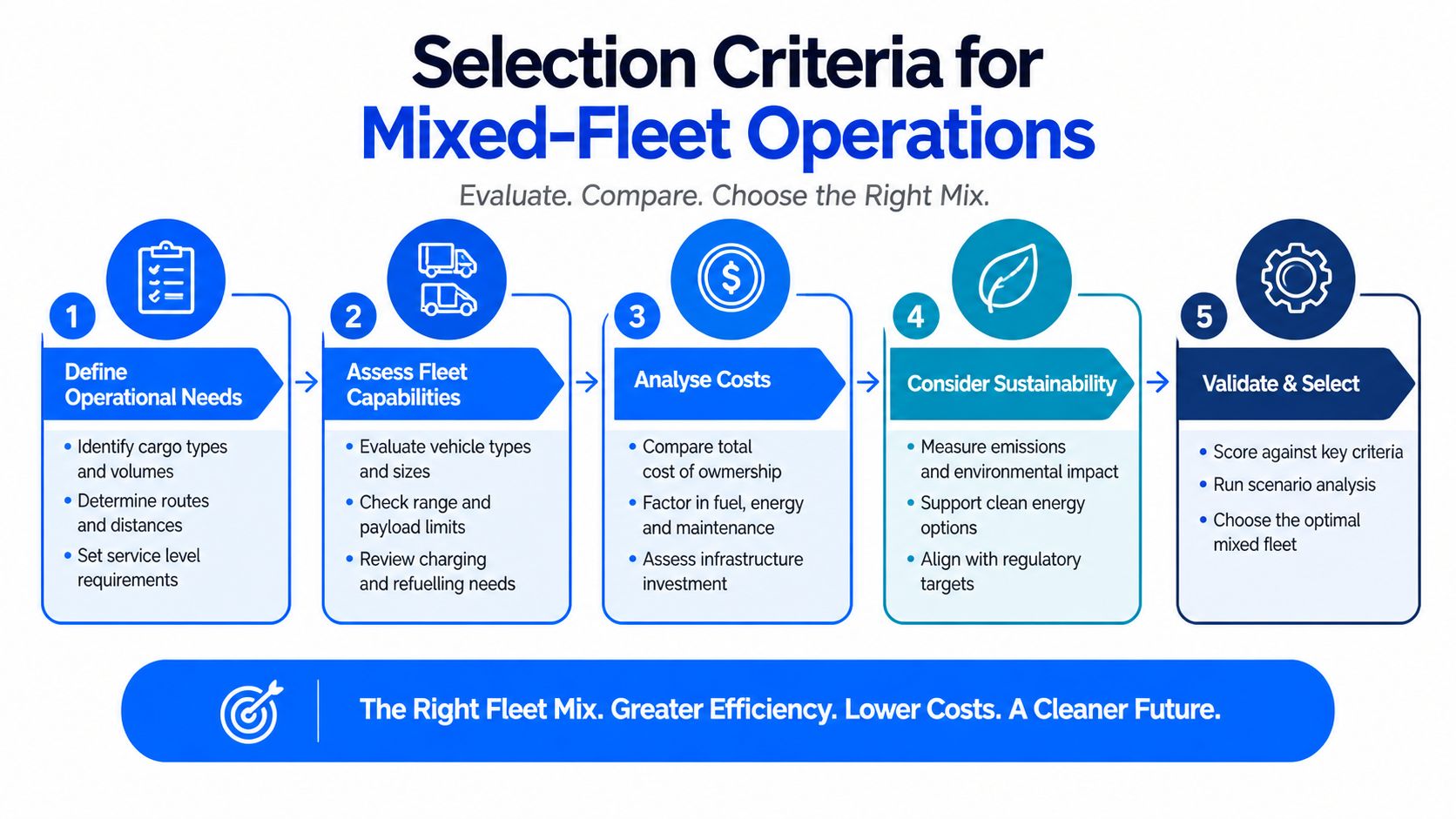
The best equipment choice depends on the gap between the building and the fleet. A standard dock leveler works well when the loading height is consistent and the trailer can back into the dock. A yard ramp can provide mobile access between the ground and a trailer, but it also needs staging space, a suitable grade, and handling equipment capable of using it safely. A dock lift becomes more compelling when one fixed bay must serve different vehicle heights, ground-level deliveries, or repeated transfers across a controlled elevation.
Recent market coverage frames that demand as broader than conventional dock equipment. One Strategic Market Research report on loading dock equipment projects loading dock lifts at a 7.12% CAGR to USD 1.79 billion by 2032, while the overall loading dock equipment market is projected at 5.9% CAGR. These are projections, not guarantees for an individual facility, but they support a practical observation: buyers increasingly need equipment for mixed-floor and mixed-fleet workflows.
Use the workflow, not the product category
| Operating condition | Usually favors | Reason to verify |
|---|---|---|
| Consistent dock height and compatible trailers | Standard dock leveler | Confirm the leveler handles the actual equipment and load pattern |
| Ground-level deliveries at a fixed receiving point | Dock lift | Check lowered height, approach angle, and site drainage |
| Several outdoor loading positions | Yard ramp | Confirm staging space, surface condition, and vehicle movement |
| Mixed vehicle heights at one bay | Dock lift or engineered combination | Model the full range of elevations and transition conditions |
| Vertical movement between fixed building levels | Vertical lift | Review guarding, landings, structure, and access control |
| Occasional unusual loads | Portable solution or shared equipment | Compare setup time, storage, operator training, and exposure |
Make the capital decision operational
Count the movements that currently require a workaround, then identify what causes the delay. If the problem is occasional and the facility has adequate yard space, a ramp may be practical. If the same bay handles daily ground-level receipts, changing trailer heights, and powered equipment, a fixed lift can provide a more repeatable process.
The decision should also include the cost of lost flexibility. A standard leveler may leave ground-level work dependent on manual handling, while a ramp may consume valuable staging area and introduce setup steps. A lift can preserve a single controlled transfer point, but it brings pit, electrical, inspection, and service obligations.
Buy for the fleet you actually receive, not the trailer specification you wish every carrier followed.
Material Handling USA lists dock and loading equipment including dock lifts, yard ramps, bumpers, wheel chocks, trailer jacks, and restraints. Use a supplier conversation to compare the equipment family against the site plan, then obtain an engineered quote that separates the lift, installation, electrical work, concrete, guarding, and ongoing service.
Implementing Lifecycle Maintenance and Inspection Protocols
A loading dock lift isn't finished when commissioning ends. It is a hydraulic, structural, and electrical machine exposed to impact, moisture, debris, and repeated rolling loads. The “install and forget” approach hides deterioration until the lift is already unsafe or unavailable during a critical shipping window.
Institutional guidance recommends maintaining and inspecting loading dock equipment according to manufacturer requirements, inspecting hydraulic dock plates regularly, and having a certified person inspect them at least once a year. University of Toronto's loading dock safety guidance also calls for pre-use checks for wear, corrosion, grease, moisture, and spills, followed by yearly certification.
Separate operator checks from technical service
Operators should inspect visible conditions before use. They should look for unusual platform movement, damaged edges, leaks, corrosion, contamination, missing guards, loose components, and anything that changes the approach or landing surface. They shouldn't continue operating a lift when a defect affects stability, guarding, descent control, or load placement.
Maintenance personnel need a deeper schedule based on the manufacturer's instructions and the actual duty cycle. That work may include hydraulic hoses and fittings, cylinders, pins, bearings, welds, anchors, controls, limit devices, safety devices, drainage, and structural wear. The maintenance strut or blocking method must be used whenever the procedure requires access beneath a raised platform.
Build records into the operation
Keep a service log tied to the lift's identification and location. Record inspections, defects, corrective actions, parts, technician qualifications, and certification status. A clear record helps the facility identify recurring failures, plan replacement before a critical outage, and demonstrate that the equipment receives appropriate attention.
Don't wait for a leak or a failed cycle to start planning end of life. Repeated corrosion, obsolete controls, damaged structure, unavailable components, or a platform that no longer matches the fleet can justify replacement even when the lift still moves. Reliability comes from treating inspection, documentation, and renewal as operating costs rather than surprises.
Material Handling USA can help you compare dock lifts with related loading equipment and source the safety, facility, and material-handling supplies that support the installation. Visit Material Handling USA to review the available equipment categories or contact a product specialist before you finalize your specification.