Poly Mailer Size Chart: Best Sizes for Apparel Shipping
You're packing orders that look simple until the first batch starts coming back with crushed seams, scuffed corners, or labels that won't read cleanly. A poly mailer size chart should help you avoid that. If it only lists bag sizes, it can still lead you to pick the wrong mailer for folded apparel, thick bundles, or anything with hard edges.
The fix is to size for the packed mailpiece, not the empty bag. Once the garment is folded, sealed, and flattened to ship, the key question is whether the mailer still fits cleanly, stays within carrier rules, and protects the product all the way to the customer.
Table of Contents
- Why Poly Mailer Size Charts Miss the Actual Fit Problem
- Quick Reference Poly Mailer Size Chart for Apparel
- Usable Length and the Flap Rule
- How to Choose the Right Poly Mailer Size
- Poly Mailer Sizes from 6x9 to 24x24
- Poly Mailer Thickness Guide by Load Type
- White vs Gray vs Printed Poly Mailers
- Shop In Stock Poly Mailers and Shipping Mailers
- FAQ About Poly Mailer Size and Thickness
Why Poly Mailer Size Charts Miss the Actual Fit Problem
Many teams grab a mailer by the printed number on the box, then wonder why the seal looks stretched or the bag feels too tight after packing. That happens because the listed size is the empty bag size, but the parcel that matters is the packed mailer after the item is folded and the flap is closed. For postal machinability, the finished piece has to meet the carrier's size and shape rules, not just look close on the shelf, including USPS minimum dimensions and rectangular form requirements for machinable letter-size mail USPS DMM 201.1.
Measure the packed piece, not the flat bag
Start with the garment in its shipping fold. Measure the usable interior against that folded item, then leave room for insertion and sealing. A shirt that seems fine against a flat 10 x 13 bag can still create seam stress, use up too much flap, and change fit once thickness comes into play.
Practical rule: the bag number on the box is not the whole story. The packed mailer is what has to ship cleanly.
Overstuffed mailers tear more easily, while oversized mailers waste space and can create processing issues. For apparel, a snug fit usually works, but snug is not the same as tight. A good poly mailer size chart should help you find that middle ground without forcing the item or leaving too much slack.
Quick Reference Poly Mailer Size Chart for Apparel
A size chart only works if it helps you pack the right item without guessing. Use this one as a quick warehouse reference for common apparel folds and the mil range that usually makes sense for each load.
| Outside Size | Common Fit | General Mil Range |
|---|---|---|
| 6 x 9 | Small accessories, jewelry, socks, very small folded items | 1.7 to 2.0 mil |
| 7.5 x 10.5 | Thin T-shirts, kids' clothing, compact soft goods | 2.0 to 2.5 mil |
| 9 x 12 | Single shirts, folded tops, light apparel | 2.0 to 2.5 mil |
| 10 x 13 | Standard apparel, folded T-shirts, lighter multi-item orders | 2.0 to 2.5 mil |
| 12 x 15.5 | Hoodies, heavier shirts, two-piece apparel, small bundles | 2.5 to 3.0 mil |
| 14.5 x 19 | Coats, jeans, bulkier apparel, mixed soft goods | 3.0 to 4.0 mil |
| 19 x 24 | Bedding, blankets, bulky soft goods | 3.0 to 4.0 mil |
| 24 x 24 | Oversized soft goods, special bulk packouts | Check product spec |
Fit control is the value here. A 6 x 9 is fine for add-ons and small accessories, while 9 x 12 and 10 x 13 cover most single apparel pieces without wasting material. Once you move into hoodies, jeans, or mixed bundles, the mailer needs more room and a stronger film, because a tight bag splits faster at the fold and the seal.
Use the table as a starting point, then check how the folded garment sits inside the bag before you commit to a full run. A clean packout is better than forcing a close.
For broader shipping supply options beyond apparel, Material Handling USA keeps a shipping mailers category with in-stock choices sold by the case.
Usable Length and the Flap Rule
The printed length on a poly mailer is not the full usable length. The adhesive flap takes up about 1.5 to 2 inches of interior space once it folds and seals, so the packed item sees less length than the bag name suggests. That's why a mailer labeled 10 x 13 can feel shorter in hand than you expected.
Size for the fold, then add seal room
Measure the garment after folding or packing, not before. Add room for insertion, then make sure the flap has space to close without pulling the seam. A mailer that is barely long enough on paper often becomes too tight once the product thickness is inside.
A packed mailer should close without a stretch test at the seam.
That simple rule keeps you from forcing apparel into the bag and stressing the adhesive line. It also helps with carrier handling, because a flatter packed piece usually travels better than one that bulges at the top.
How to Choose the Right Poly Mailer Size
A good size choice starts with the folded item, not the bag label. Lay the garment the way it ships, then check width, length, and thickness so you know what the mailer has to hold without forcing the fold.
Leave enough room for insertion and closure. If the package pinches at the top, the seal works harder than it should, and the finished piece is more likely to look bulky in transit.
Match the load to the film. A thin tee does not need the same hold as a hoodie with zippers, rigid inserts, or a dense fold.
Check the carrier fit, not just the bag fit. The finished mailpiece has to read cleanly at acceptance, and rough shape can create problems even if the bag itself looks right.
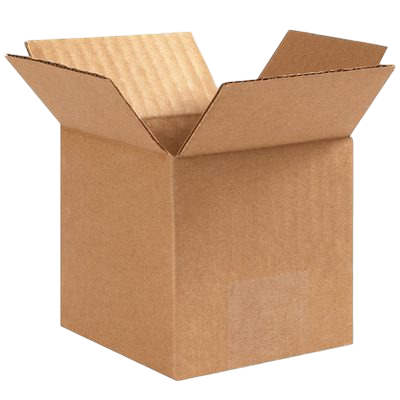
If shirts are part of your daily outbound mix, the guide to packaging bags for shirts is a useful cross-check for fold size and presentation. When you are deciding whether a poly mailer still makes sense or a carton is the better move, this comparison of the cheapest way to ship a 12 x 12 x 12 box helps frame the trade-off.
Confirm the spec sheet before buying. If the maker does not publish thickness or closure details, treat the bag as unproven until it has handled your actual packout.
Poly Mailer Sizes from 6x9 to 24x24
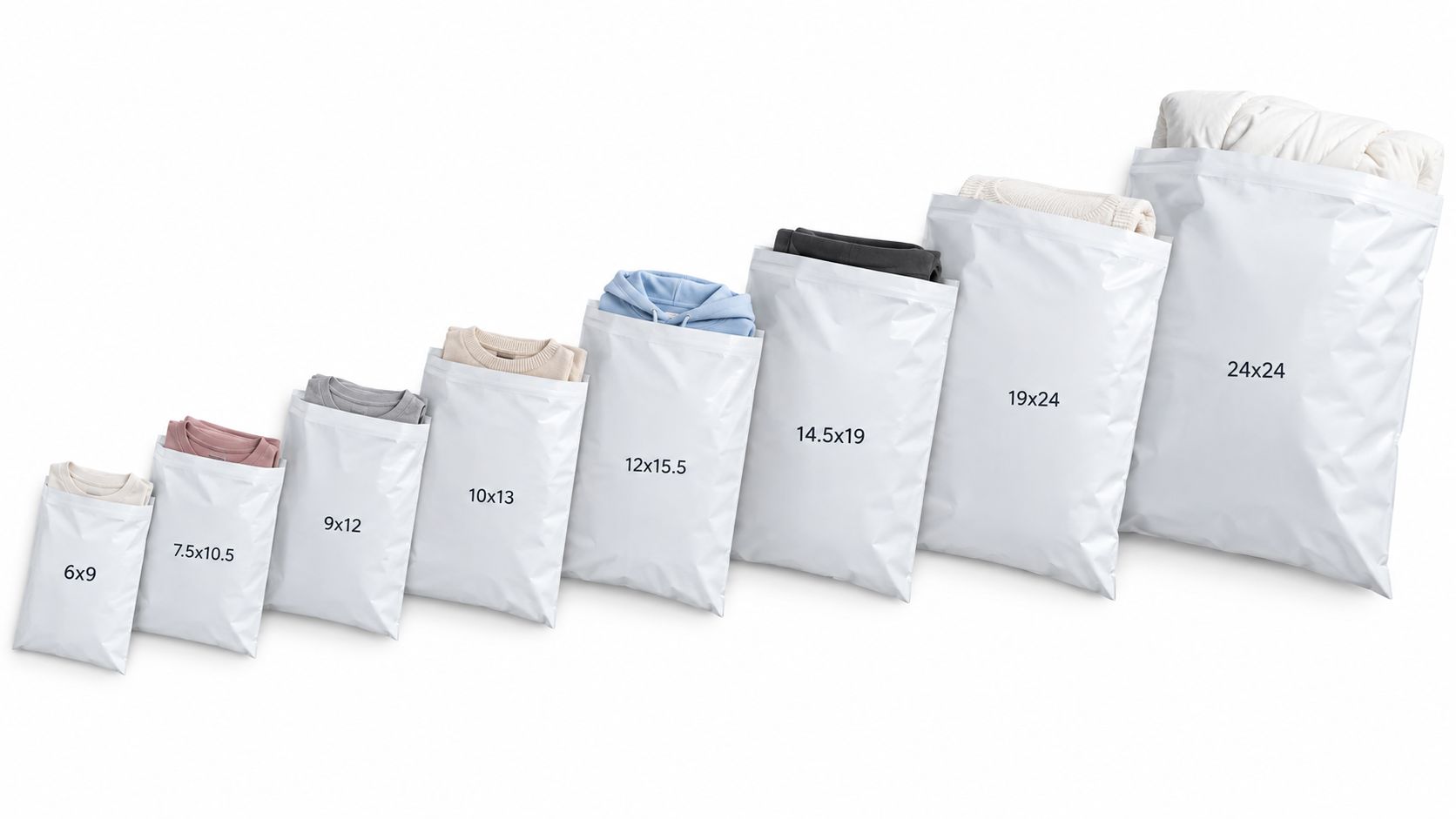
A size chart only gets you part of the way. A folded tee can sit flat in one bag and turn stubborn in the next size up if the fold is thick, the stack is uneven, or the closure has to work too hard. That is why the usable size is the one that gives the garment room to slide in cleanly and still leaves the mailer flat enough to move through the carrier flow without bulging.
Small items are easy. The trouble starts when bulk changes the packout. A 9 x 12 bag can handle a single shirt, but the same size may feel tight once you add a thicker fold or a second piece. Step up one size for standard apparel, then jump two sizes when you are packing hoodies, jeans, layered sets, or anything with a dense fold that pushes back at the seal.
Use the larger bags for bulk, not for every order. The 14.5 x 19, 19 x 24, and 24 x 24 sizes are there for oversized soft goods, mixed apparel, and special packouts that need width more than length. If a garment has rigid trim, bulky seams, or a fold that keeps springing open, a bigger bag protects the presentation and lowers the chance of a return caused by a crushed corner or a stressed seal.
Keep a small reserve of the sizes you use most during seasonal swings. That keeps you from forcing everything into one stock bag when the mix changes.
Here's a quick visual reference on apparel packouts.
Poly Mailer Thickness Guide by Load Type
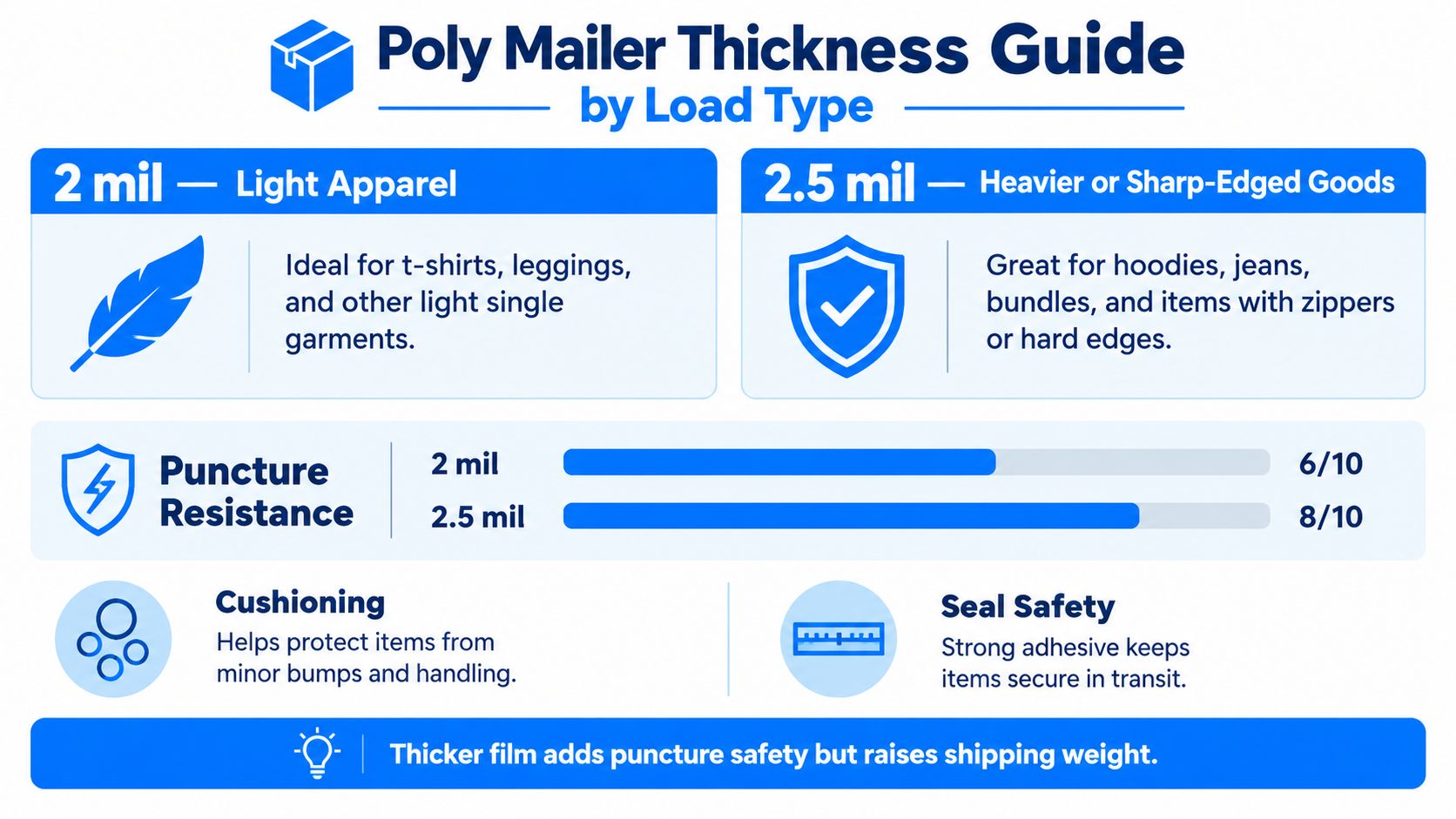
Film thickness keeps a bag from splitting at the seam or wearing through on the way to the customer. For flat, soft apparel, 2 mil is a common light-duty choice. For heavier or sharper-edged goods, 2.5 mil gives you more margin.
Match the film to the contents
A lightweight tee can ride in thinner film because it does not push back at the bag. Hoodies, jeans, boxed cosmetics, zippers, and rigid inserts need more resistance because edges and density create wear points. USPS also makes clear that mailpiece dimensions and thickness rules matter for machine handling, while flat pieces must stay uniform and contained USPS DMM archive 201.1.
Bottom line: thicker film helps with puncture safety, but it does not replace good packout discipline.
Use tear-resistant stock when your loads include heavier apparel or mixed goods, and check the spec sheet before you order. If your shipments are getting boxed inserts, hardware, or rough handling, film alone may not be enough, so review the package format and upgrade it if needed.
White vs Gray vs Printed Poly Mailers
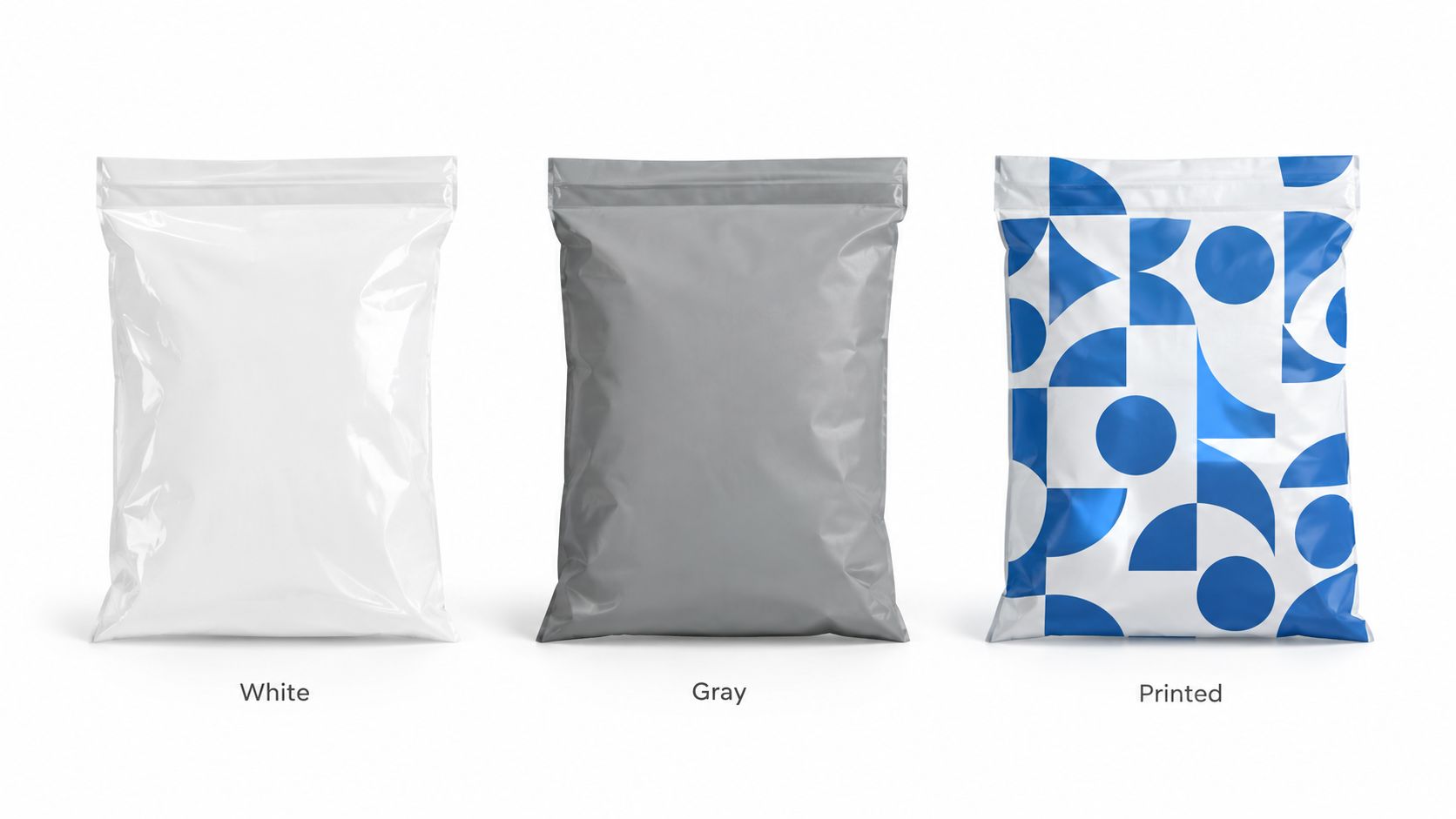
White mailers are easy to inspect and give you a clean look at packout. Gray mailers hide minor scuffs, shadows, and light staining better, which can help when you're moving a lot of apparel through the line. Printed mailers add branding and can make the parcel feel more intentional at the door.
Pick color for the job, not just the look
If you need quick visual checks at packing, white usually wins. If you want a cleaner exterior that masks handling marks, gray is practical. If brand presentation matters, printed mailers make sense, but they should still match the same fit and thickness rules you'd use for plain stock.
If you manage product content as well as packaging, a guide on rich media for retailers can help you think about how photos and product presentation support the unboxing side of ecommerce. The package still has to ship cleanly first, though, so don't let print override fit.
Shop In Stock Poly Mailers and Shipping Mailers
Start with the shipping mailers category for standard apparel orders, then narrow by size, thickness, and color. If the load needs more abuse resistance, move to the tear-resistant poly mailers category. Both are sold by the case, which helps when you are setting a repeat packout.
For teams standardizing across locations, Material Handling USA also carries mailers that fit project buys and ongoing replenishment. A quick fit check now cuts rework later, and it helps keep folds clean and shipping costs predictable. If packaging presentation matters, the guide on rich media for retailers is useful, but the mailer still has to ship flat and hold up in transit.
FAQ About Poly Mailer Size and Thickness
Should I size by outside dimensions or usable inside space?
Use the outside size as the starting point, but judge fit by the packed product. The flap and seams take away from the space you can use.
Is thicker always better?
No. Thicker film can help with puncture resistance, but it can also add weight and cost more to ship. Match thickness to the load.
What size works best for a T-shirt?
A 9 x 12 or 10 x 13 usually works for a single folded shirt, depending on the fold and the shirt weight.
When should I move up to a larger mailer?
Move up when the seal feels strained, the fold is too bulky, or the item has hard edges that press against the film.
Can I use one size for every apparel SKU?
You can, but it usually creates waste or tight packouts. A small set of core sizes is more efficient.
Do white, gray, and printed mailers ship the same way?
Yes, if the size and film spec are the same. Color changes presentation and workflow, not fit.
How do I avoid carrier problems with flexible mailers?
Keep the packed mailer flat, rectangular, and within the carrier's shape limits. USPS publishes the machinable limits and minimums in its mailing standards, so check the current DMM before standardizing on a mailpiece format.
What should I check before placing a bulk order?
Confirm the size, usable opening, adhesive flap, film thickness, and whether the mailer is meant for light apparel or heavier goods.
Material Handling USA stocks shipping mailers and tear-resistant poly mailers for apparel and ecommerce packouts, with volume pricing and case quantities that fit warehouse buying patterns. If you need pallet quantities, custom sizes, or a quote on project size orders, visit Material Handling USA or call 1-800-326-4403, Mon to Fri 8am to 5pm MT.