Foaming Glass Cleaner: Why It Matters for Facilities
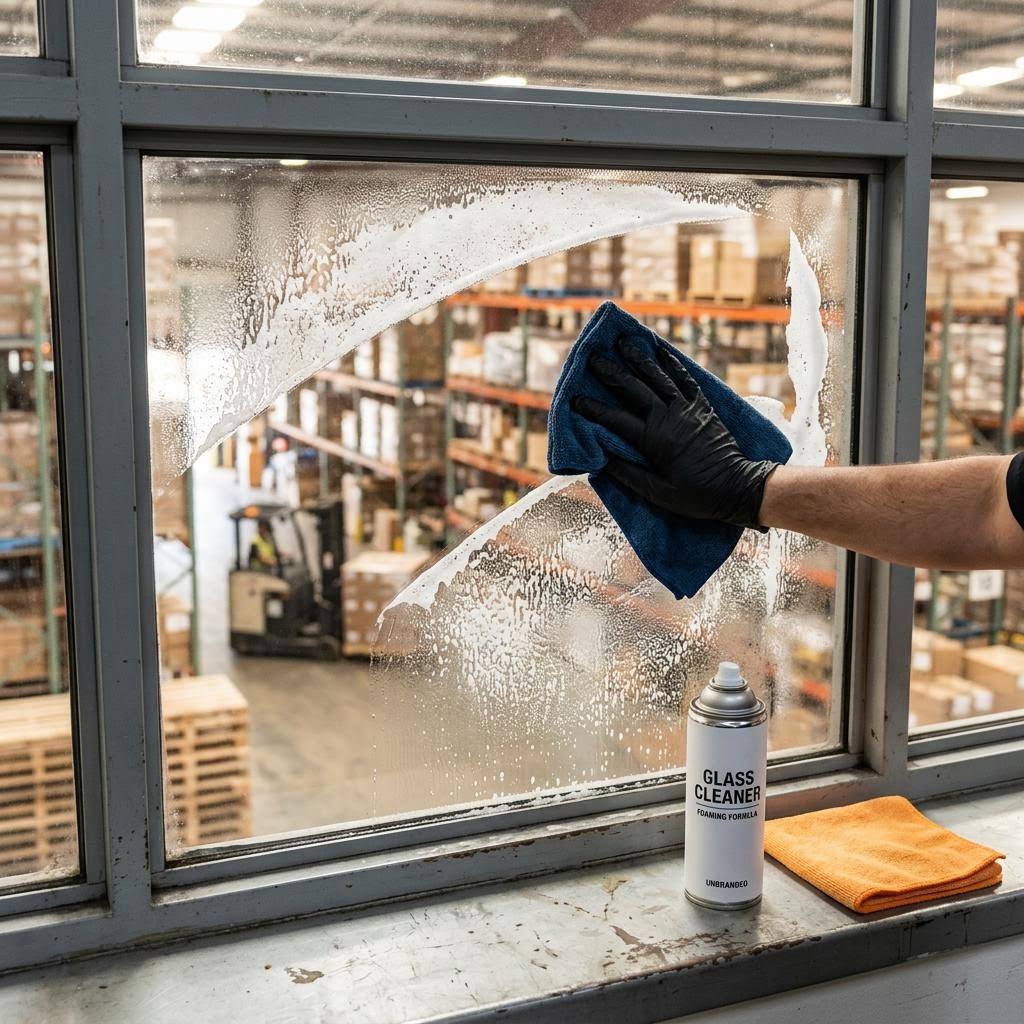
A floor walk-through can turn on a single pane of glass. Fingerprints on a reception partition, oily haze on a forklift cab, or drips running into the trim of a storefront window can make an otherwise clean facility look unfinished. The crew may have used plenty of chemical, but the delivery method worked against them.
That's why foaming glass cleaner deserves a closer look in multi-site operations. The right product can hold on vertical glass long enough to loosen soil, while the wrong formula or process can leave residue, damage a coating, or create avoidable rework. The useful question isn't only whether foam beats spray. It's whether the product matches the surface, cleaning conditions, air-quality requirements, labor routine, and purchasing model.
Table of Contents
- Why Foam Changes the Cleaning Conversation
- What Foaming Glass Cleaner Actually Is
- Foaming Glass Cleaner vs Spray Cleaner Performance
- Common Formulations and Ingredient Choices
- Safe Use Across Facility Environments
- How to Buy Foaming Glass Cleaner for Your Facility
Why Foam Changes the Cleaning Conversation
A cleaner can fail before the operator has a chance to wipe it. On a tall interior window, liquid spray starts moving downward as soon as it lands. On a mirror above a sink, it can run into the backsplash or frame. On a glass door in a busy retail entrance, the operator may apply too much just to keep the surface wet long enough to work.
Foam changes that sequence. Its structure helps the product cling to vertical glass, giving solvents and surfactants more time to act before gravity pulls the cleaner away. That matters on high windows, glass partitions, display cases, mirrors, and vehicle cabs where runoff creates both mess and extra passes.
Practical rule: If the operator needs one hand free to manage a ladder, cart, door, or vehicle cab, controlled application matters more than a dramatic shine claim.
The category has also become large enough to stand apart from ordinary liquid glass sprays. One market report valued the broader glass cleaner market at USD 3.59 billion in 2025 and estimated that foam-based products represented about 18% of it, citing longer cling on vertical surfaces and reduced dripping as reasons for their appeal. See the glass cleaner market analysis from Fortune Business Insights for that market context.
Where the format earns attention
Foam is most useful when the surface is vertical, the soil is oily or touch-related, and the operator needs deliberate contact time. It can help with fingerprints around door handles, haze on interior partitions, and grime on windshields or mirrors. It also gives the operator a visible boundary, making it easier to see where chemical has been applied and where a dry section of cloth should finish the job.
Spray still has a place. A light liquid mist can be efficient for quick touch-ups, small horizontal surfaces, or work where rapid evaporation is the priority. Foam isn't automatically better, and heavy application can create its own streak problem.
The format has a long commercial history. Windex was introduced in 1936 as an automobile windshield cleaner, and SC Johnson later expanded the brand into foam products such as Windex Fast Shine Foam. The historical glass cleaner market overview from Grand View Research also describes SOFT99's 1986 glass-cleaning tablet launch as a major success, illustrating how lather-based formats became recognized in major markets.
What Foaming Glass Cleaner Actually Is
Foaming glass cleaner is usually a water-based blend that expands during dispensing and forms a clingable layer on the surface. The foam isn't the cleaning agent by itself. It's the delivery system that helps keep the active ingredients in contact with glass rather than allowing them to run immediately.
A typical industrial foaming formulation uses solvents, biodegradable surfactants, and cleaning agents, with a mildly alkaline pH around 8 to 11. One industrial formulation reports VOC levels around 9.3% to 9.9% by weight. Those figures come from the Krud Kutter Pro Foaming Glass Cleaner technical data sheet, and they show why procurement teams should review the technical sheet rather than rely only on front-label language.
The chemistry operators notice
Surfactants lower surface tension. That lets the product spread across the glass and helps the foam remain in place. The longer contact period gives solvents more opportunity to loosen oily films, fingerprints, and everyday grime.
Alkaline builders help with fatty soil. In practical terms, the mildly alkaline side of the formulation supports the breakdown of greasy residue. That doesn't mean every foam is suitable for every substrate. pH is one part of the compatibility decision, not a universal safety guarantee.
Solvents support soil removal and drying. They help dissolve oily contamination and can contribute to a clean finish when the operator uses the right amount and wipes at the right time. Too much product, late wiping, direct sunlight, or a hot surface can leave streaks even when the formula is well designed.
A good mental model is simple: foam controls contact, chemistry loosens soil, and the cloth removes the suspended residue. If any of those three steps fails, the result suffers. A stable foam won't compensate for a dirty cloth, and a strong solvent package won't prevent damage to an incompatible tint or coating.
For a visual explanation of the operating differences, use the foaming glass cleaner performance video. Treat it as a demonstration aid, then verify the product's SDS, technical data, and approved-surface instructions before standardizing it across sites.
Foaming Glass Cleaner vs Spray Cleaner Performance
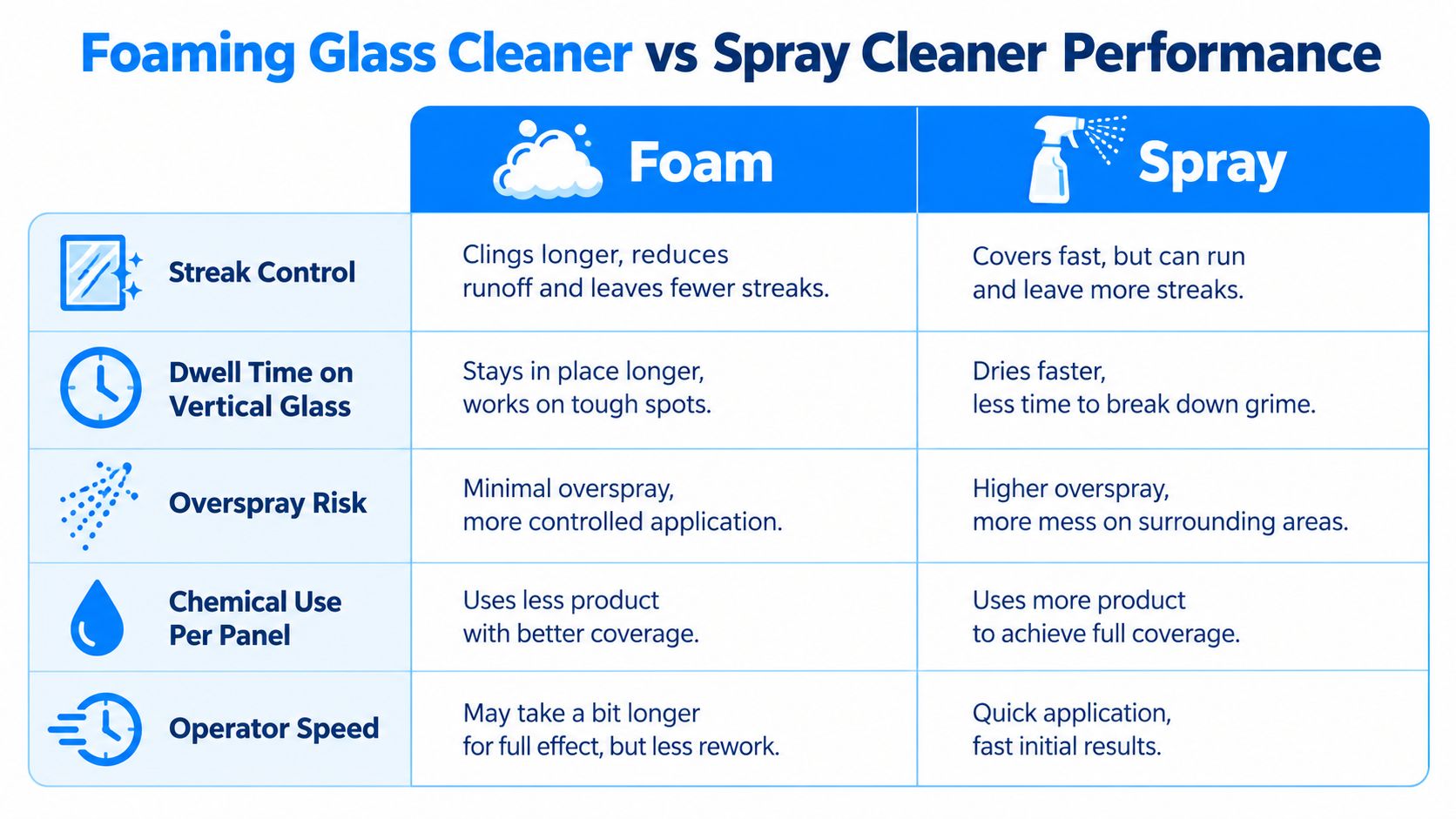
The strongest comparison starts with the task, not the product aisle. A facilities team cleaning a tall lobby window has different needs from a technician wiping fingerprints from a small inspection panel. Foam generally helps where runoff, contact time, and application control create the most labor friction. Spray can remain the efficient choice where the job is light and speed matters more than dwell.
| Operating criterion | Foaming glass cleaner | Spray cleaner |
|---|---|---|
| Vertical contact | Clings longer and reduces immediate runoff | Can move quickly under gravity |
| Coverage control | Visible foam helps the operator limit the applied area | Fine mist can spread beyond the target |
| Heavy fingerprints | Gives solvents more time to work | Often needs prompt wiping or another pass |
| Quick touch-ups | May require restraint to avoid overapplication | Light mist can be fast and economical |
| Sensitive surroundings | Lower runoff can protect trim and nearby surfaces | Overspray may reach plastics, screens, or finishes |
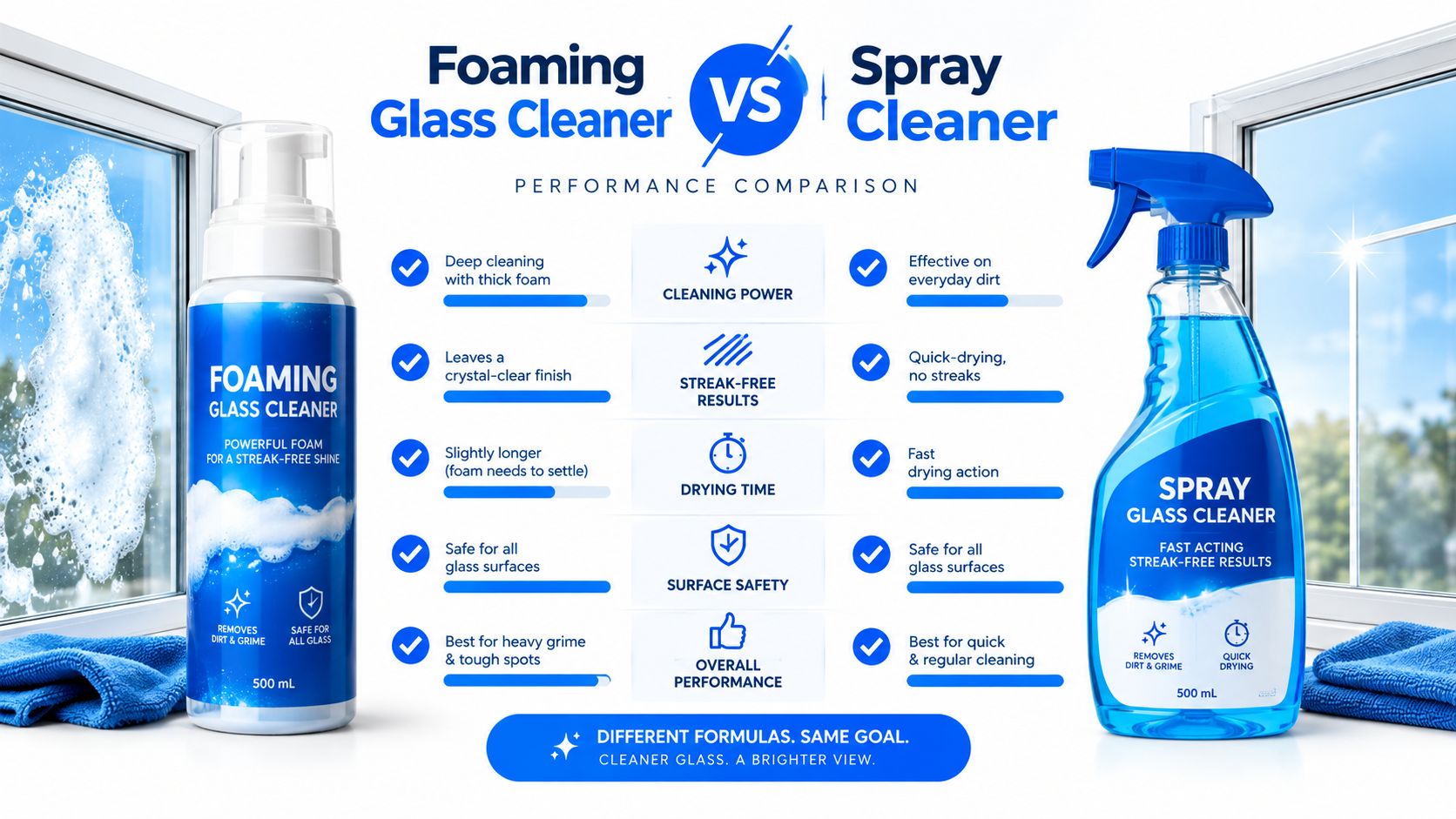
Match the format to the zone
Use foam for vertical glass with recurring touch soil, including entry doors, mirrors above wash areas, interior partitions, and vehicle windows. It's also useful when a crew needs to clean a defined section without flooding the surrounding trim.
Use spray for small maintenance touches, broad light dust removal, or situations where the operator can apply a controlled mist directly to the cloth. Spraying the cloth instead of the surface can reduce overspray near electronics, displays, painted panels, and upholstery, provided the product instructions allow that method.
Watch the hidden cost
Foam may reduce rework when it prevents running and gives the soil time to loosen. It can also increase cost if operators coat the entire pane when a few targeted applications would have done the job. Spray may appear cheaper per container, but wasted mist, repeated passes, and cleanup around the glass can change the operational calculation.
The best multi-site standard is often mixed rather than absolute. Assign foam to surfaces where dwell time and runoff control matter, and retain spray for fast, low-soil work. Then measure the result locally through supervisor inspections, complaint records, chemical issue rates, and the time required to bring a pane to an acceptable finish.
Common Formulations and Ingredient Choices
Two products can both claim streak-free performance and behave very differently in a facility. The main purchasing distinction is often ammonia-containing versus ammonia-free, but that choice should follow the substrate and environment rather than a blanket preference.
Ammonia or ammonium hydroxide commonly acts as a cleaning aid and pH adjuster. It can cut oily haze and evaporate quickly enough to support a clear finish. At the same time, ammonia may be unsuitable for some tinted glass, enclosed areas, or operations where sharp fumes create discomfort or complicate air-quality expectations.
Ammonia-free systems place more responsibility on the solvent and surfactant package. That can make them a better starting point for tinted windows, coated glass, enclosed cabs, healthcare spaces, and mixed fleets. It doesn't make every ammonia-free product automatically compatible. Film adhesive, laminate, coating chemistry, painted trim, and plastic surrounds still require verification.
Read the product sheet like a buyer
Before approving a SKU, check these points:
- Substrate language: Look for explicit guidance on tinted, laminated, coated, and treated glass, not just a general “safe for glass” statement.
- Restricted materials: Confirm whether the formula should stay off plastics, painted trim, screens, rubber seals, or decorative finishes.
- Ingredient exclusions: Some commercial foams avoid alcohol, silicone, and abrasives to reduce residue and improve streak performance.
- Ventilation requirements: Review the SDS for VOC information, first-aid instructions, personal protective equipment, and use restrictions.
- Application conditions: Note warnings about hot glass, direct sun, freezing conditions, or excessive product.
For teams comparing commercial options, the cleaning chemicals selection at Material Handling USA is a useful place to organize product research by facility requirement rather than by advertising language.
Ammonia isn't the only risk
A formula can be ammonia-free and still create problems if staff overapply it, let it dry, or use it on an unapproved coating. Residue often comes from process errors as much as ingredient choice. A clean microfiber cloth, light coverage, and a timely second pass usually matter more than chasing a single “streak-free” phrase on the label.
Safe Use Across Facility Environments
A reliable glass-cleaning program is a controlled process. The operator identifies the surface, applies a light amount, allows enough contact time to loosen soil, and removes the product with a clean cloth before it dries. That routine has to work in a warehouse aisle, a healthcare corridor, a retail entrance, and an enclosed vehicle cab without relying on individual improvisation.
Start with the surrounding materials. Glass may sit beside painted steel, powder-coated trim, rubber seals, acrylic, polycarbonate, touchscreen displays, upholstery, or tint film. Test an inconspicuous area when the substrate or coating is uncertain, and never assume that a product approved for bare glass is approved for every material around it.
Surface rule: The pane may be glass, but the cleaning job includes everything the foam can touch.
A repeatable application method
- Remove loose grit first. Dust and abrasive particles can drag across the surface during wiping. A dry or contaminated cloth can create more visible defects than the original soil.
- Apply a light, even amount. More foam doesn't mean more cleaning. Excess product increases wiping effort and raises the chance of residue.
- Respect the conditions. Avoid direct sun and very hot or cold surfaces when the label warns against them. Product that dries too quickly is difficult to finish cleanly.
- Use the right cloth. A clean, lint-free microfiber is a practical default. Reserve a dry side or a second cloth for the final buff.
- Control the perimeter. Keep product away from dashboards, upholstery, screens, painted trim, and sensitive seals unless the technical instructions specifically approve them.
- Train the finish. Staff should know the difference between a clean reflection and a wet-looking haze. Supervisors should inspect from multiple angles and under the normal facility lighting.
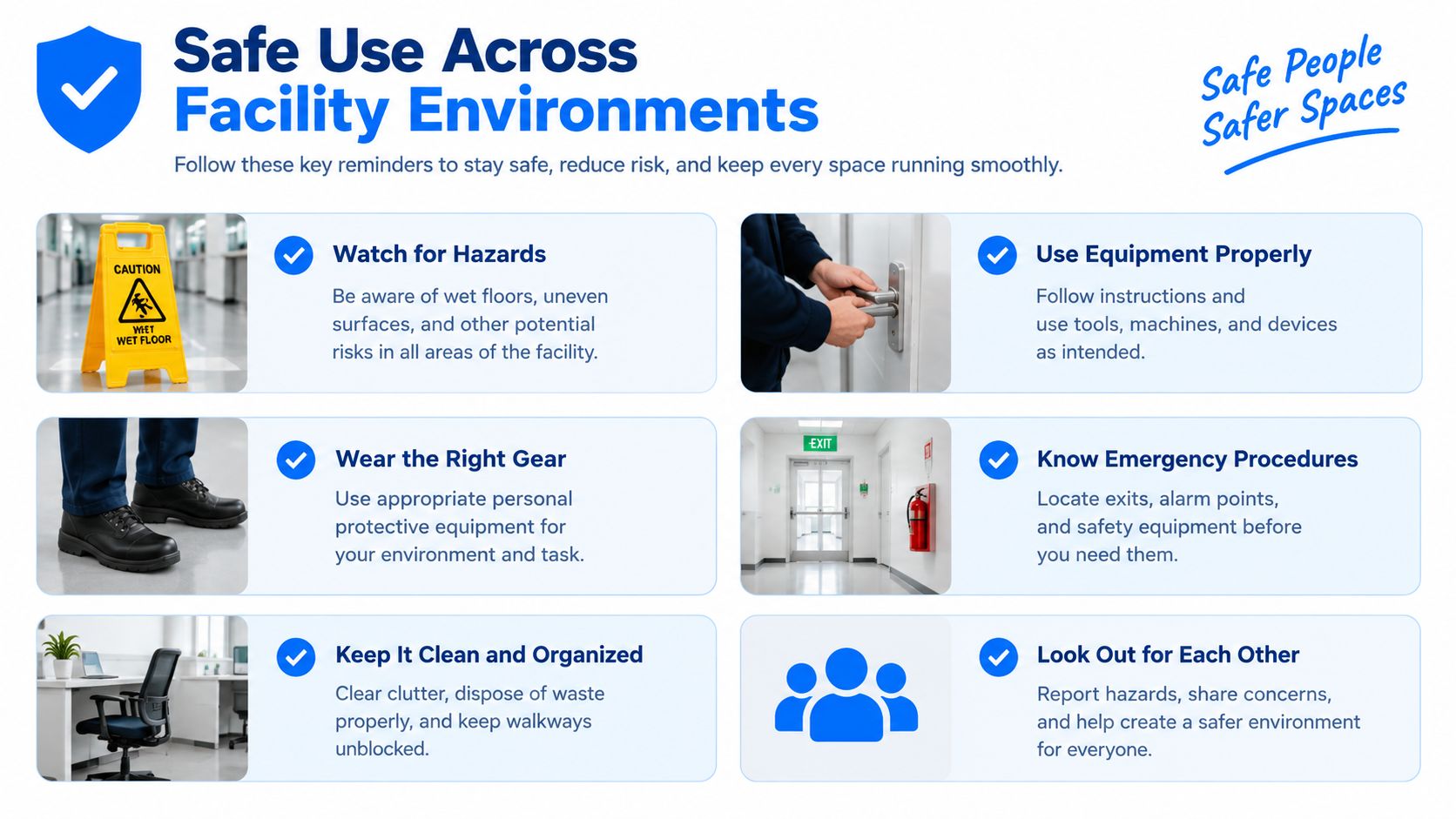
In warehouses and manufacturing spaces, schedule glass work around traffic and airborne dust. Block or control the area when an operator needs to reach high windows, and don't let foam or wet residue reach walking paths. In healthcare and retail, odor, touch frequency, and presentation standards may outweigh maximum degreasing strength, so an ammonia-free option can be worth evaluating.
For vehicle fleets, check aftermarket tint, windshield treatments, cab plastics, and instrument displays before issuing one cleaner to every unit. In any environment, workers should follow the product SDS and site safety procedures, avoid mixing cleaners, and report damage or unusual residue instead of compensating with stronger application.
A broader range of cleaning and janitorial supplies can help teams keep compatible cloths, wipes, gloves, and related supplies under the same operating standard.
How to Buy Foaming Glass Cleaner for Your Facility
Purchase the product against the work order, not the marketing claim. A multi-site operation needs a cleaner that performs consistently across assigned surfaces and remains manageable for the people who dispense, use, store, and reorder it.
Start with a short qualification checklist:
- Define the surfaces: Separate bare architectural glass from tinted automotive glass, laminated panes, coated displays, mirrors, and glass near plastics or painted trim.
- Confirm the formula: Identify ammonia, alcohol, silicone, abrasives, solvent types, pH, and VOC information through the SDS and technical data.
- Test the process: Run the candidate on representative soil, including fingerprints, oily haze, and ordinary dust. Test in the actual lighting and temperature conditions where complaints occur.
- Set the application standard: Specify light coverage, approved cloths, dwell expectations, final-buff technique, and prohibited surfaces.
- Compare total use: Consider container price, chemical consumption, rework, cloth usage, storage, shipping, and the labor required to correct streaks or overspray.
- Consolidate carefully: Fewer SKUs can simplify training and replenishment, but one formula shouldn't be forced onto incompatible substrates.
- Plan volume purchasing: Ask about case quantities, contract pricing, delivery cadence, and whether the supplier can support multiple locations without creating inconsistent substitutes.
The janitorial supplies buying guide can support that evaluation by helping procurement teams organize chemical, wiping, and facility-supply requirements together.
A practical trial should include a facility manager, a frontline cleaner, and someone from procurement. The manager sees appearance and safety, the cleaner sees handling and rework, and procurement sees the cost and replenishment consequences. Approve the product only when all three perspectives agree that it holds up in the actual operating environment.
Material Handling USA supplies cleaning chemicals, janitorial products, wiping materials, safety equipment, and other facility essentials, with volume pricing and product support for business buyers. Visit Material Handling USA to compare options, consolidate replenishment, and speak with a product specialist about a foaming glass cleaner program that fits your sites.