Insulated Foam Shipper Sizes: A Practical Buyer's Guide
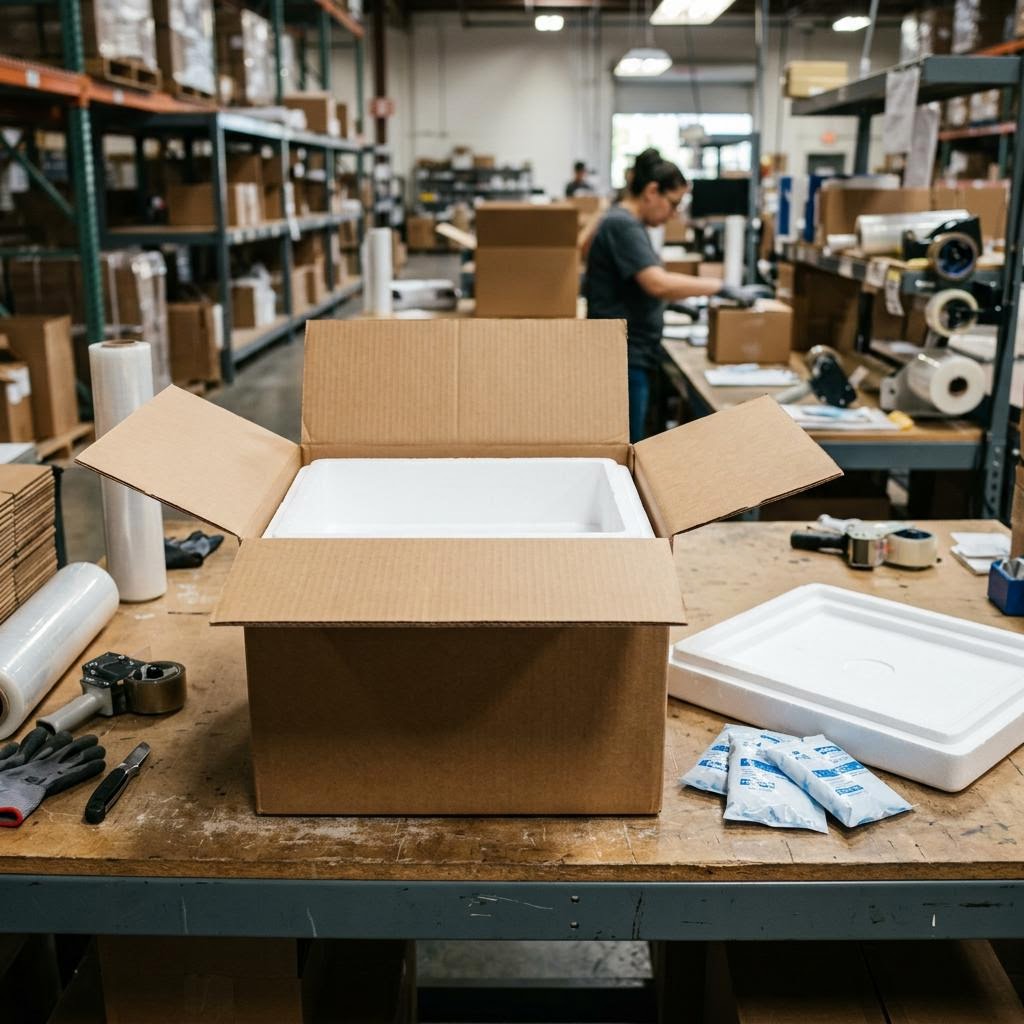
You have a temperature-sensitive shipment ready to go, but the box choice still isn't clear. The product fits one carton, the refrigerant fits another, and the carrier will charge based on the outside dimensions. Choose the wrong insulated foam shipper sizes, and you may waste refrigerant, pay for unused space, or receive a warm product at delivery.
The practical way to buy is to separate the decision into three parts: inside cavity, foam wall thickness, and refrigerant load. This guide walks you through each one, from small parcel shippers to pallet-scale systems, with direct recommendations for food, meal kits, pharmacy, lab, cannabis, and specimen shipments.
Table of Contents
- Why the Right Insulated Foam Shipper Sizes Save Your Cold Chain
- How Insulated Foam Shippers Are Actually Sized
- Common Insulated Foam Shipper Sizes From Small Parcel to Pallet
- Wall Thickness and Transit Time Matched the Right Way
- Pairing Cold Packs and Dry Ice With Your Shipper Size
- Insulated Box Liners for Longer or Odd Shaped Shipments
- How to Choose the Right Insulated Foam Shipper in 5 Steps
- Shop in Stock
- Frequently Asked Questions About Insulated Foam Shipper Sizes
- What size foam shipper fits a meal kit?
- Is a 1.5-inch wall enough for 48-hour ground shipping?
- How much dry ice goes in a 12 x 9 x 9 inch shipper?
- Can foam shippers protect ambient products?
- What is the difference between EPS and PUR foam?
- How do you ship a liquid sample that must stay under 8 degrees C?
- Why did a rated shipper arrive warm?
Why the Right Insulated Foam Shipper Sizes Save Your Cold Chain
The smallest box that safely holds the product is usually the best starting point. A loose cavity leaves more air for the refrigerant to cool and gives the payload more room to shift. A cavity that is too tight can crush the product or leave no space for gel packs, dry ice, or an inner bag.
You need to make three decisions before ordering:
- Choose the inside cavity. It must hold the product, refrigerant, and any required secondary packaging.
- Choose the wall thickness. This controls how long the shipper resists outside heat.
- Choose the refrigerant load. The amount must match the product temperature, cavity, wall thickness, and total transit window.
Practical rule: Don't choose a foam shipper by its outside carton or trade name alone. Confirm the usable inside dimensions first.
A small lab parcel, seafood pack, pharmacy order, and chocolate shipment may look completely different, but the sizing logic stays the same. Measure the product, allow room for the cooling medium, then match the insulation to the full time in transit. Include pickup delays, sortation, weekends, and delivery windows. Your product doesn't care whether the delay happened on a truck or at a hub.
The wrong size creates two common problems. You either add excess refrigerant to fill thermal gaps, or you under-pack the shipment and let the payload drift out of range. Right-sizing protects the product while controlling package weight and dimensional space.
How Insulated Foam Shippers Are Actually Sized
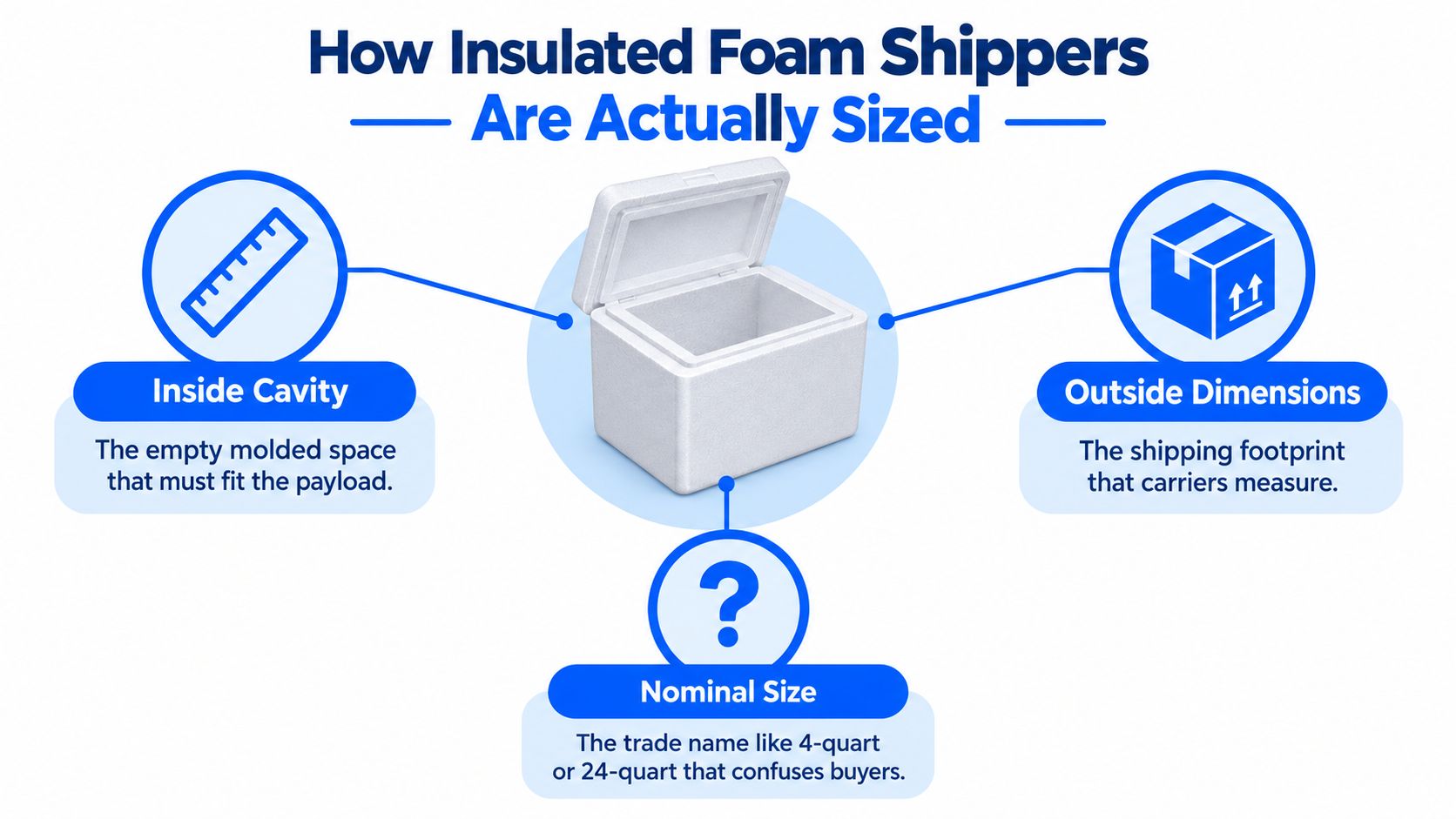
An insulated shipper has three measurements buyers often confuse.
The inside cavity is the usable molded space. It must fit the product, cold packs or dry ice, and any pouch, tray, absorbent material, or secondary container.
The foam wall thickness is the insulation layer around the cavity. It affects thermal hold time and also increases the outside carton size. A thicker wall can protect a longer lane, but it can also reduce the number of cartons you fit on a pallet.
The outside carton is the shipping envelope. Carriers use it for dimensional calculations, while the product and refrigerant fit inside the cavity. A product may fit inside a compact cavity but still require a much larger outer carton once foam and corrugate are added.
EPS and PUR are the main foam choices buyers encounter. EPS shippers are widely available in parcel formats. PUR systems are also available across a broad size range. One industry listing describes PUR insulated shippers from 2.6 liters to 206 liters (VWR insulated shipper specifications).
Treat nominal labels such as quart or liter capacity as a starting point only. The product specification should control the purchase. Ask for inside length, width, and height, wall thickness, outer dimensions, and the validated hold-time profile.
Common Insulated Foam Shipper Sizes From Small Parcel to Pallet
A vial shipment and a palletized food order need different cavities, foam walls, and refrigerant loads. Start with the inside cavity, then confirm wall thickness, outer carton space, refrigerant weight, and the transit window before ordering.
Stock formats range from small specimen parcels to bulk cold-chain transport. One EPS supplier lists inside dimensions as small as 6 x 4.5 x 3 inches and kits up to 12 x 10 x 9 inches (VWR EPS foam shipping kits).
Use this table to screen options. The manufacturer's specification and packout test make the final decision.
| Inside cavity | Typical payload | Common use |
|---|---|---|
| 6 x 4.5 x 3 inches | Small vial, sample, or compact chilled item | Lab mailers and pharmacy parcels |
| 12 x 10 x 9 inches | Multiple small products with refrigerant | Food, pharmacy, and general cold-chain parcels |
| 12 x 10 x 15 inches | Taller product or layered packout | Mixed product shipments and larger lab orders |
| 17 x 10 x 8.25 inches | Broad or shallow payload | Food and healthcare shipments |
| Up to 24 x 18 x 17.875 inches overall | Larger insulated parcel envelope | High-volume or oversized parcel applications |
Match refrigerant weight to the cavity, wall thickness, product load, and required transit window. Leave enough room for the refrigerant without crushing the product or forcing the lid open. Compare the resulting outer carton with your current cartons using this corrugated box sizes chart, since carrier space depends on outside dimensions.
Pallet systems use much larger formats. Documented EPS pallet shippers include footprints of 800 x 600 mm and 1,400 x 1,000 mm, with payload volumes from roughly 120 liters to 1,200 liters (EPS pallet shipper dimensions). These serve pallet logistics rather than ordinary parcel fulfillment. Confirm the final packout with a temperature logger.
Wall Thickness and Transit Time Matched the Right Way
A shipment can leave Salt Lake City on schedule and still face a warm dock, weekend hold, pickup delay, or missed delivery. Set the shipper using two numbers: the inside cavity and the EPS wall thickness. The cavity must fit the product and refrigerant without wasted space. The wall must match the full transit window.
For EPS, published wall-thickness and hold-time guidance places 0.75 to 1.125 inches with shipments of 24 hours or less, 1.5-inch walls with 24 to 48 hours, and 1.75 to 2.25 inches with 48 hours or more.
| Wall thickness and material | Total transit window | Best fit |
|---|---|---|
| 0.75 to 1.125 inches of EPS | 24 hours or less | Short parcel lanes and chilled products |
| 1.5 inches of EPS | 24 to 48 hours | Standard two-day cold-chain planning |
| 1.75 to 2.25 inches of EPS | 48 hours or more | Longer lanes and more demanding shipments |
| 1 to 1.5 inches of EPS | 1 to 5 days, depending on the system | Use only with the product specification and packout test |
A separate cold-pack and dry-ice packaging guide lists 0.75 to 1 inch EPS walls for 1 to 2 days, 1.25 to 1.5 inches for 2 to 5 days, and 2 to 3 inches for extended transit. It also notes that 2 to 3 inches of EPS can perform like rigid high-density polyurethane. Use the product specification when guidance differs.
Pair the wall-thickness choice with the outer carton rating. The 32-ECT vs 44-ECT box guide explains how carton strength supports the complete shipping system.
Choose the smallest cavity that holds the product and refrigerant, then set refrigerant weight through the actual packout rather than by carton size alone. Finish with a temperature-logger test using the product, packout, carrier, route, and planned transit window.
Pairing Cold Packs and Dry Ice With Your Shipper Size
There is no safe universal rule that assigns a refrigerant weight to a box dimension. Refrigerant demand changes with the product's starting temperature, target range, cavity volume, wall thickness, outside conditions, and total transit time.
Start with the manufacturer's packout instructions. If they don't specify a load, build a test packout and measure the sealed package with a temperature logger. Test the actual combination of foam cavity, refrigerant type, product mass, and secondary packaging. Don't estimate from the outside carton.
Gel packs are generally the better choice for chilled products that must stay above freezing. Dry ice is intended for frozen applications and needs different handling. For a dry-ice shipment, confirm the required UN1845 marking, net dry-ice weight, ventilation, and carrier acceptance rules before shipping. Use the DOT and UN labels category to source the applicable shipping labels and related supplies.
Packing advice: Refrigerant should surround the payload according to the packout design. A heavy block placed only on top can leave warm zones at the sides or bottom.
Your test should answer four questions:
- Does the payload stay within its required temperature range for the full planned window?
- Does the refrigerant remain effective when the package reaches the delivery point?
- Does the sealed shipper stay within the carrier's weight and size limits?
- Does the product stay centered and protected during handling?
If the logger shows temperature drift, first check cavity size and pack placement. Then review wall thickness and refrigerant weight. Adding more refrigerant to an oversized box is rarely the cleanest fix.
Insulated Box Liners for Longer or Odd Shaped Shipments
A liner makes sense when the product has an irregular shape, the carton is larger than standard foam formats, or you need to store flat insulation before packout. It also helps when one carton must handle several product shapes.
A 1-inch liner is commonly used for 24 to 48 hour shipments, while a 1.5-inch liner is commonly used for 48 to 72 hours. Shipments longer than 72 hours, especially frozen products, generally need a more heavy-duty style such as a PopupLiner or similar system (insulated box liner guide).
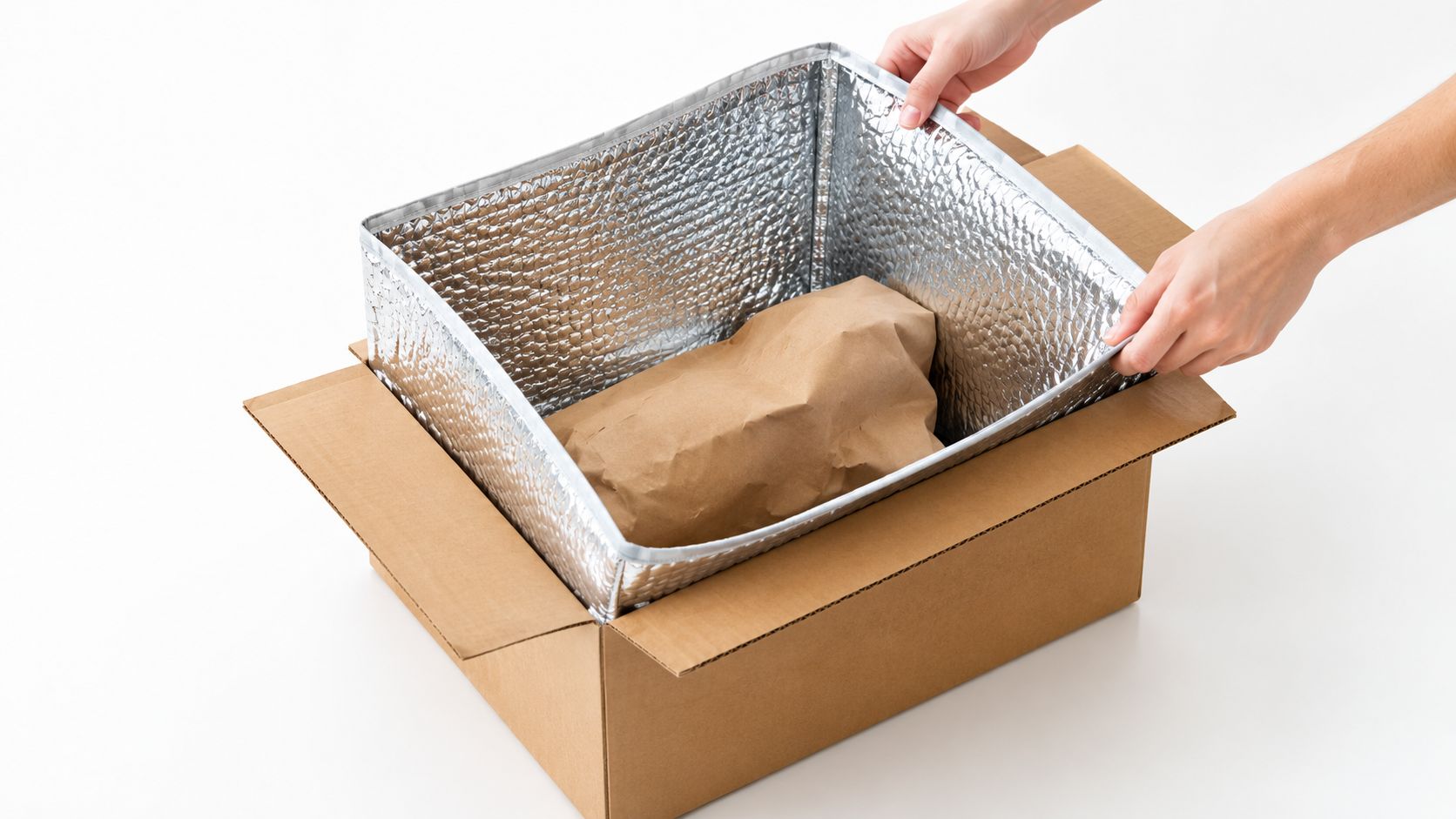
Choose a full foam shipper when you want a rigid, repeatable cavity. Choose a liner when the outer corrugated carton needs more flexibility. A liner can also support a nonstandard carton without requiring a molded foam cavity, but you still need a tested refrigerant arrangement.
For related materials, browse protective packaging supplies. Keep the product away from direct contact with frozen refrigerant unless the packout instructions specifically allow it.
How to Choose the Right Insulated Foam Shipper in 5 Steps
-
Measure the product. Record the longest, widest, and tallest dimensions. Include trays, pouches, bottles, absorbent material, and any secondary container.
-
Add refrigerant space. Choose a cavity that leaves room for the required gel packs or dry ice. Don't force the payload into the smallest box if the packout leaves no room for cooling material.
-
Match the wall to the lane. Use the published wall-thickness guidance as your starting point. Thin EPS walls suit shorter windows, while thicker walls support longer windows when the full packout is validated.
-
Select refrigerant by tested packout. Don't calculate from the outside carton. Confirm the refrigerant type and weight with the product specification, then weigh the sealed shipper to check carrier limits.
-
Run a logger test. Ship a representative test package through the actual route. Review the temperature data before you approve a recurring purchase.
For recurring orders, record the approved cavity, wall thickness, refrigerant type, refrigerant weight, product load, and transit window on the packout sheet. That gives your warehouse team a repeatable process and makes substitutions easier to review.
Shop in Stock
Start with shipping boxes, pads, and tubes when you need the outer carton, labels, and general shipping materials around the insulated insert. For healthcare and laboratory workflows, specimen transfer bags can provide the secondary containment needed for samples and related materials.
Order the insulated shipper or liner only after you confirm the inside cavity and wall thickness. If you're buying for food, meal kits, pharmacy, lab, or cannabis shipments, keep the approved packout with the product specification so your team doesn't substitute a similar-looking carton with a different usable cavity.
Frequently Asked Questions About Insulated Foam Shipper Sizes
What size foam shipper fits a meal kit?
Measure the tray, ingredients, inner packaging, and refrigerant together. A cavity in the 12 x 10 x 9 inch range is one documented stock format, but check the actual product dimensions before ordering (EPS shipper dimensions).
Is a 1.5-inch wall enough for 48-hour ground shipping?
A standard 1.5-inch EPS wall is described for 24 to 48 hours, but your product temperature and refrigerant packout still need validation (EPS wall guidance).
How much dry ice goes in a 12 x 9 x 9 inch shipper?
Don't assign a dry-ice weight from dimensions alone. Use the product specification or validate the exact cavity, product load, wall thickness, and route with a temperature logger.
Can foam shippers protect ambient products?
Yes, they can add cushioning and reduce temperature swings, but they may be unnecessary if the product only needs impact protection. Compare a foam insert, corrugated partition, and standard protective packaging before adding refrigerant.
What is the difference between EPS and PUR foam?
Both can be used in insulated shipping systems. Select based on the validated hold time, cavity, wall thickness, and packout rather than the foam name alone.
How do you ship a liquid sample that must stay under 8 degrees C?
Use the required primary and secondary containment, select a tested chilled packout, and confirm the logger stays below the required limit throughout the lane. A specimen transfer bag may support the handling process, but it doesn't replace thermal validation.
Why did a rated shipper arrive warm?
The cavity may have been too large, the refrigerant may have been misplaced or under-loaded, or the package may have spent longer in transit than planned. Review logger data, pack placement, wall thickness, and actual carrier timing together.
Material Handling USA helps business buyers source shipping boxes, protective packaging, specimen transfer bags, and related supplies for repeat cold-chain packouts. Visit Material Handling USA to shop the available categories, or call a product specialist at 1-800-326-4403, Mon to Fri 8am to 5pm MT, for pallet quantities, custom sizes, or a quote on project size orders.