Corrugated Box Sizes Chart: Complete Shipping Box Guide
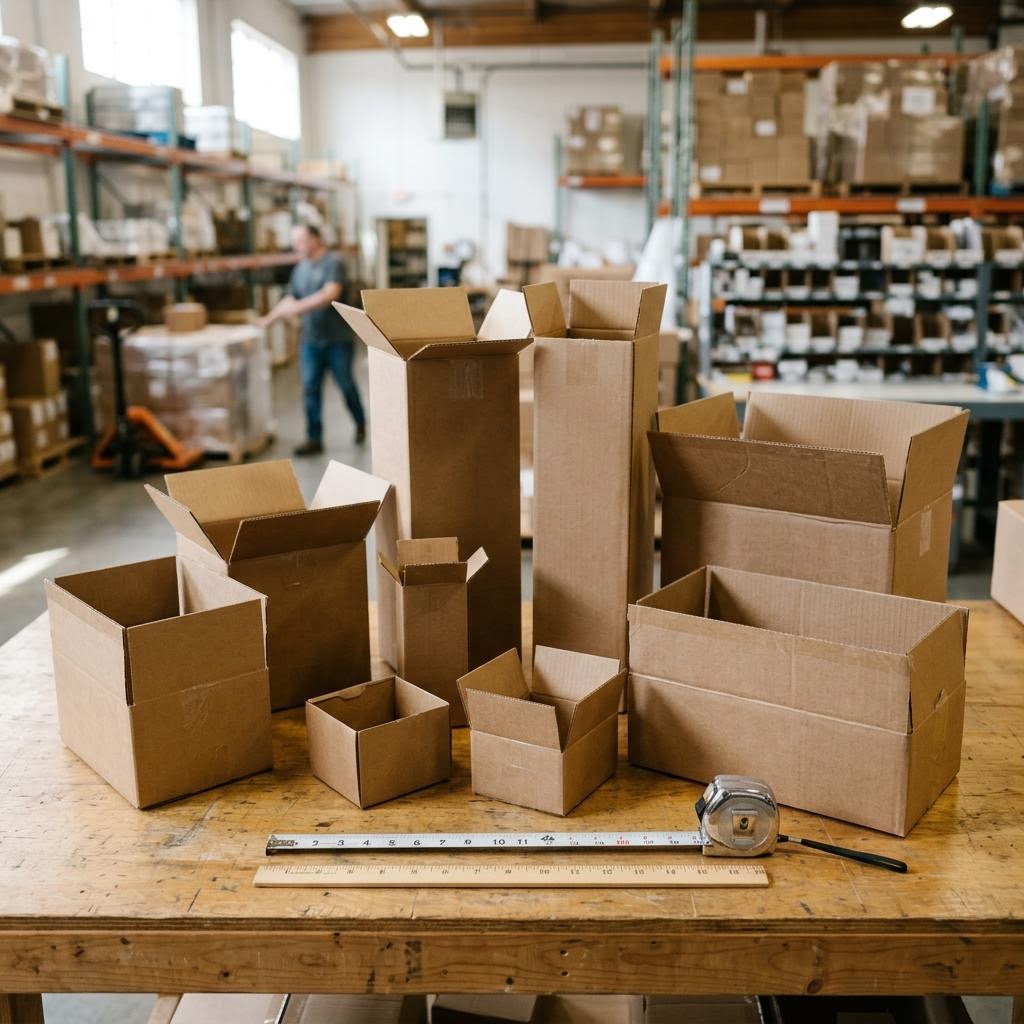
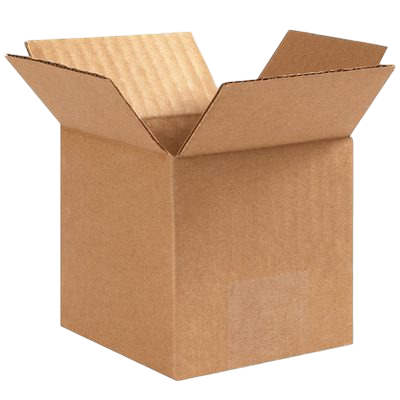
Corrugated boxes are listed by their inside dimensions, in L x W x D order with the opening on top. Add roughly 1/8 to 1/4 inch per side for board thickness when you check carrier size limits.
For current product options, box families and direct shopping links, visit our shipping boxes selection and shopping page.
You're likely looking at a box chart because the carton on your packing bench is either too tight, too large, or too weak for the job. A small mismatch can mean crushed corners, extra filler, slower packing, or a carrier charge you didn't expect. This corrugated box sizes chart gives you a practical starting point, then shows how to confirm the fit, board strength, and shipping limits before you order.
Table of Contents
- Why Box Size Matters for Shipping Cost and Product Protection
- Common Stock Corrugated Box Sizes Chart
- How to Read Inside Dimensions Correctly
- Single Wall vs Double Wall and ECT Ratings Explained
- How to Choose the Right Corrugated Box Size
- Carrier Size Limits for USPS UPS and FedEx
- Shop In Stock Corrugated Shipping Boxes
- Frequently Asked Questions About Corrugated Box Sizes
- Are corrugated box sizes inside or outside dimensions?
- How much wall thickness should I allow?
- Is single wall enough for general shipping?
- When should I choose double wall?
- Does the box size matter more than the ECT rating?
- Is a stock size always better than a custom size?
- How should I buy boxes for regular fulfillment?
- What information should I provide for a quote?
Why Box Size Matters for Shipping Cost and Product Protection
The right box does more than hold a product. It controls how much cushioning you need, how efficiently your team packs orders, and how much unused air travels through the shipping network. A carton that barely clears the product leaves no room for pads or protective wrap. A carton with too much empty space needs more void fill and may create a larger billable package.
Start with the product, not the box name. Measure the item, including handles, corners, lids, and other parts that extend beyond the main body. Then select an inside dimension that leaves enough room for the protection your product needs.
Practical rule: Use the smallest carton that fits the product and its cushioning without forcing the flaps, corners, or contents.
A size chart matters because corrugated boxes don't have one universal global footprint. Modern charts use common styles, including the FEFCO 0201 Regular Slotted Container, or RSC, which is described as the most common corrugated case design in global packaging practice. The style is standardized, but the size may be stock or custom, as explained in this overview of standard corrugated box sizes.
Size, board, and shipping method work together
The same outside footprint can perform very differently with different flute grades and wall construction. A, B, C, E, and F flute describe the wall profile and performance. They don't define the box's length, width, or depth.
Your decision has three parts:
- Fit: Does the product and its cushioning fit inside?
- Strength: Does the board match the packed weight and stacking conditions?
- Shipping: Does the finished outside carton fit the carrier and pallet plan?
A box chart gives you the first answer. The product specification and carrier check give you the other two. That combination works better than choosing a carton because its title sounds familiar.
Common Stock Corrugated Box Sizes Chart
The chart below uses inside dimensions in inches, listed as length by width by depth. These are common stock patterns, not a universal official list. A product page can specify a different board grade or capacity, so confirm the carton specification before placing a large replenishment order.
| Inside Size (L x W x D) | Max Weight Capacity | Typical Use Case |
|---|---|---|
| 4 x 4 x 4 | Check product spec | Small parts, samples, compact accessories |
| 6 x 6 x 6 | Check product spec | Small parcels, hardware, retail items |
| 8 x 8 x 8 | Check product spec | Compact e-commerce orders and mixed small items |
| 10 x 10 x 10 | Check product spec | Cube-shaped products and protective packing |
| 12 x 12 x 12 | Check product spec | General-purpose shipments and bundled products |
| 14 x 14 x 14 | Check product spec | Larger retail orders and light bulky items |
| 16 x 16 x 16 | Check product spec | Cushion-heavy products and larger mixed orders |
| 18 x 18 x 18 | Check product spec | Bulky products that need a cube format |
| 20 x 20 x 20 | Check product spec | Large, lightweight products |
| 24 x 24 x 24 | Check product spec | Freight-oriented or large-volume cartons |
| 12 x 10 x 4 | Check product spec | Flat products, books, parts, and accessories |
| 14 x 10 x 4 | Check product spec | Shallow e-commerce orders and compact components |
| 16 x 12 x 8 | Check product spec | Medium mixed orders and boxed products |
| 18 x 12 x 12 | Check product spec | Rectangular products and multi-item fulfillment |
| 20 x 20 x 12 | Check product spec | Wide, shallow products and light equipment |
| 36 x 6 x 6 | Check product spec | Long parts, trim, tubes, and narrow products |
The most useful comparison isn't always cube versus rectangle. It's usable volume versus handling risk. A 20 x 20 x 12 carton can suit a wide, shallow item, while a 36 x 6 x 6 carton protects a long narrow part without surrounding it with unnecessary empty space.
Government procurement records also show stock cartons ordered in inside dimensions such as 10 x 8 x 6, 12 x 12 x 12, 24 x 16 x 12, and 45 x 22 x 22 inches. Those examples support keeping cube, rectangular, and long-span formats available for different product lines. You can use this box size guide to compare sizing choices before you build a replenishment list.
How to Read Inside Dimensions Correctly
Box dimensions describe the usable space, not the outside of the assembled carton. In the standard format, length is the longest inside side, width is the shorter inside side, and depth is the inside height when the box is closed with the opening on top. This convention is also described in this guide to shipping box dimensions.
Suppose your product measures 15 inches long, 11 inches wide, and 7 inches high. A 16 x 12 x 8 box may look close, but it doesn't automatically leave enough room for padding on every side. A fit-sensitive product can also contact the flaps or corners even when the straight measurements appear acceptable.
Check the outside size before shipping
The board adds to every outside dimension. For carrier checks, add roughly 1/8 to 1/4 inch per side for wall thickness. Use the actual product specification when the package is close to a carrier threshold, because wall construction can change the finished outside size.
Inside dimensions help you answer, “Will the product fit?” Outside dimensions help you answer, “Will the packed carton fit the carrier, pallet, shelf, or trailer plan?” You need both answers before standardizing a carton.
Cushioning creates another allowance. Practical packaging guidance commonly uses about 1 to 2 inches of extra space per side for cushioned products, depending on the material and fragility. Don't add that clearance automatically to every item. A rigid, durable part may need less, while glass, electronics, or a product with exposed corners may need more protection.
Write the final target as an inside dimension. Then check the product specification for the outside dimension and board grade. That simple habit prevents the common mistake of ordering by the carton title without confirming the usable space.
Single Wall vs Double Wall and ECT Ratings Explained
Wall construction answers how much board the carton has. ECT, or edge crush test, measures compression resistance. A larger box isn't automatically stronger, and a smaller box isn't automatically weak. Match the ECT rating to the packed load, stacking conditions, and handling environment.
Single-wall cartons are lighter and suit many general shipping applications. Double-wall cartons add another layer of fluted material and are useful when the load is heavier or cartons will be stacked. Common ECT ratings include 32, 44, 48, 51, and 71, so check the product specification instead of judging strength by appearance alone. The relationship between wall construction and ECT is summarized in this corrugated box construction guide.
| Wall Type | ECT Rating | Weight Capacity |
|---|---|---|
| Single wall | 32 ECT | Up to about 65 lb |
| Single wall | 44 ECT | Up to about 95 lb |
| Double wall | 48 ECT | About 80 to 120 lb |
The weight ranges above are practical selection guidance from the product brief. They aren't a substitute for the manufacturer's specification. Board grade, carton size, stacking pattern, moisture, pallet conditions, and how the load is distributed can all affect the result.
Choose for the real load
A 32 ECT single-wall carton can be a sensible choice for a lighter general shipment. Moving to 44 ECT gives you a higher specified range when the contents or stacking plan demands more compression resistance. A 48 ECT double-wall carton belongs on the shortlist for heavier loads, taller stacks, or products that need a stiffer shell.
Don't use double wall as a cure for poor fit. An oversized double-wall carton may still shift, need excessive filler, and occupy more shipping space. Start with the correct inside dimensions, then choose the lowest wall construction that meets the packed weight and handling requirements.
Material Handling USA's corrugated boxes guide is useful when you need to compare construction details before selecting a carton for regular fulfillment.
How to Choose the Right Corrugated Box Size
Use the same process for every product line. It makes box selection repeatable and gives purchasing a clear reason for each stock size.
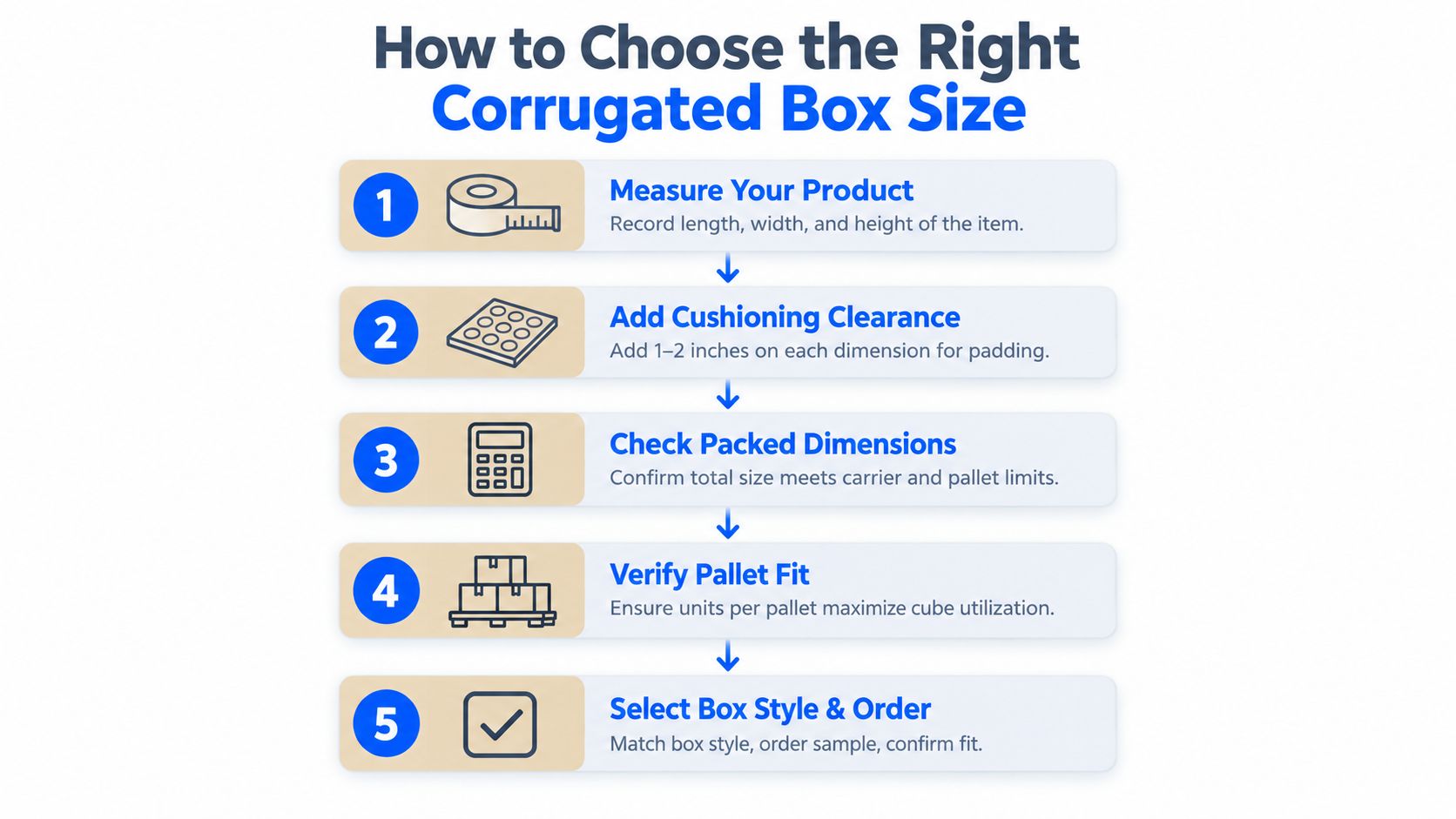
- Measure the product. Record the longest, shortest, and tallest points, including protrusions. Treat those measurements as the starting inside dimensions.
- Add cushioning clearance. Leave room for the pads, wrap, corner protection, or other material you use. Fragile products need more working space than durable parts.
- Check the packed weight. Weigh the product, cushioning, and carton together when you set the shipping standard. Match the result to the ECT range and manufacturer specification.
- Verify the finished outside size. Add roughly 1/8 to 1/4 inch per side for wall thickness when checking carrier limits, pallet fit, shelving, or automated equipment.
- Select the style and order. Use a regular slotted container when that construction fits the job. Order by the bundle for normal replenishment, use volume pricing for larger needs, and request a review for pallet quantities or custom sizes.
Run one packed sample through the process before you convert a size into a standard. Check that the product stays centered, the flaps close without force, and the carton doesn't collapse when handled as your team normally handles it.
For mixed-SKU fulfillment, keep a small group of complementary sizes rather than forcing every order into one large carton. That approach usually gives packers a better fit and reduces the need to improvise with extra filler.
Carrier Size Limits for USPS UPS and FedEx
Carrier rules change, and the carrier measures the finished package, not just the inside dimensions printed on the carton. Check the current service guide before you commit a stock box to a recurring shipping program. The outside size also includes board thickness, tape, and any part of the package that extends beyond the carton.
USPS
USPS measures length as the longest side and girth as the distance around the thickest part. For most domestic parcels, length plus girth can't exceed 108 inches, while USPS Ground Advantage mailpieces may go up to 130 inches combined, according to the USPS parcel size and weight standards.
A 36 x 6 x 6 inside carton is a long-box example that deserves a finished-size check because the longest side and girth both matter. Cube and rectangular cartons through the common stock range are easier to evaluate, but you still need the outside dimensions when the package is near a limit.
UPS
UPS service tiers can apply different size, weight, and additional-handling rules. Use the finished outside dimensions, packed weight, and destination service when you verify a carton. A 12 x 10 x 4 or 16 x 12 x 8 carton may be a practical parcel starting point, while larger cubes need a closer check for dimensional pricing and handling requirements.
FedEx
FedEx also uses service-specific package rules, and dimensional pricing can make an oversized carton more expensive even when the actual product is light. Check the current FedEx specification for the service you plan to use. For larger products, compare a 20 x 20 x 12 rectangle with a more compact carton before you standardize the packing method.
The safest carrier workflow is simple. Measure the assembled carton, weigh the packed shipment, and verify both against the current service rules.
Shop In Stock Corrugated Shipping Boxes
Once you know the inside size, packed weight, and required ECT rating, shop the corrugated shipping boxes category by the closest stock dimension. Read the product specification before ordering, especially when the product needs cushioning or the carton will travel through a parcel carrier.
Order by the bundle for routine replenishment. For larger programs, ask about volume pricing and price breaks by the case or pallet. A purchasing team should also compare storage space, bundle quantities, and the number of sizes needed at each packing station.
Boxes are only one part of a protective pack. Use the shipping box pads and tubes category when your product needs flat protection, edge support, or a long package format. Pads can separate items inside a shared carton, while tubes may suit narrow products that don't belong in a wide cube.
For pallet quantities, custom sizes, or a project-size order, call a product specialist at 1-800-326-4403, Monday through Friday, 8am to 5pm MT. Have your product dimensions, packed weight, monthly usage, and carrier plan ready.
Frequently Asked Questions About Corrugated Box Sizes
Are corrugated box sizes inside or outside dimensions?
They're normally inside dimensions, listed as length by width by depth with the opening on top. Use the inside size to check product fit, then review the product specification for the assembled outside size.
How much wall thickness should I allow?
Add roughly 1/8 to 1/4 inch per side when checking carrier size limits. Use the actual outside specification when the carton is close to a threshold or must fit a tight pallet, shelf, or conveyor space.
Is single wall enough for general shipping?
Often, yes, when the packed load and stacking plan fit the selected ECT rating. Single wall is lighter and suits many routine shipments. Confirm the manufacturer's capacity rather than choosing from the wall label alone.
When should I choose double wall?
Choose double wall when the packed load, stacking height, or handling conditions require more compression strength. It adds protection, but it doesn't fix a carton that is poorly sized or filled with too much empty space.
Does the box size matter more than the ECT rating?
Neither works alone. Size controls fit, cushioning, and shipping volume. ECT and wall construction control compression resistance. A good carton selection matches both to the product and the shipping method.
Is a stock size always better than a custom size?
No. Stock boxes work well when a common dimension gives you a clean fit and acceptable carrier size. Consider a custom size when repeated shipments leave substantial empty space, require excessive filler, or miss a pallet pattern.
How should I buy boxes for regular fulfillment?
Start with a small set of sizes that covers your main products, then monitor fit and packing consistency. Order by the bundle for routine use and ask about volume pricing or pallet quantities when demand is predictable.
What information should I provide for a quote?
Provide the product dimensions, packed weight, desired inside size, cushioning type, ECT requirement, estimated order quantity, and carrier. That gives the specialist enough information to discuss stock cartons, custom sizes, or a project-size order.
Choose the closest inside dimension from the chart, confirm the ECT rating and finished outside size, then shop Material Handling USA for corrugated cartons and related protective packaging. Call 1-800-326-4403, Monday through Friday, 8am to 5pm MT, for pallet quantities, custom sizes, or a quote on project-size orders.