Side Loading Boxes for Framed Art: The Complete Guide
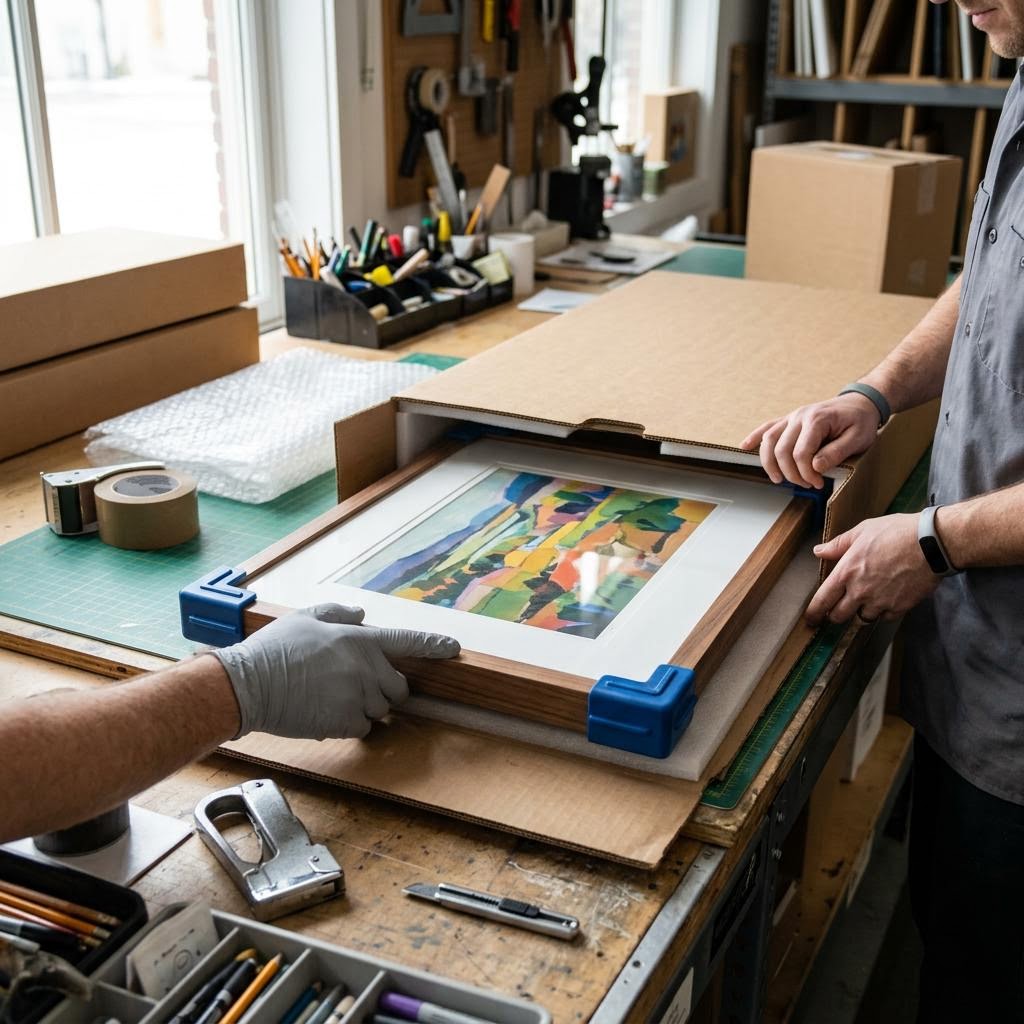
A framed mirror arrives with a chipped corner, or a painting reaches the customer with cracked glass. The problem often starts before transit, when a worker drops a flat item vertically into a regular carton and lets its weight land on the lower frame. For galleries, framers, movers, and ecommerce sellers, the right carton can make packing safer and easier to repeat.
Side loading boxes for framed art let you load the piece flat through an end opening. The frame slides into the carton instead of being dropped from the top, which helps limit bending and edge damage during packing. The box works with foam, paper, bubble roll, and corner protection to create a controlled fit around the artwork.
Table of Contents
- Why Side Loading Changes Everything for Framed Art
- Telescoping vs Slotted Side Loading Boxes
- How to Measure Your Artwork Correctly
- Padding and Sealing Best Practices
- Common Side Loading Box Sizes
- Essential Packaging Materials to Stock
- Frequently Asked Questions
- Are side loading boxes better than regular top-loading boxes?
- Should I measure the picture or the frame?
- How much space should I leave for padding?
- Can I ship more than one framed work in one carton?
- Which is better, telescoping or slotted?
- Can tape touch the frame?
- What should I do if the carton has empty space?
- Ready to Ship Safely
Why Side Loading Changes Everything for Framed Art
A regular top-loading box forces you to lower a framed piece into a narrow opening. If the frame catches the carton edge, the worker may tilt or twist it. If the piece lands hard, the lower corners take the force. A frame can crack or chip, and glass can break when the package receives another impact later.
Side loading changes the direction of the job. The worker opens the end of the carton, supports the framed piece across its broad surface, and slides it in horizontally. The frame stays supported by the carton walls instead of relying only on padding at the bottom.
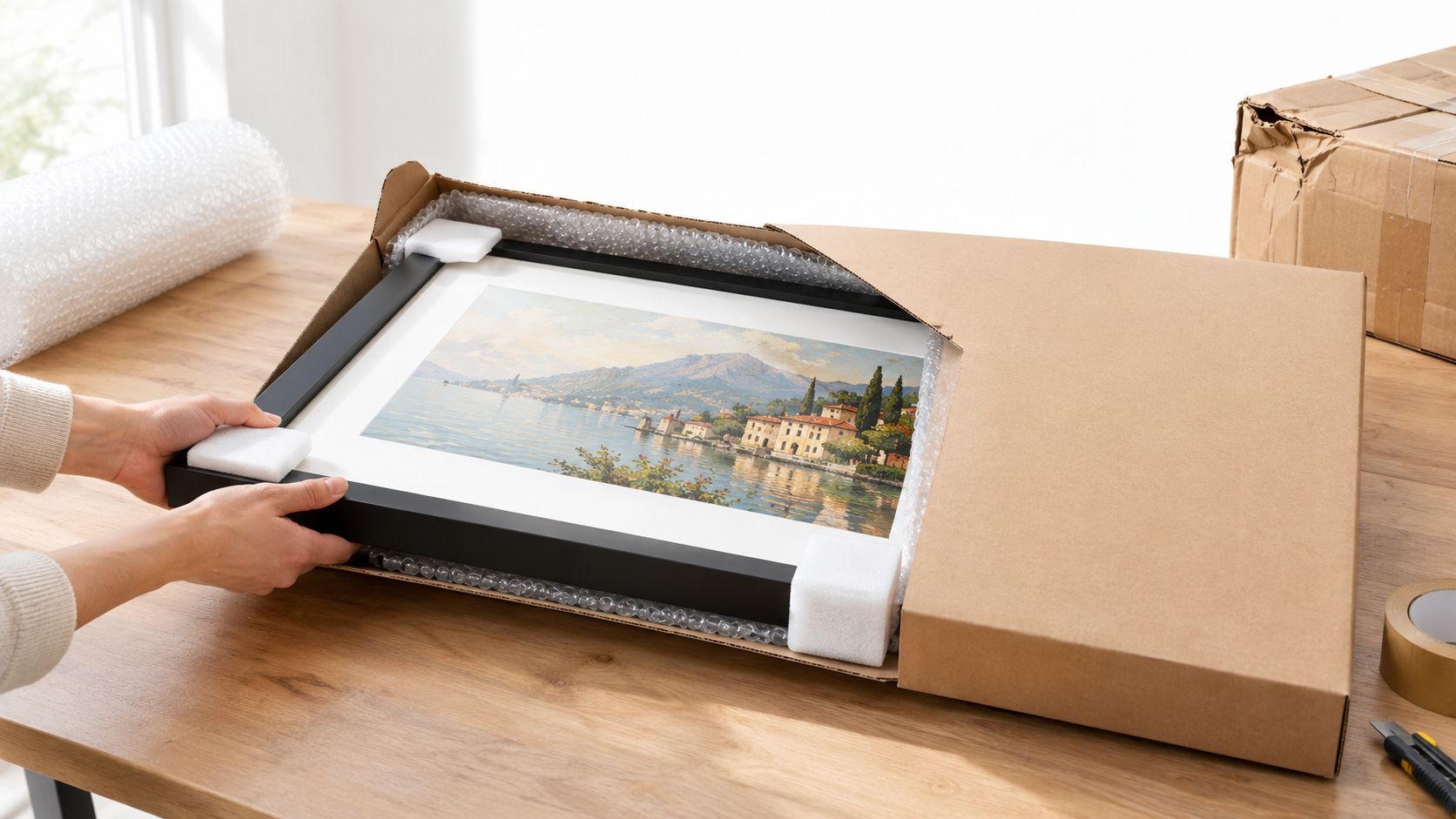
This format is designed for flat, fragile products such as mirrors, picture frames, artwork, and glass. Its defining feature is end-opening access, so the item slides in horizontally rather than dropping in from the top. That design reduces bending and edge damage during packing, as described in this overview of side loading boxes for flat fragile items.
Practical rule: If the item is flat, fragile, and awkward to lower into a carton, start your box search with an end-opening format.
The benefit also shows up in daily warehouse work. A packer can keep the frame level, add protection around the edges, and close the carton without forcing the artwork through a small top opening. That makes the process easier to train and more consistent across different shifts.
Side loading doesn't remove the need for careful packing. It gives the frame a better starting position. You still need the right inside dimensions, corner protectors, cushioning, and a secure seal.
Telescoping vs Slotted Side Loading Boxes
The main choice is between telescoping and slotted, also called panelized, construction. Telescoping picture and mirror cartons use two open-ended sleeves that slide into each other. This lets you adjust the length for different flat sizes instead of forcing every item into one fixed carton, according to this explanation of telescoping picture frame boxes.
Slotted cartons use a formed panel design with open ends. They can suit a repeatable packing line where the team handles similar artwork sizes and wants a fast, familiar setup. Always confirm the manufacturer's dimensions, board grade, and assembly details before ordering.
| Feature | Telescoping Boxes | Slotted or Panelized Boxes |
|---|---|---|
| Fit | Adjusts to different lengths by sliding two sleeves together | Uses a defined carton size |
| Best operational match | Mixed artwork sizes and fewer box SKUs | Repeated sizes and a steady packing routine |
| Corner support | Lets you set the fit around padded edges | Provides fixed walls around the framed piece |
| Storage approach | Nested pieces can simplify size planning | Stock each needed size for the workflow |
| Packing speed | Requires adjustment and secure closure | Can be quick when the size matches the item |
Choose telescoping construction when your inventory includes many frame dimensions. A single adjustable format can reduce the need to keep every possible length on the shelf, though you still need to check the usable range and depth in the product specification.
Choose slotted construction when your team repeatedly packs similar panels, mirrors, or framed prints. A close fit can reduce extra void fill, but a carton that's too small can press on the frame. A carton that's too large leaves room for movement and may require more cushioning.
How to Measure Your Artwork Correctly
A framed print can look small on the wall and still need a much larger carton once you add protection. Measure the finished framed piece, not just the visible image, because the outside frame sets the carton length and width, while the depth decides whether cushioning will fit without pressure. National Gallery Singapore's framed-painting packing guidance also advises measuring the painting with its frame attached.
Use this process before you choose a carton:
- Measure the outside height of the frame.
- Measure the outside width from edge to edge.
- Measure the total thickness, including the frame and any raised hardware that will remain attached.
- Add 2 inches per side for foam or bubble cushioning, then select the next telescoping size up.
- Check the product specification for the carton's usable inner length, width, depth, and closure style.
For example, a frame measuring 22 in × 18 in × 2 in with 2 in of cushioning per side needs at least 26 in × 22 in × 6 in of interior space. A 28 in × 5 in × 24 in carton would be too shallow, so you would need a deeper profile.
Use the exact product listing before ordering. If your padded measurements land between sizes, choose a telescoping carton or the next size up rather than forcing the piece into a tight box.
Thickness needs the same attention. A narrow profile may suit one padded frame, while several framed works require you to stay within the carton's load and depth limits. A commercial 30 in × 5 in × 24 in profile is one common example, but confirm the actual inside dimensions and board specification for the product you select.
Padding and Sealing Best Practices
Start by protecting the face of the artwork. Place glassine or kraft paper over the glass or finished surface before adding outer cushioning. This barrier helps keep the bubble material away from the object.
Add foam around the corners and edges, then wrap the piece with bubble roll. Museum collection guidance recommends placing the bubbles facing outward so they don't stick to the object. It also says to apply tape only to packing materials, never directly to the art, and to fill voids so the frame can't slide, rotate, or hit the carton wall. You can find flat reinforcement materials in the corrugated pads and sheets category.
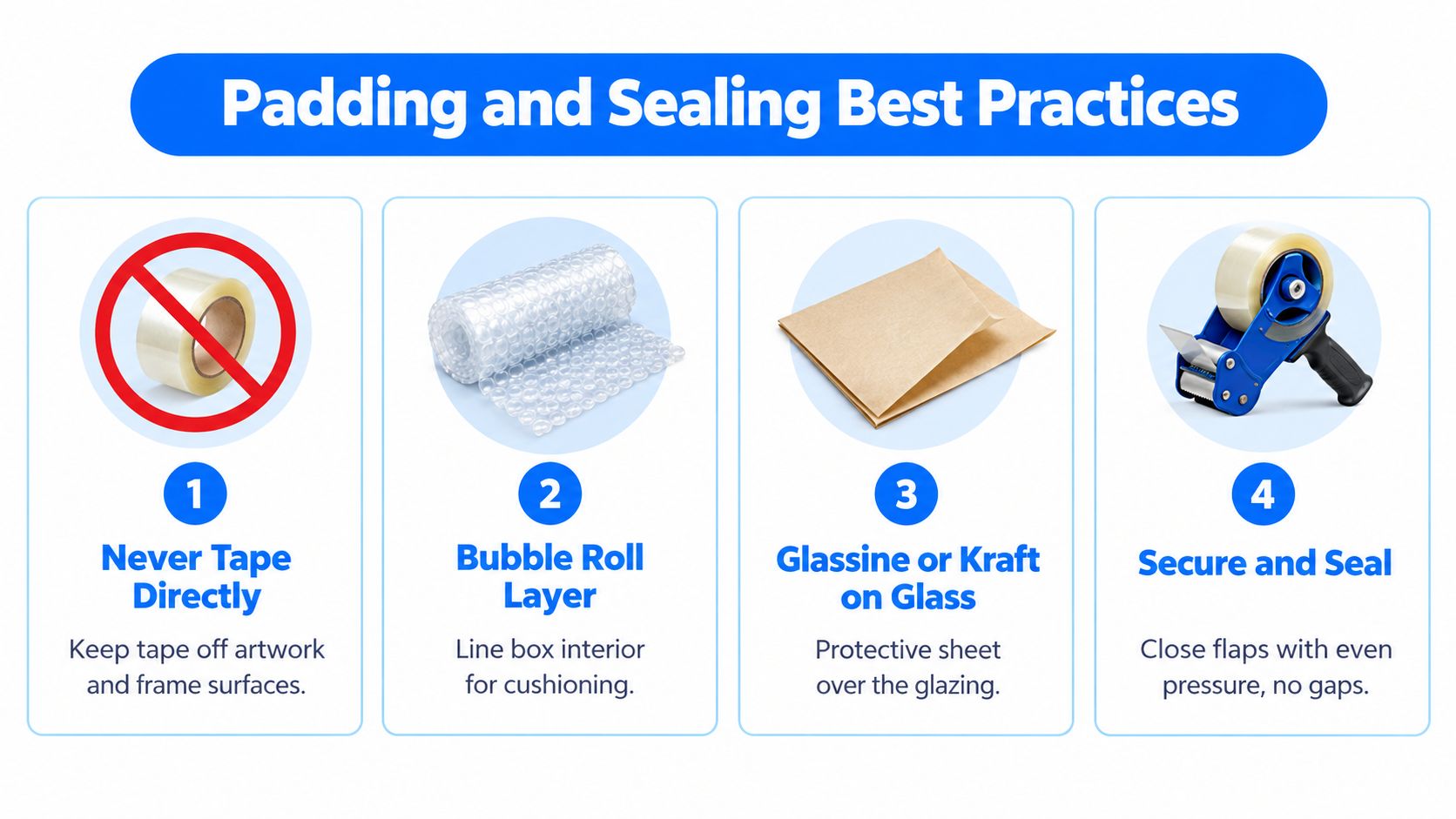
Keep the item snug, but don't compress the frame or glass. Add cushioning wherever the piece could contact a carton wall. Corner protectors are especially important because the frame edges can take concentrated force even when the broad faces have padding.
Seal the end flaps with strong packing tape, including 2.6 mil tape or water activated tape when that matches your operation. Apply even pressure along each seam and reinforce the closure so the carton doesn't separate during handling. For mirrors and framed pieces, packing guidance recommends allowing extra space for cushioning and corner protection, then sealing the seams securely with strong tape. See this guide to packing and shipping framed art safely.
Before the package leaves the station, lift it carefully and listen. If the frame shifts, rotates, or taps the wall, open the carton and add void fill. A quiet, rigid package is a better target than a loose carton with excess air.
Common Side Loading Box Sizes
A framed print that measures neatly on the bench can still miss the carton once you add padding. That is why side loading sizes are easiest to choose by matching the artwork first, then the box. A standard source like the corrugated box sizes chart helps you compare carton families before you place an order.
Side loading cartons often show up in a few practical inner sizes, such as 24 in × 5 in × 18 in, 28 in × 5 in × 24 in, and 30 in × 5 in × 24 in. The 5-inch depth can work for flat framed items, but only after you account for the board thickness, corner protection, and cushioning you plan to use. Two cartons with the same listed size can still differ in usable space or strength, so check the maker's specification before you load more than one piece.
| Artwork Size | Recommended Box Inner Size |
|---|---|
| Up to 20 in × 16 in × 2 in framed piece | 24 in × 5 in × 18 in, after confirming padded fit |
| 22 in × 18 in × 2 in to 26 in × 22 in × 2 in | 28 in × 5 in × 24 in, after confirming padded fit |
| 28 in × 20 in × 2 in to 30 in × 22 in × 2 in | 30 in × 5 in × 24 in, after confirming padded fit |
Use the table as a fit check, not a shortcut. Measure the framed piece, add the padding allowance, then compare that finished size to the carton's actual inner dimensions. If the artwork falls outside these common formats, a telescoping carton may fit better than a fixed slotted box. For thick frames, layered protection, or multiple pieces in one shipper, ask for product guidance before you commit to a large order.
Essential Packaging Materials to Stock
A repeatable art-packing station needs more than one carton. Keep the box, surface barrier, edge protection, cushioning, and sealing supplies close to the workbench so a packer doesn't improvise when a fragile order is ready.
Material Handling USA lists corrugated shipping boxes, including side loading options for flat products. Its catalog also includes foam rolls, pouches, and sheets for building cushioning around different frame depths.
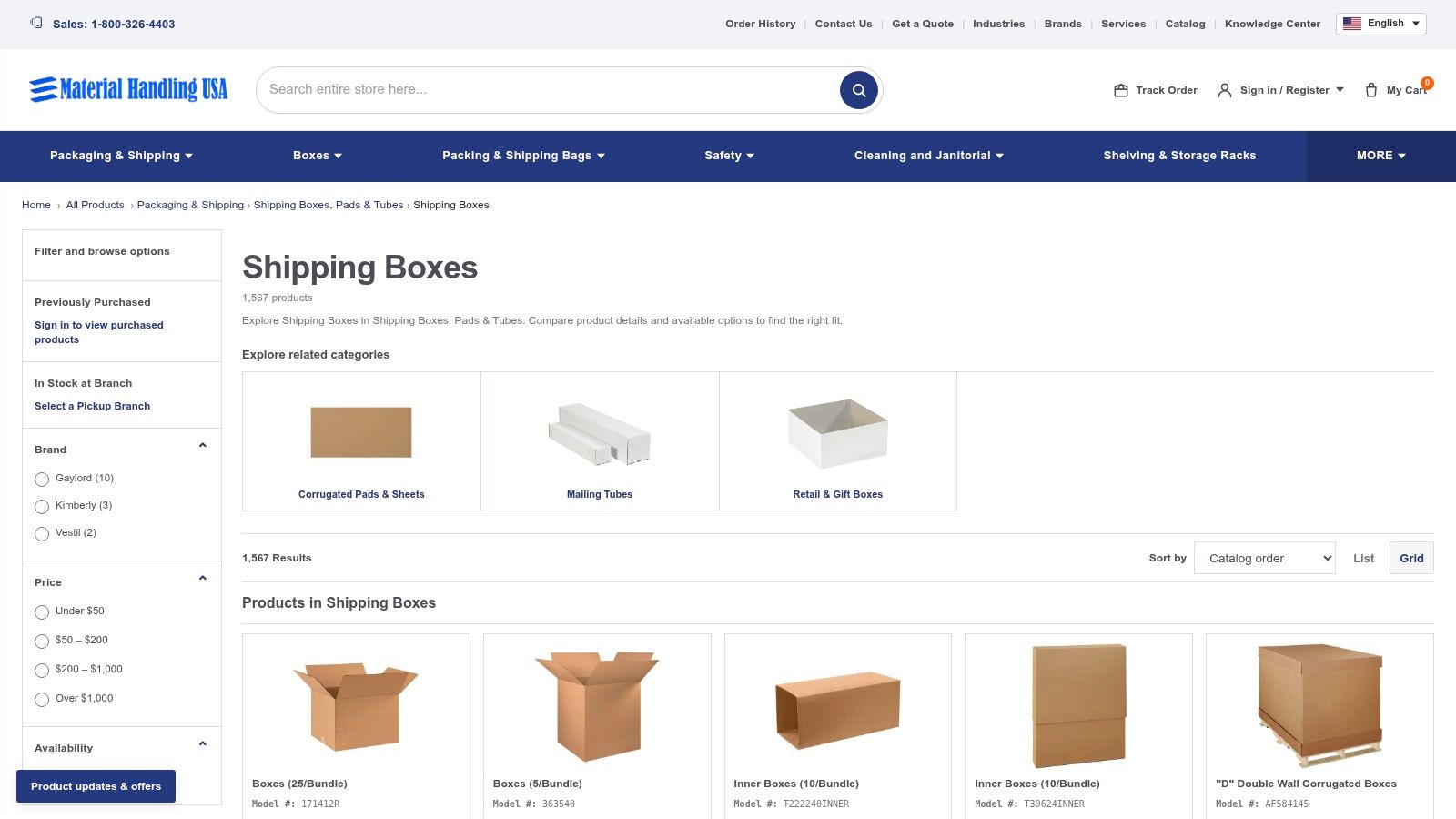
Stock corner protectors for the areas most likely to receive impact. Add glassine or kraft paper for the glass, corrugated pads for flat reinforcement, bubble roll for cushioning, and a suitable packing tape for closure. You can group these supplies in the broader protective packaging category when building a replenishment list.
Choose package quantities around your actual workflow. Galleries may need flexible materials for varied frame sizes. Framers and ecommerce sellers may prefer repeatable carton sizes, while movers may need a mix of telescoping cartons and protective pads. Volume pricing and price breaks by the case or pallet can help when you replenish packaging for ongoing shipments.
Frequently Asked Questions
Are side loading boxes better than regular top-loading boxes?
They give you a safer loading direction for flat, fragile items. The artwork slides in horizontally, so you don't drop it vertically into the carton or make the lower corners carry the full loading force.
Should I measure the picture or the frame?
Measure the entire framed object. Include the outside height, width, and thickness, then allow room for cushioning. The image area alone won't give you the carton dimensions you need.
How much space should I leave for padding?
Use the planned padding thickness on every protected side. The finished package should be snug, not compressed. For mirrors and framed art, packing guidance commonly allows extra room around the object for cushioning and corner protection, with the exact allowance depending on the materials and product specification.
Can I ship more than one framed work in one carton?
You can when the carton depth, board strength, and padding plan support the combined load. Keep each piece separated and prevent movement between frames. Don't exceed the manufacturer's load guidance.
Which is better, telescoping or slotted?
Telescoping works well for mixed sizes because the sleeves adjust. Slotted cartons can be efficient when your team packs a repeated size. Compare storage space, packing speed, and the range of artwork you handle.
Can tape touch the frame?
No. Tape should hold the paper, bubble, corner protection, and carton materials in place. Keep it off the artwork, glass, and frame surface.
What should I do if the carton has empty space?
Fill the voids with suitable cushioning so the piece can't slide, rotate, or strike the carton wall. Recheck the closure after adding material, since overfilling can press against the frame.
Ready to Ship Safely
Protecting framed art starts with a measurement, not a guess. Match the carton to the finished frame, choose telescoping construction when sizes vary, use slotted construction for repeatable packing, and build protection around the corners and surfaces. A side-opening design supports the loading process, but careful padding and sealing complete the package.
Material Handling USA is a Salt Lake City supplier serving business buyers nationwide since 1997, with 58,000+ in-stock SKUs, volume pricing, and product support for packaging workflows. Shop the shipping box, foam, and corner protector categories for routine replenishment, or ask for help when your project needs a different carton plan.
For pallet quantities, custom sizes, or a quote on project-size orders, call a product specialist at 1-800-326-4403, Monday to Friday, 8 AM to 5 PM MT.
Visit Material Handling USA to shop side loading boxes, foam cushioning, corrugated pads, and corner protection for framed art and mirrors. Order the sizes that match your packing workflow, or call the product team for help with pallet quantities, custom sizes, and project orders.