Oil Dry Absorbent 50 Lb Bag for Drip Cleanup
A familiar 50 lb bag can look like the easy choice when a service-bay drip appears. But package weight won't tell you whether loose granules or a pad will work better on that floor. For an identified oil drip, choose by the cleanup job, the floor and drains, and the plan for collecting and disposing of used material.
Table of Contents
- Identify the Liquid Before Choosing a Cleanup Format
- Compare Granules and Oil-Only Pads by Cleanup Job
- Read the 50 Lb Bag Without Inventing Coverage
- Place Pads and Plan Granule Pickup
- Plan Waste Handling Before the Absorbent Is Used
- Buy for the Approved Cleanup Process
Identify the Liquid Before Choosing a Cleanup Format
A drip spreads near a lift. Before reaching for an oil dry absorbent 50 lb bag, identify the liquid and check the site's cleanup procedure. A small, recurring drip may call for a different format than oil spread across an open floor.
For a known drip approved for absorbent use, granules and pads are two options to compare. The store examples are MH-USA Oil Dry (50Lbs/Bag) and MH-USA Oil Only Sorbent Pads, 16 x 18 inches, Heavy (100/Case). The 50 lb bag describes package size, not floor coverage or gallons absorbed. Liquid identity, floor condition, pickup method, and the waste stream determine which format fits.
An unknown, reactive, or uncontrolled release calls for the site's response procedure, not a product comparison. Keep people clear of an unidentified spill under site rules, and identify the liquid before choosing an absorbent. “Oil-only” does not mean a pad suits water-based coolant or every other shop fluid.
For PPE context, see the Workplace Safety Equipment Guide: PPE, Signs & Compliance. For routine cleaning systems, see the Commercial Janitorial Supplies Buying Guide. These guides offer general context, but the liquid and its SDS help establish whether an absorbent is appropriate. Check the floor, nearby drains, and waste route as well.
Oil on pavement outside the bay is a separate cleanup problem. The Riverside Sealing & Striping stain guide focuses on driveway oil stains. Use the site's process for workplace drips.
Compare Granules and Oil-Only Pads by Cleanup Job
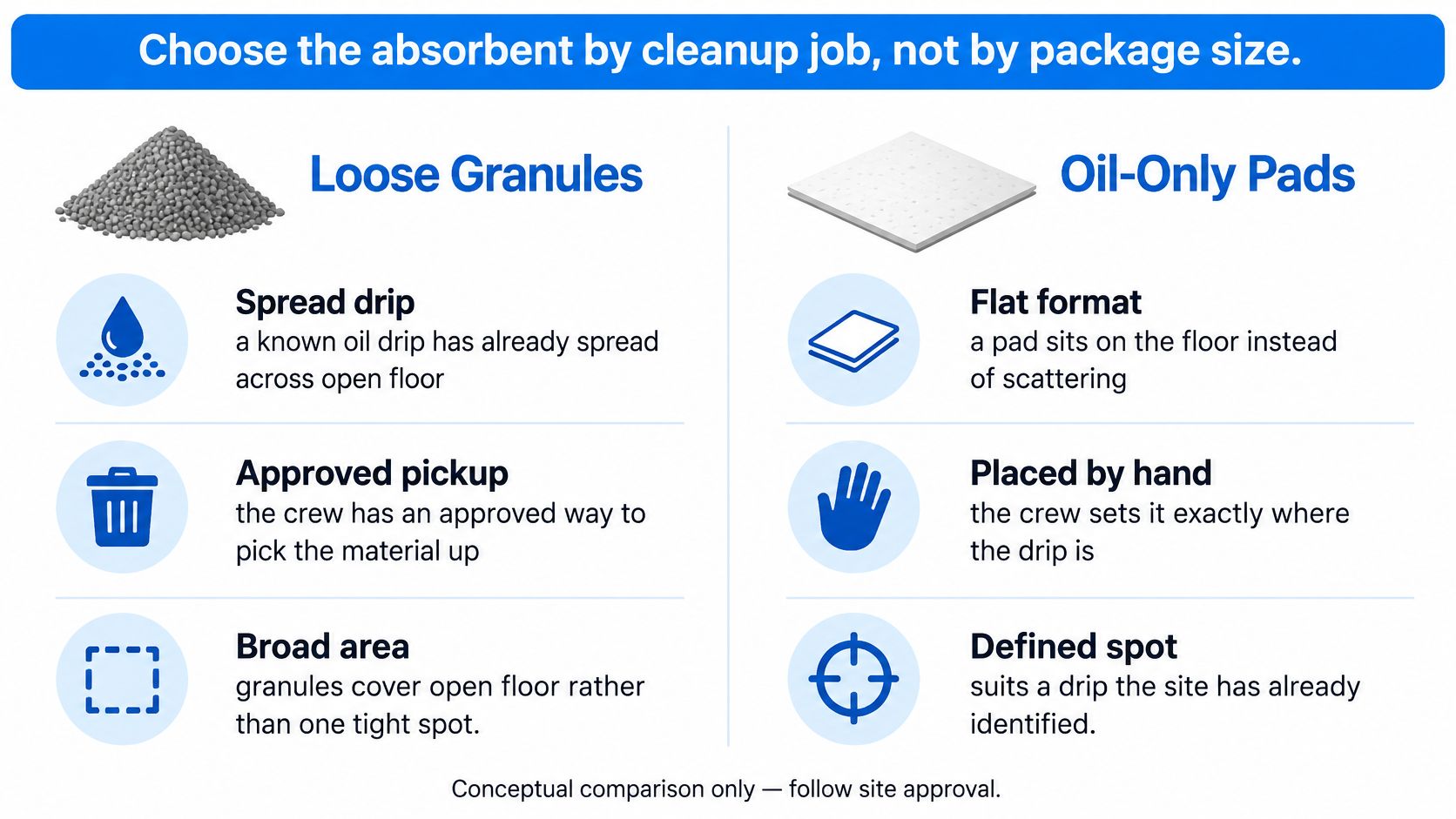
A service-bay drip can spread across open floor or keep falling in one spot. For a known oil drip, loose granules suit an open area when the crew has an approved pickup method. An oil-only pad fits a localized drip that can be covered or caught without loose material moving toward a walkway or drain.
| Cleanup job | Oil dry granules, 50 lb bag example | Oil-only pads, 16 x 18 in heavy |
|---|---|---|
| Apply the material | Spread over the known wet area if the liquid is approved | Lay the pad on or under the drip point |
| Where it works best | Open floor with a contained, identified oil drip | A local recurring drip that stays in one spot |
| Pickup | Sweep or shovel by the crew's approved method | Lift the used pad without scattering loose fill |
| Dust and tracking | Loose grains can dust, track, and migrate | Less loose debris if the pad stays intact |
| Floor and drains | Check cracks, finish, and nearby drains before spreading | Keep the pad off traffic paths and drain openings |
| After removal | Inspect for film, residue, and leftover grains | Inspect under and around the pad for remaining liquid |
The table compares cleanup tasks, not measured performance. A 50 lb package describes the granules' package size, while the pad dimensions describe its format. Neither label establishes liquid absorption or floor coverage. Use supplier documentation and the liquid's SDS to confirm that the exact product suits the identified liquid. An oil-only label does not establish suitability for water-based leaks, coolants, or mixed, unknown fluids.
The floor and pickup method matter too. Granules can fall into cracks or drains, and sweeping or shoveling them up may take extra care around nearby openings. A pad can be kicked aside or driven over. Consider the floor's finish and slope, traffic, and nearby drains when deciding whether the crew can keep the absorbent in place and collect it afterward.
Practical rule: Choose the format the crew can recover and inspect, not the one with the more familiar package.
For other sorbent and containment formats, browse Sorbents and Spill Control. Use either example only after confirming product documentation for the liquid and cleanup job.
Read the 50 Lb Bag Without Inventing Coverage
A 50 lb label gives the package weight of the MH-USA Oil Dry (50Lbs/Bag). It does not tell you how much liquid the granules absorb or how much floor they cover.
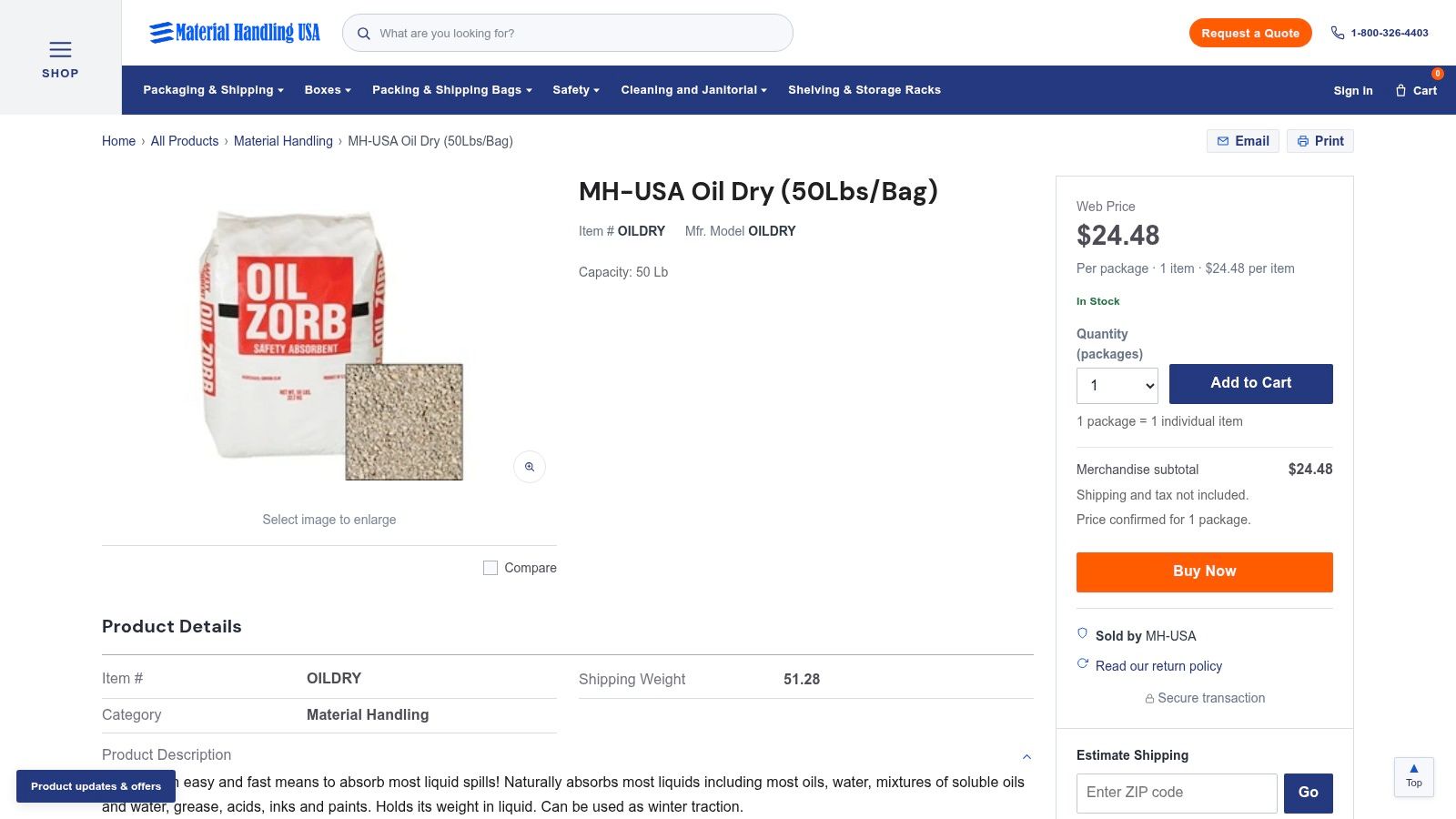
Before ordering, check the current product description and supplier SDS for the exact variant. Confirm its absorption capacity, coverage information, and compatibility with the liquid in your bay. Check the liquid's SDS as well. A familiar product name or package size cannot answer those questions.
Check the product-specific documents
A small, known oil drip and an unplanned release are different cleanup jobs. For a routine drip, choose a product only after confirming it suits the liquid and the approved process. If the liquid is unknown or the event requires a response plan, follow the site's procedure rather than estimating from the bag weight.
Granule size, dust, and floor condition also affect cleanup. A sealed floor, cracks, and a slope can change where granules travel and how the crew collects them. Don't transfer specifications from another bag just because its package weight matches.
Use the product documents to guide the choice, then follow the approved pickup method. The bag's weight is a package size, not a coverage estimate or a measure of gallons absorbed.
Place Pads and Plan Granule Pickup
Use this checklist only for a drip the site has identified and approved for absorbent use. Keep the work clear of passageways. The general housekeeping rule in 29 CFR § 1910.176 addresses keeping passageways clear and stored materials stable and secure. It doesn't approve a product or certify a cleanup method.
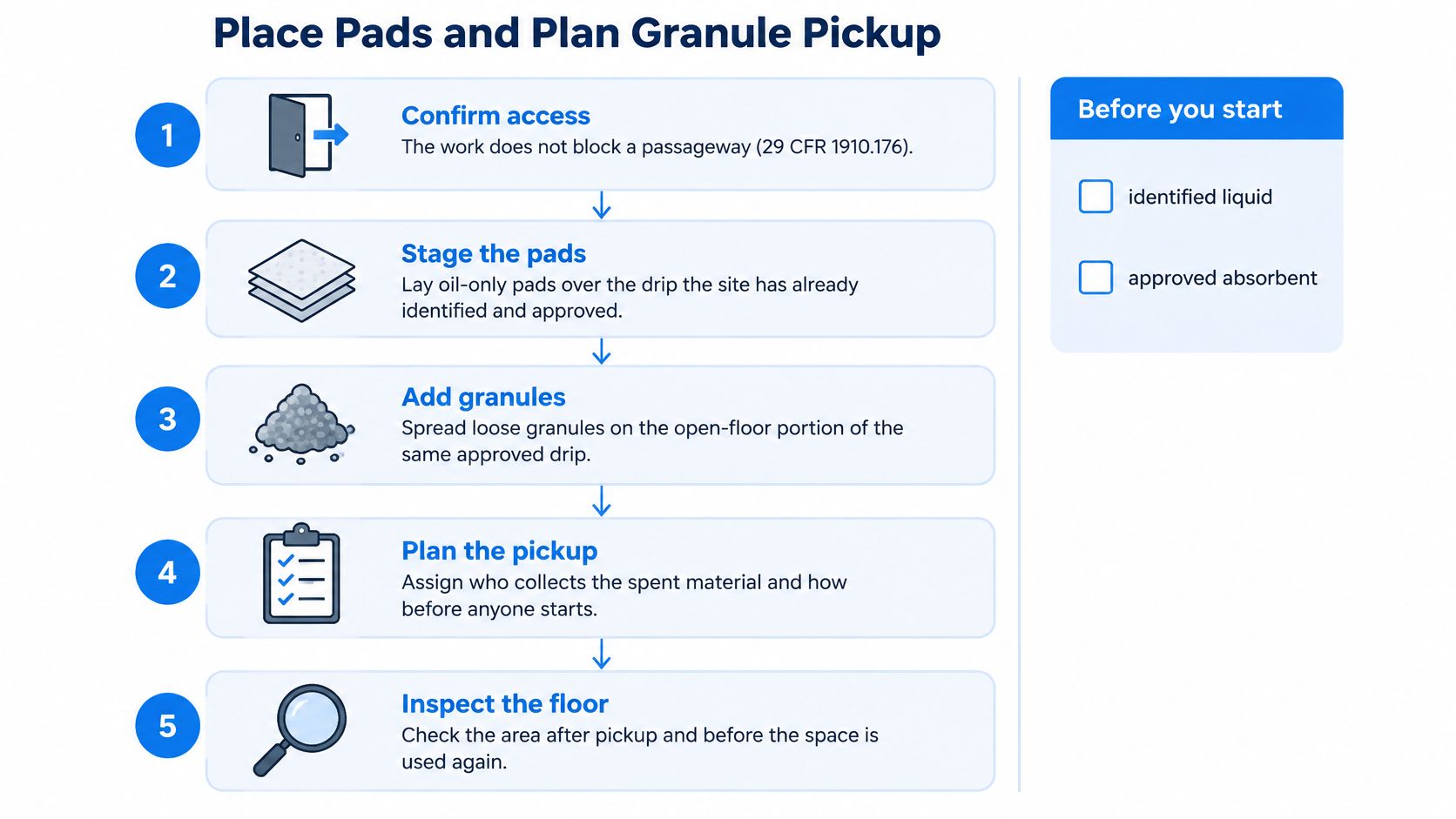
- Confirm access. Keep the task from blocking a passageway. Follow site rules for the work area and crew access.
- Check where the liquid can travel. Look for cracks, slopes, walkways, and drains before setting down absorbent.
- Place a pad for a recurring point drip. Put the MH-USA Oil Only Sorbent Pads, 16 x 18 inches, Heavy (100/Case) where the identified liquid lands and where the crew can lift it intact.
- Spread granules only where the crew can recover them. For an approved oil drip on open floor, keep the granules on the wet area. Don't spread loose material toward a drain or into a crack.
- Collect and inspect. Use the crew's approved pickup method, keep used material out of drains, then check for film, residue, leftover grains, and a renewed drip.
Granules can be less convenient in a tight bay, where dust or loose grains could track into customer areas, or where fans, cracks, and repeat drips make recovery difficult. A pad can be less convenient across a wide wet area, in a path where vehicles will drive over it, or when the liquid falls outside the product's documented use.
Browse Spill Containment Berms, Dikes, and Pools for related containment products after the liquid is known. Any workflow diagram used with this advice should be labeled conceptual, not presented as an engineered setup.
Plan Waste Handling Before the Absorbent Is Used
Choose the collection container and disposal route before opening a bag or case. Waste handling follows the absorbed material and the applicable federal, state, and local requirements. A used pad or granules aren't automatically ordinary trash, nonhazardous, or reusable.
Keep three things distinct: unused product in storage, a drip being managed under the site's approved routine process, and collected used material awaiting its approved next step. A full bag or case in storage also needs to remain stable and out of aisles.
Decide the waste route before the cleanup starts. A lighter package doesn't automatically mean an easier disposal decision.
Consider three situations. A pad that has collected one known oil still needs to follow the site's rules for that material. Granules exposed to a second, unidentified fluid may no longer fit the original cleanup plan. Material that has entered a drain area isn't a simple drip cleanup to resolve by choosing a different package.
The Waste, Recycling & Trash Supplies category can help you browse containers and related supplies for a process your site has already approved. It doesn't determine whether a container is permitted for a particular waste. Ask your site environmental or safety contact about the labeling, storage, and hauler requirements for the liquid. Related drums, buckets, IBC totes, and tanks may be relevant to a collection process, but the site must confirm suitability.
Carry that disposal decision into the order check. Package weight can't classify waste or establish its final route.
Buy for the Approved Cleanup Process
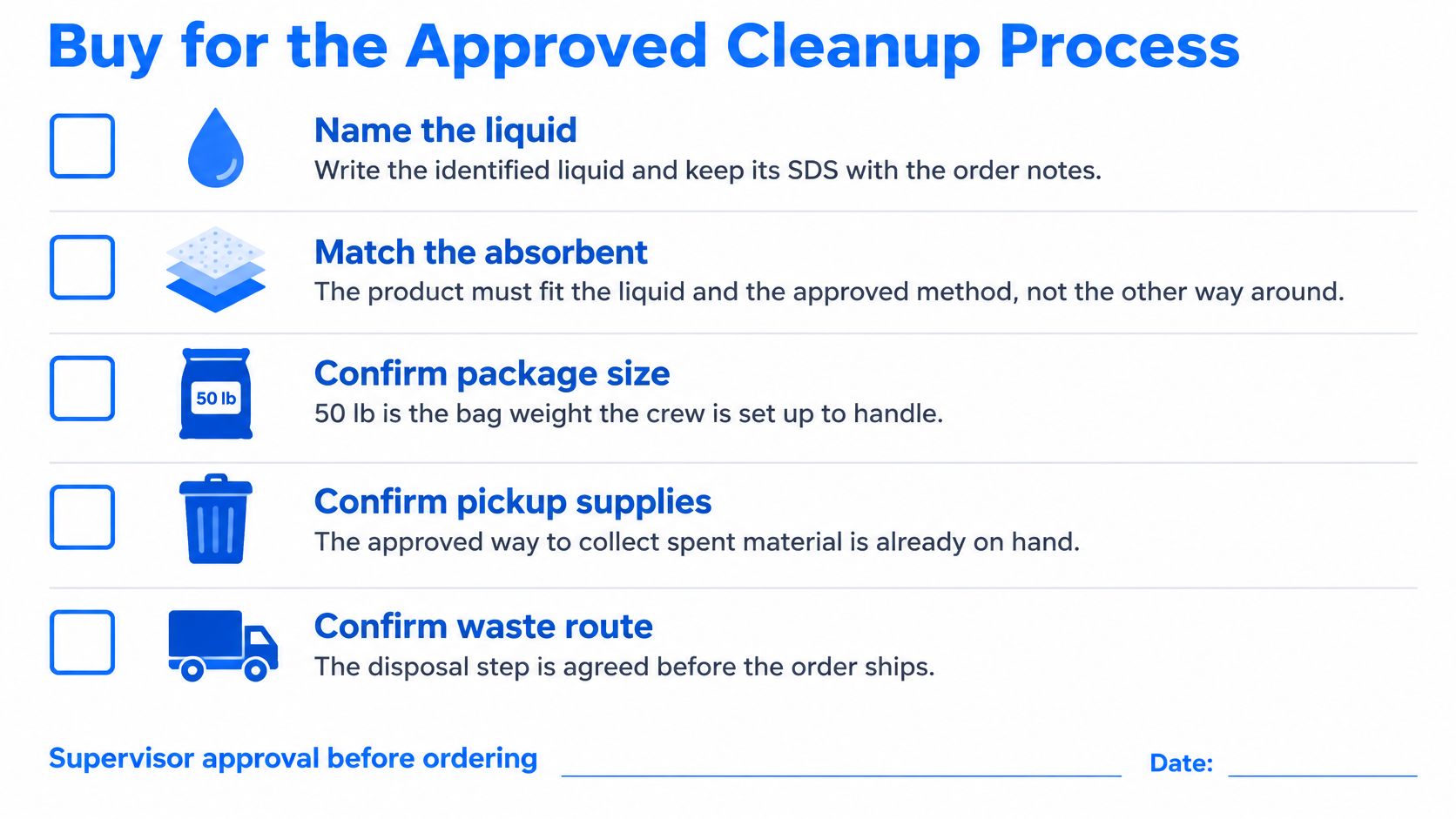
A service-bay drip has a different cleanup plan from an unknown spill. Before ordering, confirm the liquid, the approved response, and the route for used material.
- Name the liquid. Record the identified fluid and keep its SDS with the order notes.
- Match the absorbent to the liquid. Check compatibility information and the product SDS for the exact MH-USA Oil Dry (50Lbs/Bag) or MH-USA Oil Only Sorbent Pads, 16 x 18 inches, Heavy (100/Case). A general statement about other fluids is not enough.
- Choose the format for the job. Use granules for an approved oil drip spread across open floor when the crew can recover them. Consider pads when the same known oil returns at one point and the crew can lift the pad intact.
- Recheck the selected variant and confirm current availability and included accessories before ordering.
- Name the waste container and route. Confirm how the site will manage used absorbent before opening either package.
Material Handling USA offers buying guides and planning tools to help buyers match supplies to a task. For protective workwear, review FR coveralls from Refinery Work Wear Canada against your site's requirements.
Stop the order check once the liquid, compatibility documents, format, and disposal route are confirmed. Then compare the Oil Dry granules and oil-only pad listings in Sorbents & Spill Kits. For product-selection help, call Material Handling USA at 1-800-326-4403 or visit Material Handling USA.