Personal Protective Equipment (PPE) Overview
OSHA requires employers to perform a workplace hazard assessment (29 CFR 1910.132) and provide appropriate PPE at no cost to employees. The most common PPE categories for industrial environments include:
| PPE Category | Standard | When Required |
|---|---|---|
| Eye & Face Protection | ANSI Z87.1 | Any task with flying debris, chemical splash, or UV exposure |
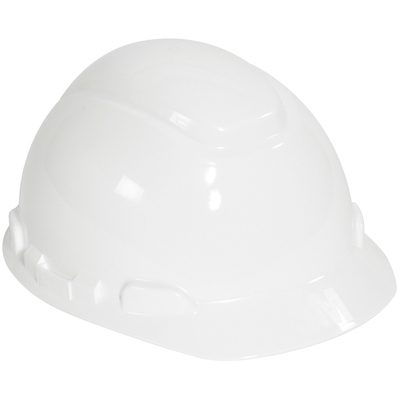
| Head Protection | ANSI Z89.1 | Overhead hazards, construction, electrical work |
| Hand Protection | ANSI/ISEA 105 | Handling sharp materials, chemicals, or extreme temperatures |
| Foot Protection | ASTM F2413 | Areas with falling/rolling objects, puncture hazards |
| High-Visibility | ANSI/ISEA 107 | Anywhere vehicle/pedestrian conflicts occur |
| Hearing Protection | NIOSH | Areas with sustained noise ≥85 dB (8-hour TWA) |
| Respiratory Protection | NIOSH/OSHA | Dust, fumes, vapors, insufficient oxygen environments |
Gloves: Choosing the Right Type
Gloves are the most-purchased PPE item. Selecting the wrong glove type is a common mistake:
- Nitrile (disposable): Chemical-resistant, puncture-resistant, latex-free. Use for general industrial tasks, cleaning chemicals, and food handling.
- Cut-resistant (ANSI A2–A9): For handling sheet metal, glass, sharp plastics. Higher ANSI cut level = more protection. A4–A6 covers most warehouse needs.
- Leather/Mechanic: Durable, good grip, heat-resistant. Use for general maintenance, construction, and handling rough materials.
- Chemical-resistant (neoprene, nitrile, PVC): For working with acids, solvents, and caustics. Check chemical compatibility for the specific hazard.
- Heat-resistant: Up to 500°F+ for foundry, welding, and industrial oven work.
High-Visibility Safety Vests
ANSI/ISEA 107 defines three performance classes for high-visibility vests. For most industrial warehouses with forklift traffic, Class 2 vests are the minimum standard:
- Class 1: Parking lot attendants, roadside work at low speeds. Minimal background material and retroreflective tape.
- Class 2: Most warehouses with forklift traffic, airport ground crews, utility workers. More background material, horizontal and vertical retroreflective tape configuration.
- Class 3: Highway construction, emergency responders. Maximum visibility — full-sleeve coverage with 360° reflectivity.
First Aid Kits: What You Need
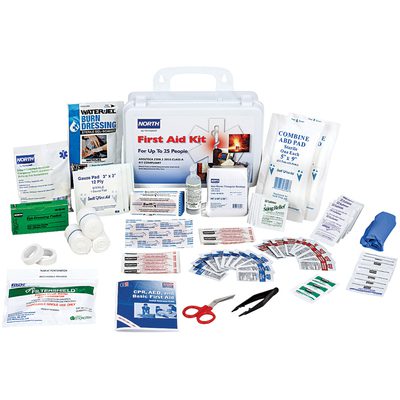
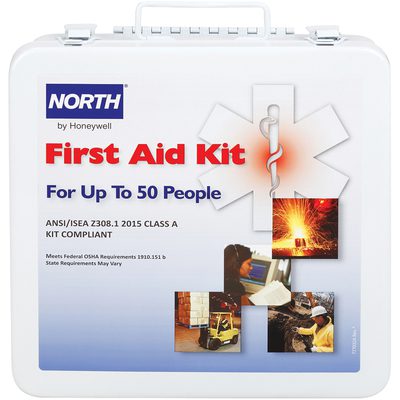
OSHA 29 CFR 1910.151 requires adequate first aid supplies in all workplaces. The required contents vary by industry and workforce size, but a complete industrial kit should include:
- Adhesive bandages (assorted sizes), sterile gauze pads and rolls
- Antiseptic wipes, antibacterial ointment
- Burn treatment pads/gel
- Eye wash solution (16 oz minimum); eyewash stations required within 10 seconds of chemical hazards
- Nitrile exam gloves, CPR face shield
- Scissors, tweezers, emergency blanket
- Cold packs, elastic bandages
Anti-Fatigue Floor Mats
Workers standing more than 2 hours per shift benefit significantly from anti-fatigue mats, which reduce lower back pain and leg fatigue by 50% or more. Key specifications:
- Thickness: 3/4"–1" is the industrial standard; thicker is not always better (trip hazard on thick mats).
- Surface: Raised cleats for drainage in wet areas; ribbed or flat for dry floors.
- Material: Foam (comfort-focused), rubber (durability), nitrile rubber (oil and chemical resistance).
- Beveled edges: Critical for trip prevention — all industrial mats should have angled edges.
Shop Safety Equipment
Shop All Safety →