Equipment Categories at a Glance
| Equipment | Capacity Range | Best For |
|---|---|---|
| Hand Trucks (2-wheel) | 300–1,200 lbs | Stacked boxes, drums, appliances, vertical transport |
| Platform Dollies | 500–2,000 lbs | Flat, wide loads; furniture; shipping skids |
| Utility Carts | 300–1,500 lbs | Route-based supply distribution; short-distance moving |
| Pallet Jacks (manual) | 4,400–6,600 lbs | Pallet movement on smooth floors |
| Pallet Jacks (electric) | 4,400–6,600 lbs | Long-distance pallet movement, high frequency |
| Walkie Stackers | 2,200–4,400 lbs | Loading pallets onto racking (up to 144"+ lift) |
| Lift Tables | 500–6,000 lbs | Ergonomic height adjustment for assembly/packing |
| Conveyors | Varies | Continuous transport from point to point |
| Overhead Cranes & Hoists | 1/4 to 20+ tons | Lifting heavy machinery, equipment, materials |
Hand Trucks vs. Platform Dollies
These are the most common non-powered moving tools, and they're not interchangeable:
- Hand trucks (2-wheel): Upright frame with a toe plate at the bottom. Tilt the load and roll — great for stacking boxes, barrel drums, and appliances. Available with stair-climbing wheels for navigating steps. Nose plate width typically 12–17".
- Platform dollies: Low, flat 4-wheel platforms. Load sits on top and is pushed horizontally. Available in standard sizes (14×14" to 30×60") and as specialty dollies for furniture, vehicles, and equipment. No tilting required — load rides flush.
- Convertible hand trucks: Convert between 2-wheel and 4-wheel platform mode. Versatile but heavier and more expensive than specialized units.
Utility Carts: Route-Based Distribution
Utility carts (wire, polymer, stainless steel, or folding) are the workhorse of hospitals, hotels, food service, and manufacturing plants where supplies need to be moved between rooms, stations, or departments on a regular route. Key selection criteria:
- Shelf quantity and size: Match the volume of supplies moved per route. 2–3 shelves typical; 4 shelves for high-volume routes.
- Material: Wire for food service and healthcare (visibility, sanitation); polymer for wet environments; stainless for food processing and healthcare compliance.
- Casters: Swivel casters for maneuverability; locking brakes required on at least 2 wheels. 5" casters handle most facility floors; 6"–8" for uneven floors.
- Handle height: Standard 38–42" handles work for most operators; adjustable-height carts available.
Conveyors: When to Add a Conveyor System
Even a simple conveyor can dramatically increase throughput at packing stations and order fulfillment areas:
- Gravity roller conveyors: Zero power required; relies on gravity (requires slope) or manual pushing. Best for short, straight runs at shipping and receiving.
- Skatewheel conveyors: Lighter weight than roller, ideal for lightweight boxes. Flexible sections navigate curves.
- Belt conveyors: Powered; handles inclines, declines, and precise speed control. Best for automated packing lines and induction to shipping.
- Accumulation conveyors: Allow products to pause and buffer without stopping the upstream line. Critical in high-speed e-commerce fulfillment.
Capacity Selection: Always Build In a Safety Margin
25–33%
Safety margin above maximum expected load to add when selecting equipment capacity
Annual
Frequency of full service for powered material handling equipment
Daily
Pre-shift inspection requirement for all powered industrial trucks (OSHA)
Shop Material Handling Equipment
Shop All Equipment →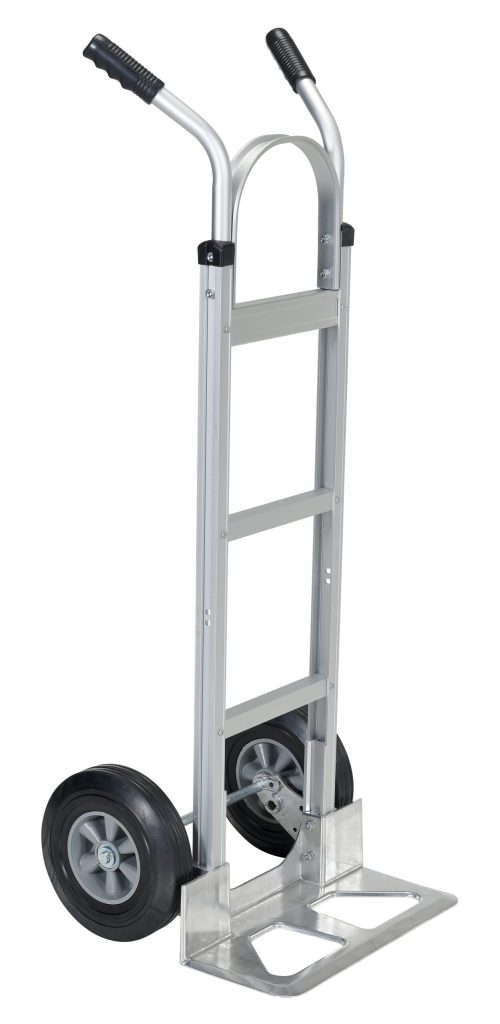
2 Handle Alum Hand Truck Hard Rubber
$230.98
Shop Now →
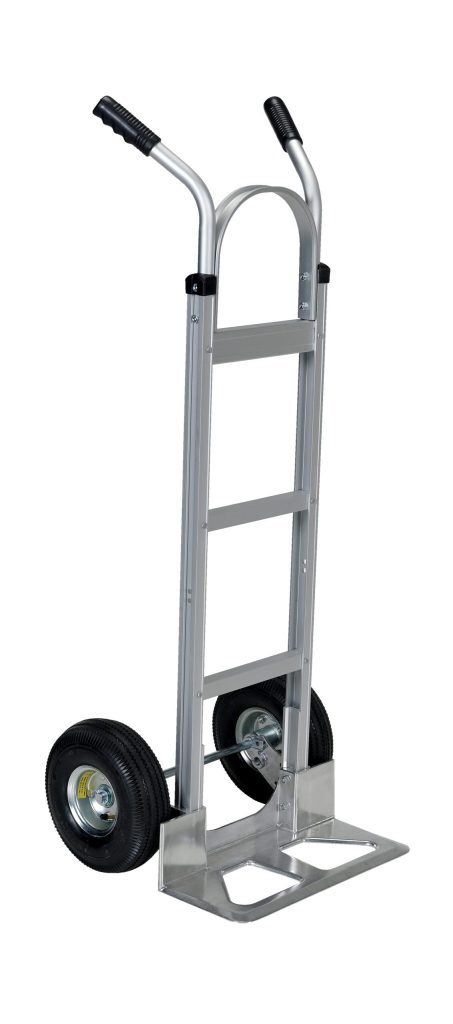
2 Handle Alum Hand Truck Pneumatic
$194.01
Shop Now →
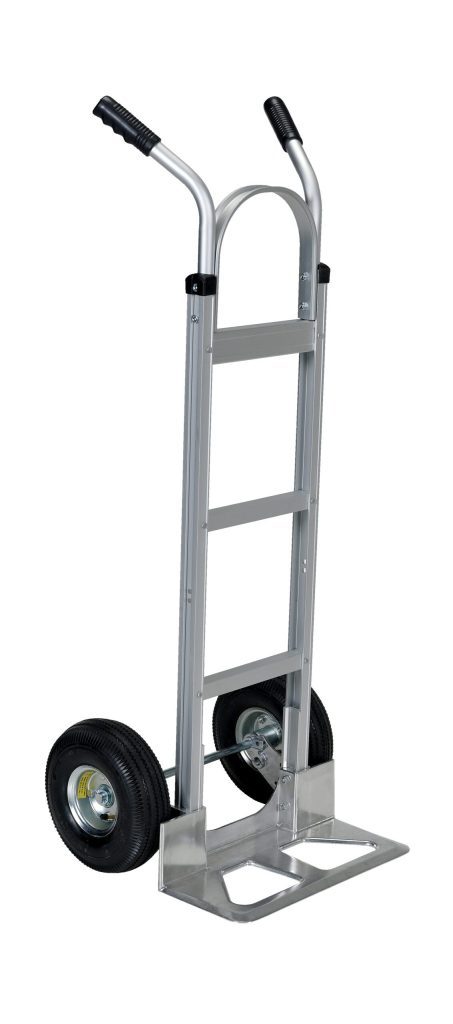
2 Handle Alum Hand Truck Pnu Alum Plate
$193.88
Shop Now →
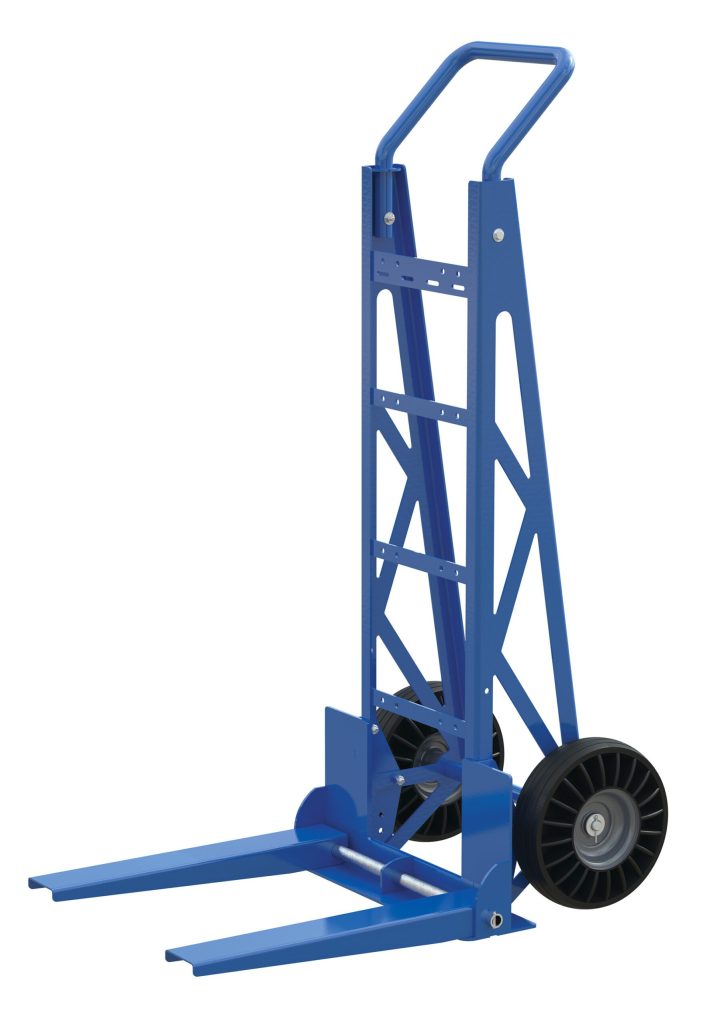
Adjustable Fork Hand Truck 20" Wide
$566.37
Shop Now →
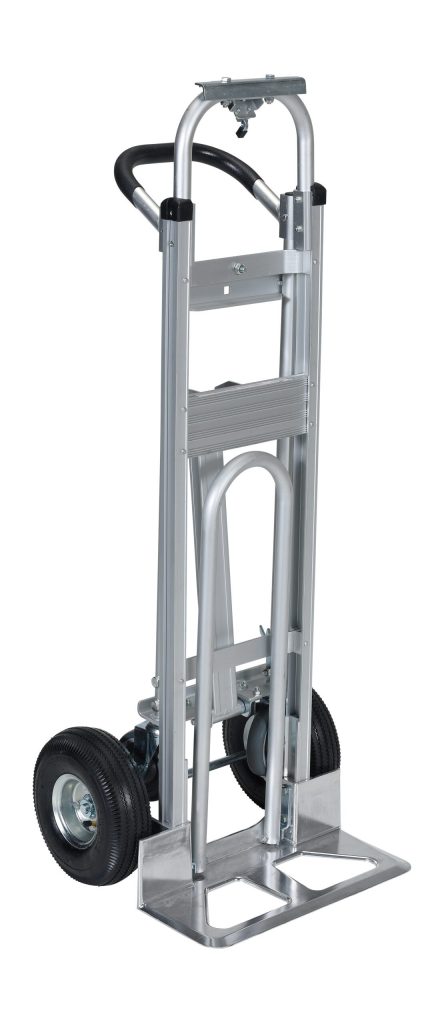
Alum Convertible Hand Truck
$428.91
Shop Now →
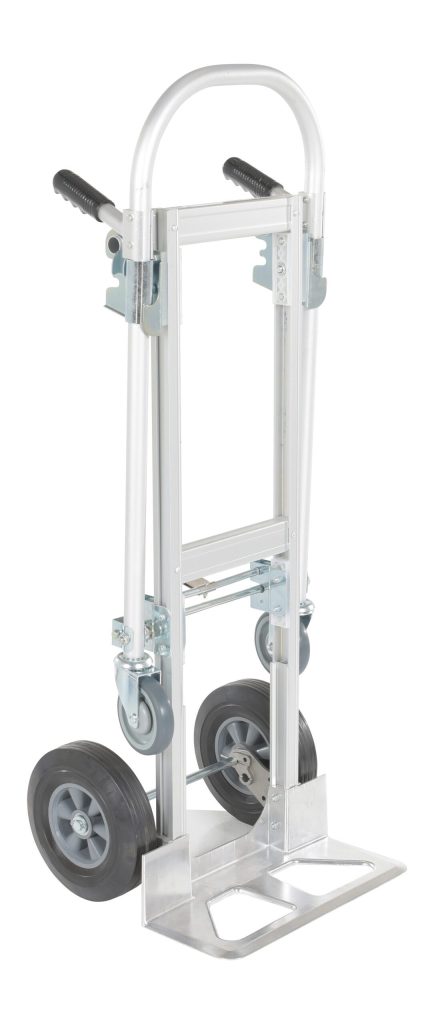
Alum Convertible Hand Truck Hr
$341.11
Shop Now →
Frequently Asked Questions
What is the difference between a hand truck and a dolly?
A hand truck is an L-shaped upright device on two wheels — designed for tall, stacked boxes, appliances, or drums. A dolly is a flat, low platform on four wheels — designed for flat, wide, or heavy items that rest horizontally. Hand trucks are better for stairs; dollies are better for heavy furniture and large flat loads.
How do I choose the right capacity for material handling equipment?
Select equipment rated at least 25–33% above your maximum expected load. If your heaviest load is 800 lbs, choose equipment rated for 1,000–1,200 lbs minimum. Operating at or near maximum capacity shortens service life and increases accident risk.
What is a lift table used for?
A lift table (scissor lift table) raises materials from floor level to an ergonomic working height — typically 8 to 36 inches of lift, with capacities from 500 to 6,000 lbs. They're used at assembly lines, loading docks, and packaging stations to eliminate repetitive bending and reduce back injury rates.
What is the difference between a conveyor and a conveyor system?
A single conveyor is a standalone transport device (5–20 feet long). A conveyor system integrates multiple conveyors with diverters, merges, curves, and inclines into a connected material flow path. Even a simple 3–5 section system at a packing line dramatically increases throughput.
What maintenance does material handling equipment require?
Manual equipment: monthly inspection, quarterly lubrication. Powered equipment: daily pre-shift inspection (OSHA required), monthly hydraulic fluid check, annual service. OSHA requires pre-shift operator inspections for all powered industrial trucks.