Know Your Drum First: Size, Type, and Weight
Before selecting any drum handling equipment, you need to know three things about your drum:
- Size: Standard drums come in 15-gallon, 30-gallon, and 55-gallon sizes. Most drum equipment is rated for one or more of these sizes — confirm compatibility.
- Type: Open-head drums have removable lids; closed-head (tight-head) drums have permanent tops with small bung openings. Many drum tools are type-specific.
- Weight: A full 55-gallon drum can weigh 400–600 lb depending on the liquid. Steel drums themselves weigh ~38–45 lb; plastic drums ~25 lb. Always calculate total weight before choosing capacity-rated equipment.
Drum Dollies: Moving Drums Safely
A drum dolly is a low-profile platform with casters that sits under a drum and allows it to be rolled across a floor. They're the simplest and most common drum handling tool.
Key specs to check:
- Drum diameter compatibility: 55-gallon drums are typically 22.5" in diameter; confirm the dolly's fit range.
- Capacity: Minimum 1,000 lb for standard 55-gal liquid drums; 1,500–2,000 lb for heavy chemicals.
- Caster type: Rigid casters for straight-line movement only; swivel casters for maneuverability; locking casters to keep drums stationary during dispensing.
- Material: Steel dollies for heavy-duty use; polyethylene for corrosive chemicals (secondary containment dollies).
Drum Trucks and Barrel Trucks: Transporting Over Distances
When drums need to move longer distances or over uneven surfaces, a drum truck (barrel truck) is more practical than a dolly. Drum trucks tilt the drum onto two wheels and are pushed like a hand truck.
- Standard drum trucks: Two handles, J-hooks that grip the drum chime, 1,000–1,500 lb capacity. Good for horizontal transport on smooth floors.
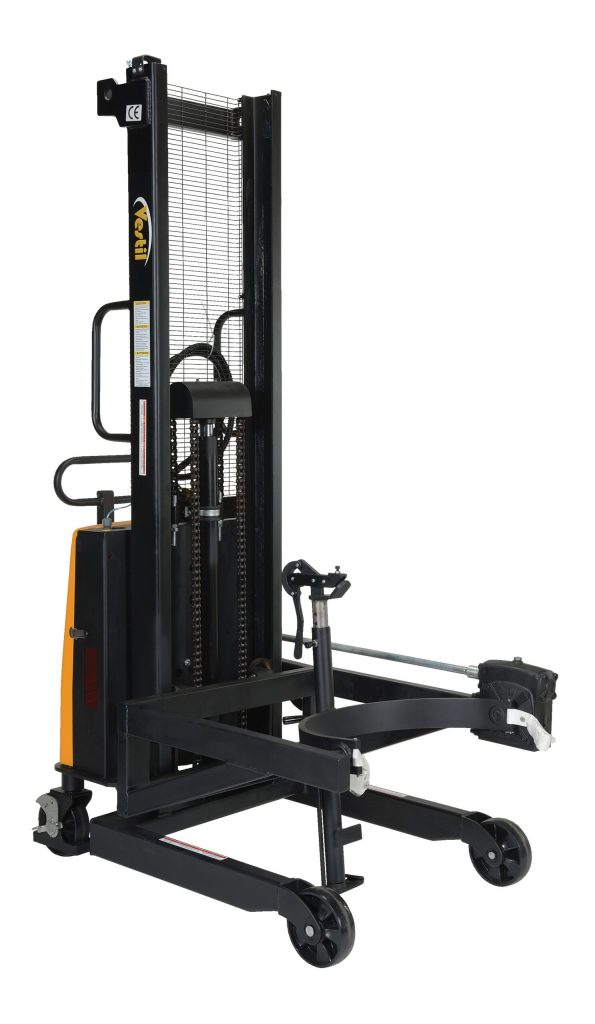
- Vertical drum lifters/trucks: Upright two-wheel design that can move the drum upright — better for stairs or rough terrain.
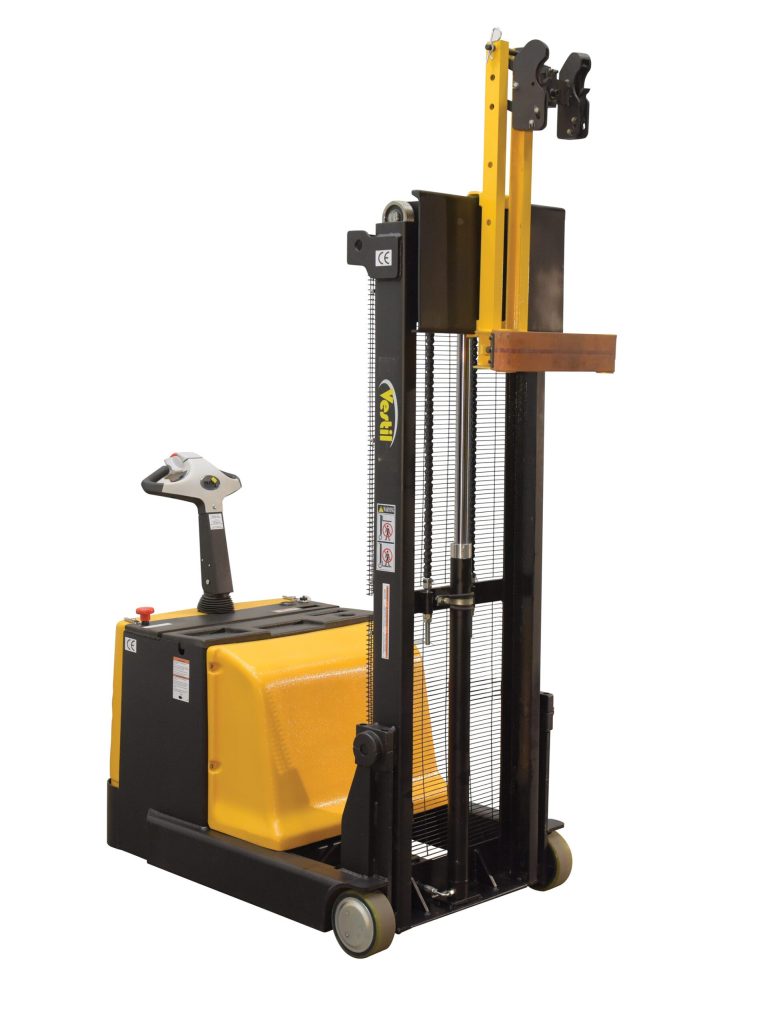
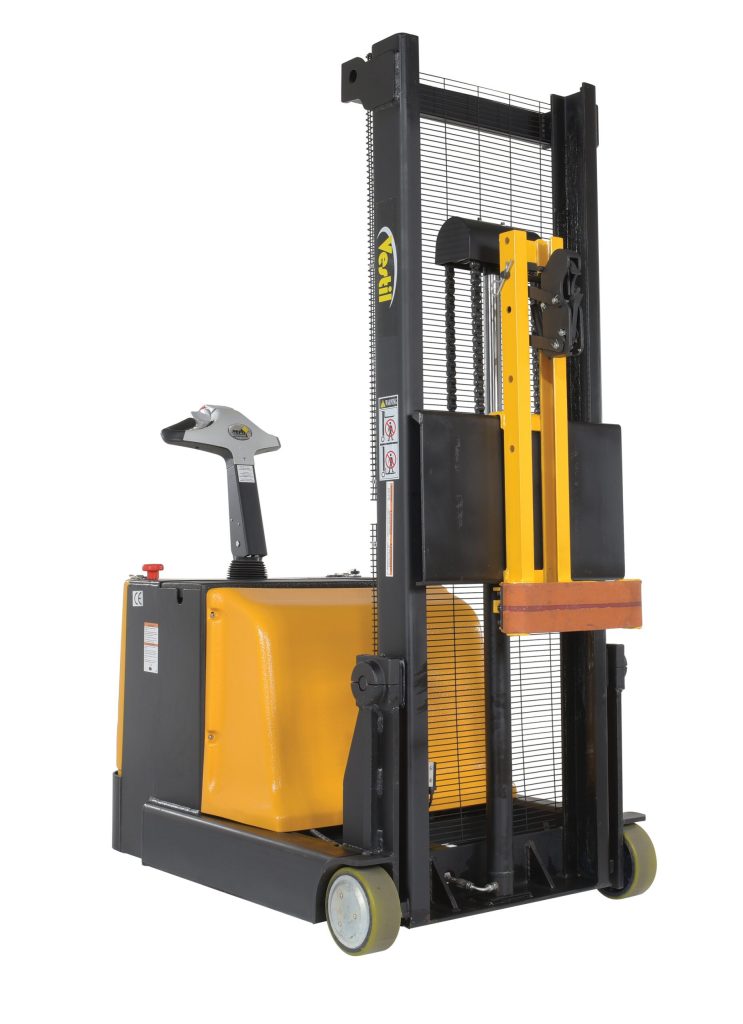
- Motorized drum transporters: Battery-powered; best for long distances or repeated daily movement. Reduce ergonomic risk significantly.
Drum Lifters: Hoisting Drums with a Hoist or Forklift
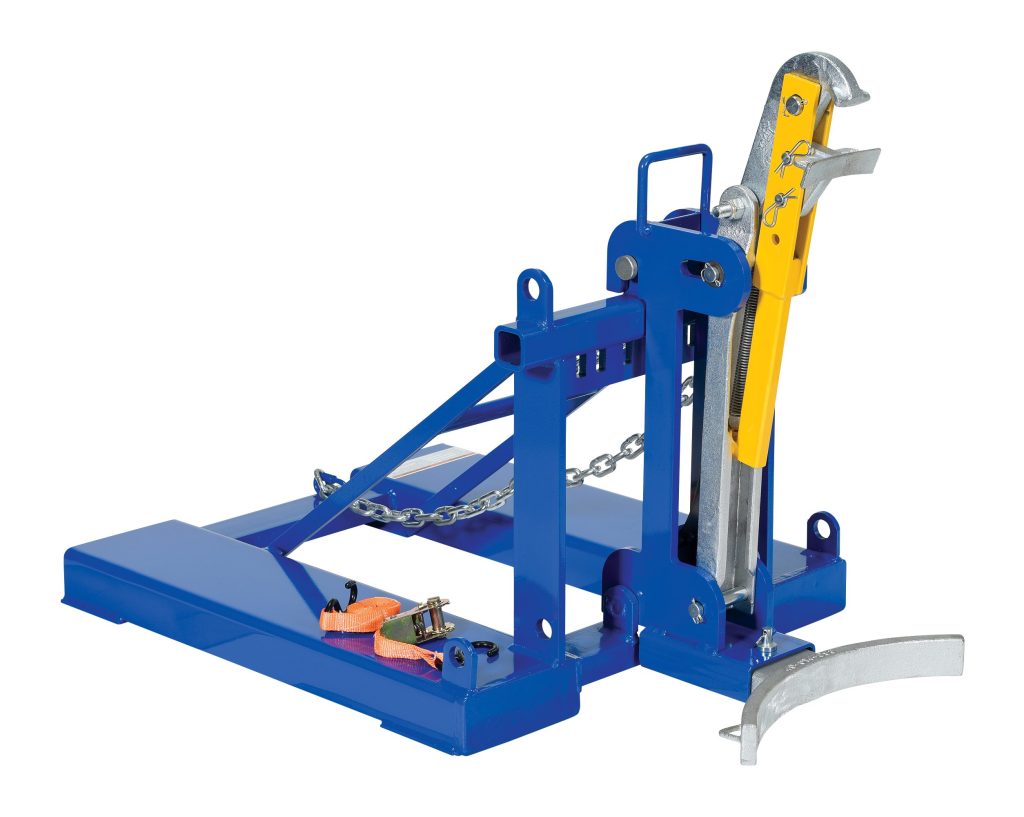
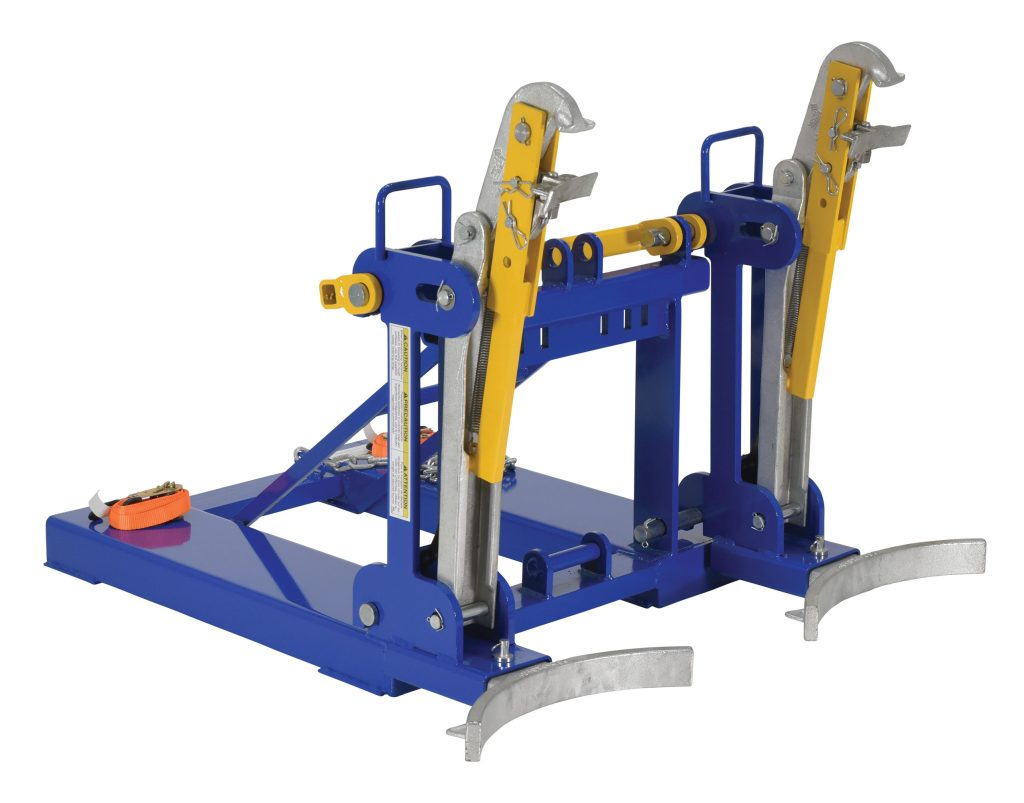
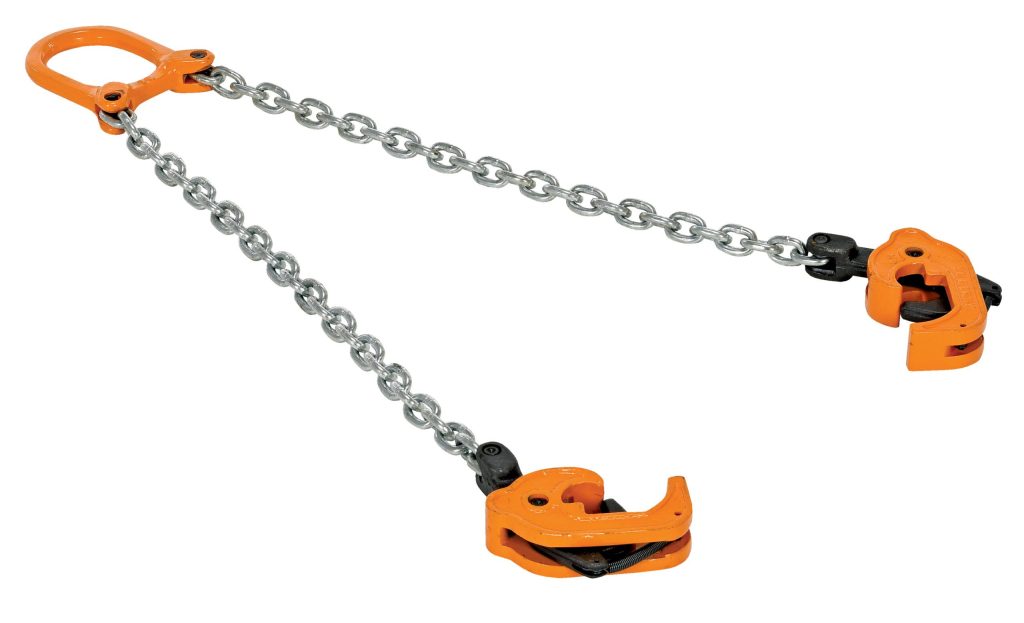
Drum lifters allow drums to be raised by an overhead hoist, jib crane, or forklift. Never attempt to lift a drum with standard forks — drums can roll or tip off and cause a catastrophic incident.
| Lifter Type | How It Works | Best For |
|---|---|---|
| Chime hook lifter | Hooks grip the rolled top rim (chime) | Steel open-head drums; simple lifts |
| Drum grab / clamp | Mechanical arms clamp the drum body | Both open and closed head; stacking |
| Forklift drum attachment | Bolts to carriage; grips or scoops drum | High-volume forklift loading |
| Below-hook drum lifter | Attaches to chain hoist; rotates for pouring | Overhead cranes; chemical dispensing |
Drum Cradles and Drum Tippers: Controlled Dispensing
Drum cradles hold the drum at an angle for gravity dispensing — ideal for viscous contents (oil, adhesives, coatings) where a pump isn't practical. Drum tippers rotate the drum 90° or more for complete emptying.
- Drum cradles: Manual tilt; typically adjustable from 0–90°; bung-down position allows gravity flow. Many include a hand crank for controlled lowering.
- Drum tippers/dumpers: Fork-mounted or self-supporting; tip drums fully for emptying into hoppers, mixers, or conveyors. Capacities from 800–2,000 lb.
- Drum rollers: Rotate drums horizontally to mix settling contents — used for paints, coatings, and two-part adhesives before dispensing.
Shop Drum Handling Equipment
Shop All Drum Equipment →