The Business Case for Ergonomics
Musculoskeletal disorders (MSDs) — back injuries, repetitive strain, shoulder and knee injuries — account for 33% of all workplace injuries, according to the Bureau of Labor Statistics. In warehousing, that number is even higher.
The good news: most ergonomic hazards in warehouses are addressable with equipment. The four highest-impact areas are standing positions, lifting height, lifting frequency, and repetitive motion — each with targeted solutions.
Anti-Fatigue Mats: Standing Comfort and Productivity
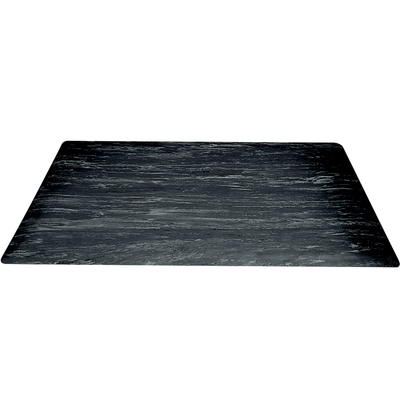
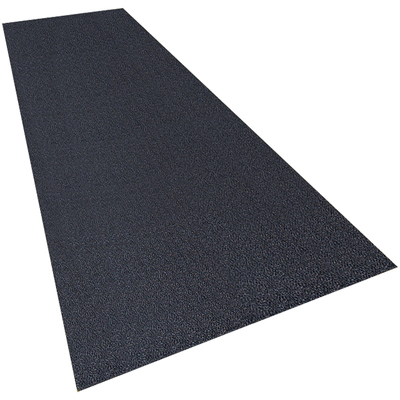
Workers standing on concrete for 8+ hours experience significantly higher rates of fatigue, leg/back discomfort, and long-term musculoskeletal damage than those on cushioned surfaces. Anti-fatigue mats are the simplest, highest-ROI ergonomic investment.
What to look for:
- Thickness: 3/8"–1/2" for standard use; 5/8"–1" for heavy-duty or all-day standing positions. Thicker = more cushion, but diminishing returns above 1".
- Material: Solid foam rubber (standard); anti-fatigue gel (premium); vinyl-capped foam for easy cleaning; rubber sponge for wet environments.
- Surface texture: Ribbed or diamond surfaces for drainage; flat surfaces for clean assembly areas; beveled or tapered edges to reduce trip hazard.
- Size: Cover the entire standing zone — typically 2×3' or 3×5' at minimum. Connect multiple mats with interlocking or channel strips for large areas.
- Chemical/oil resistance: Critical in manufacturing or maintenance environments. Not all mats resist petroleum-based fluids.
Scissor Lift Tables: Eliminating Bending and Overreach
Lift tables raise loads to the optimal working height, eliminating the need to bend, stoop, or reach down — three of the leading causes of back injury. They're particularly effective at:
- Packing stations: Raise the packing surface to elbow height; lower it to accept pallets from the floor.
- Assembly and kitting: Bring components to the right height for each operation without bending.
- Pallet building: Raise an empty pallet to working height and lower it as it fills — eliminating the need to stack boxes at floor level and overhead reach at the top.
- Receiving inspection: Bring incoming product to a convenient height for checking and sorting.
Key specs:
- Capacity: 1,000–6,000 lb for most warehouse applications. Match to your heaviest load including the pallet.
- Platform size: Must accommodate the largest item or pallet (standard: 48×48"). Turntables available for rotation tasks.
- Height range: Floor to 36"–40" typical; some tables go higher. Consider your floor height and desired working height.
- Operation: Foot-pump, air, or electric. Electric is most ergonomic (one button raises/lowers).
Height-Adjustable Workbenches
Fixed-height workbenches are set for a "standard" worker — but workers vary in height by 12" or more. A bench that's right for a 5'4" worker forces a 6'1" worker to stoop all day. Height-adjustable benches solve this by:
- Accommodating multiple workers at the same station across different shifts
- Enabling sit-stand work rotation (reduce fatigue by alternating postures)
- Matching bench height to the specific task (fine assembly vs. heavy part manipulation)
Adjustment mechanisms range from manual crank (economical) to pneumatic (fast, no tools) to electric (most ergonomic). Electric height-adjustable benches are increasingly standard in high-volume pick-and-pack and assembly operations.
Ergonomic Carts and Push/Pull Force
Pushing or pulling loads that are too heavy or too awkward is a leading cause of shoulder, back, and wrist injury. Ergonomic carts reduce these injuries by:
- Proper caster selection: Swivel casters with ball bearings dramatically reduce push/pull force. A poorly-caster'd cart can require 5–10x more force than a properly-specified one.
- Handle height: Ergonomic carts have handles at elbow height (36"–42"), not at knee height or above shoulder — both of which cause awkward loading.
- Platform height: Carts with platforms at shelf or conveyor height eliminate the need to lift items up or down during transfers.
- Powered carts: Battery-powered tuggers and transport carts eliminate push/pull force entirely and are the standard in automotive, aerospace, and high-volume distribution.
Shop Ergonomic Equipment
Shop All Ergonomics →